Lawsuits brought against Facebook over anti-competitive claims have been dismissed by a federal judge in a major boost for tech firms.
The antitrust lawsuit was launched by the Federal Trade Commission (FTC) and a coalition of state attorney generals, but US district judge James Boasberg has dealt a significant blow to regulators attempting to rein in tech giants.
In dismissing the claims, Judge Boasberg said they were "legally insufficient" and didn't provide enough evidence to prove Facebook was a monopoly.
Image:The decision is a blow to regulators, who are seeking to rein in the powers of big tech companies
The ruling, which prompted a surge in the company's share price beyond $1trn for the first time, dismisses the complaint but not the case, meaning the FTC could refile another complaint.
"These allegations - which do not even provide an estimated actual figure or range for Facebook's market share at any point over the past 10 years - ultimately fall short of plausibly establishing that Facebook holds market power," the judge said.
Advertisement
The case was brought in December by the US government and 48 states, who accused Facebook of abusing market power to crush competitors and sought remedies which include a force spin-off from its Instagram and WhatsApp services.
The FTC also alleged Facebook engaged in a "systematic strategy" to eliminate competition, including by purchasing up-and-coming rivals such as Instagram in 2012 and WhatsApp in 2014.
More on Facebook
New York Attorney General Letitia James said when filing the suit that Facebook "used its monopoly power to crush smaller rivals and snuff out competition, all at the expense of everyday users".
Judge Boasberg also dismissed a separate complaint made by the state attorney generals as well.
The FTC has not yet commented on the ruling.
Facebook said "We are pleased that today's decisions recognise the defects in the government complaints filed against Facebook.
"We compete fairly every day to earn people's time and attention and will continue to deliver great products for the people and businesses that use our services."
Legislation which would overhaul antitrust laws, potentially forcing Facebook, Google, Amazon and Apple to splinter, was approved by the House Judiciary Committee last week and sent to the full US House.
Image:Google is facing a similar lawsuit in the US, which was filed in October 2020
Representative Ken Buck of Colorado, the chief Republican sponsor of the legislation, said the ruling "shows that antitrust reform is urgently needed".
"Congress needs to provide additional tools and resources to our antitrust enforcers to go after big tech companies engaging in anti-competitive conduct."
In October, the US Justice Department sued Google claiming it had abused its market power to fend off rivals.
A judge has dismissed two antitrust lawsuits against Facebook, one from the Federal Trade Commission and another by a coalition of US states, dealing a significant blow to regulators and sending the social media group’s share price to record levels.
In an opinion on Monday, Judge James Boasberg in Washington, DC said the FTC’s lawsuit was “legally insufficient” and the federal agency had “failed to plead enough facts to plausibly establish” that Facebook had monopoly power over the social networking market.
However, the FTC will have 30 days to file a new complaint, he added.
Boasberg also dismissed entirely a similar case pursued by a group of 46 states and two other jurisdictions — led by New York attorney-general Letitia James — on the basis that any alleged violations took place too long ago.
Facebook’s share price jumped more than 4 per cent on the news to a high of $357.36, with the company surpassing a $1tn market capitalisation for the first time.
“We are pleased that today’s decisions recognise the defects in the government complaints filed against Facebook,” a spokesperson for the social media group said, adding that Facebook “competes fairly every day to earn people’s time and attention”.
The judgment dealt a big setback to regulators, who in December accused the company of anti-competitive conduct, including a “buy or bury” approach of strategically snapping up rivals or cutting off services to those that threatened its monopoly power.
The FTC said at the time that it was seeking penalties including a forced break-up of Facebook from Instagram and WhatsApp, acquisitions it made in 2012 and 2014 for $1bn and $19bn respectively.
The lawsuits are part of a wider effort by the US government to curb the power of Big Tech companies over allegations of monopolistic practices and abuse of market dominance. Google also faces an antitrust lawsuit brought by the US justice department.
In a bruising opinion on Monday, Boasberg deemed the FTC’s claim that Facebook has a dominant share of more than 60 per cent of the social networking market “unsupported” and “naked”, saying the agency failed to clarify how it calculated the figure.
“[W]hatever it may mean to the public, ‘monopoly power’ is a term of art under federal law with a precise economic meaning: the power to profitably raise prices or exclude competition in a properly defined market,” he wrote.
However, the FTC may be able to correct those failures in a new lawsuit, he added.
Boasberg said there was no case with regards to the allegations that the company cut off services to rivals since the conduct was too far in the past. But “the agency is on firmer ground in scrutinising the acquisitions of Instagram and WhatsApp”, he added.
A spokesperson said the New York attorney-general was reviewing the decision. The FTC could not be reached for comment.
The judgment illustrated the challenges faced by those attempting to redefine US antitrust laws for the digital era.
Regulators have traditionally proved that companies were abusing their market power by showing how the groups raised prices unfairly for their customers.
But academics such as Lina Khan, a prominent Big Tech critic and the newly appointed FTC chair, have argued that companies can abuse their market power without charging anything, whether by degrading services or demanding customers hand over more personal data.
“This suggests that the competitive ecosystem here is pretty broad and dynamic,” said Maureen Ohlhausen, a former FTC commissioner who is now a partner at the legal firm Baker Botts and who has previously worked for Facebook in other matters. “Just saying this is a large company, a lot of people use them, is not enough.”
Doug Melamed, a law professor at Stanford and one of the lawyers who brought the landmark 1998 antitrust case against Microsoft, said: “It is obvious that the team at the FTC wants to move very aggressively. But what they really need is really skilled litigators who can put together good legal arguments, rather than ones that feel good.”
The judgment is also likely to add weight to some progressives’ argument that US antitrust laws are outdated. Members of Congress are debating legislation that would make it easier to prosecute big technology companies.
“Facebook’s power is obvious, and yet we have a judge here getting into arcane details of what makes up the market,” said Bill Kovacic, a former FTC chair. “It will be held up as the precise example of why we need to change the law.”
The FTSE 100 index ended weaker on Monday, near the day’s low point, while US stocks were mixed, as a fresh bout of worry over coronavirus (COVID-19) cases caused a sell-off in travel stocks and there was some profit-taking in energy issues.
At the close, the UK blue-chip index was down 63.10 points, or nearly 0.9% at 7,072.97, just fractionally above the session low of 7,071.95, having dropped from an early peak of 7,136.22.
On Wall Street by London’s close, the Dow Jones Industrials Average was also lower, off 170 points, or 0.5% at 34,263, but the broader S&P 500 index edged 0.02% higher and the tech-laden Nasdaq Composite rose 0.7% to fresh all-time highs.
Michael Hewson, chief market analyst at CMC Markets UK) commented: “European markets have got off to a poor start to the week, as rising virus cases threaten to undermine sentiment as we come to the end of the month, the end of the quarter and the first half of 2021, with the energy sector, along with travel and leisure leading the losses.
“Oil prices are slipping back ahead of this week’s OPEC+ meeting as well as concerns that a rise in global cases, and new restrictions will act as a brake on the pace of global reopening, with BP and Royal Dutch Shell lower.”
He noted: “Having seen falls at the end of last week over disappointment over the limited government relaxation of travel restrictions, which saw the addition of Malta, Madeira and the Balearics to the green list. Airlines were also unhappy that the government wasn’t bolder in promising that it would look at dropping quarantine rules for fully vaccinated UK residents returning home from amber list countries.
“While airlines and travel companies expressed disappointment over last week’s announcement criticising the government for its cautious approach, the reality is whatever countries the government puts on its green list now matters less than the restrictions being faced by UK passengers when they leave the UK for their destination country.”
Hewson added: “While European markets are sliding, US markets continue to look resilient with the Nasdaq and S&P500 both hitting new record highs, while the Dow has slipped back. There appears to be increasing optimism that some form of infrastructure deal can be done on a cross party basis, after Republican senators indicated the deal could move forward.”
3.25pm Carnival battles against travel weakness
The FTSE 100 has fallen below 7,100 again after a mixed opening on Wall Street.
London’s index of blue-chip shares was down 47 points (0.7%) at 7,089, despite the S&P 500 hitting new intra-day record highs.
The S&P 500 was up by less than a point at 4,281 while the Nasdaq Composite was 99 points (0.7%) heavier at 14,459. The Dow Jones industrial average, however, dived 130 points (0.4%) to 34,303.
Dual-listed cruise operator Carnival PLC (LON:CCL) edged up 0.1% to 1,679.8p after its half-year report revealed it made a loss before tax of US$2.06bn in the three months to the end of May, compared to a loss of US$4.39bn in the corresponding perod of 2020.
2.45pm: US stocks start mixed
US stocks opened mixed to start the week, with the Dow lagging, but the S&P 500 and Nasdaq hit new intraday highs as the bullish investor mood appears to be continuing.
Soon after the bell, the Dow Jones Industrial Average shed around 84 points at 34,349.
The S&P 500 added around three points at 4,283. The Nasdaq advanced over 92 points at 14,452.
"Despite a weaker start on Monday, sentiment is overall positive in these last few days of the month and quarter," said Fawad Razaqzada, market analyst at ThinkMarkets.com.
"Buying-the-dip is likely to remain the trade of choice in the equity markets, as despite rising inflationary pressures, central banks are still keen to keep their record stimulus measures in place for the time being."
He added: "This message is likely to be echoed by a handful of central bank officials scheduled to speak. On Wednesday, we might see some volatility as money managers rebalance their portfolios ahead of the third quarter."
Coming up, attention will turn to this Friday's US jobs data, where traders will be looking for a rebound from some disappointing recent monthly stats.
"Analysts expect a 600K reading, which would be a little higher than the May print. However, average hourly earnings have beaten expectations in the previous two months and another sharp rise could re-ignite inflation concerns," noted Razaqzada.
Ahead of the US open, London shares are modestly lower on balance as lockdown fears return to the fore.
The FTSE 100 was down 23 points (0.3%) at 7,113.
The new health Secretary, Sajid Javid, is to address parliament at 5.00pm today, reacting to the latest coronavirus data.
Javid has indicated his “absolute priority” as Health Secretary is getting the COVID-19 lockdown restrictions lifted as soon as possible, and has pledged – or possibly threatened - that once the restrictions are lifted, there would be “no going back”.
Meanwhile, some European countries appear not to be waiting for the latest data with Spain stipulating that arrivals in the Balearic Islands (Mallorca, Ibiza and Minorca) from the UK will have to produce a PCR test result of proof of vaccination to be admitted to the popular holiday islands.
Portugal, meanwhile, has imposed a 14-day travel ban on UK arrivals who have not had both jabs.
German chancellor Angela Merkel, meanwhile, has suggested that all UK arrivals in European Union should be quarantined, as the number of cases with the Delta variant continues to rise.
All of this talk is naturally hitting stocks whose fortunes are tied to air travel; British Airways owner International Consolidated Airlines SA (LON:IAG) is down 4.7% at 178.72p while aerospace engineer Rolls-Royce Holdings PLC (LON:RR.) has shed 3.0% at 103.26p.
Hotelier InterContinental Hotels Group PLC (LON:IHG) is another getting it in the neck, with the shares off 1.9% at 4,885p.
12.30pm: US stocks to open lower
The Footsie’s losses are gradually lengthening as traders start to listen to the mood music wafting across the Atlantic from Wall Street.
The FTSE 100 has fallen below the 7,100 level to 7,093, down 43 points (0.6%).
Across the pond, the Dow Jones industrial average is expected to open at around 34,403, down 31 points, while the S&P 500 is expected to start at around 4,282, off a point or so. The tech-heavy Nasdaq 100 is tipped to open 12 points weaker at 14,372.
“With no US economic data for investors to focus on, attention will be firmly on John Williams and Patrick Harker, Presidents of the Federal Reserve Banks of New York and Philadephia, respectively, for further clues over the next steps,” said Sophie Griffiths at OANDA.
10.50am: It's a locked-down world
Against a background of governments around the world tightening COVID019 restrictions (some of which might even be observed by government ministers), equities are on the slide.
The FTSE 100 was down 33 points (0.5%) at 7,103, with sentiment not helped by sterling rallying by almost four-tenths of a cent against the greenback on foreign exchange markets.
AstraZeneca PLC (LON:AZN) defied the trend, rising 1.0% to 8,583p after it said the MEDLEY Phase II/III trial of Nirsevimab demonstrated a favourable safety profile in infants at high risk of respiratory syncytial virus.
9.35am: Burberry leads the retreat as CEO announces plans to jump ship
The FTSE 100 has stumbled at the start of the week and is just about keeping its head above the 7,100 level.
London’s index of heavyweight shares was down 33 points (0.5%) at 7,103, with Burberry Group PLC (LON:BRBY), down 7.1% at 2,091p, leading the retreat after the fashion firm’s chief executive, Marco Gobbetti, decided it was time to get his coat.
“That shows how much he is credited with the success of the luxury goods business,” opined AJ Bell’s Russ Mould.
The shares, floated at 257p, were up 15.5p at 272.p in mid-morning trading.
8.30am: Sluggish start
The FTSE 100 made a sluggish start to proceedings as the spread of the Covid delta variant placed question marks over the easing of final lockdown restrictions and raised the prospect of a renewed overseas travel embargo.
Certainly, the EU appears to be in the process of quarantining the UK, if reports in the popular press are to be believed.
The market was taking them seriously with shares in British Airways owner IAG (LON:IAG) marked down 1.6%.
Budget carriers EasyJet (LON:EZJ), Ryanair (LON:RYA) and Wizz Air (LON:WIZZ) followed IAG’s descent as they dropped 1.8%, 1.3% and 1.2% respectively.
The Footsie’s top faller early on was Burberry (LON:BRBY), which was rocked by the decision of Marco Gobbetti, its chief executive, to quit in order to find work closer to home.
The news wiped half a billion pounds from the luxury fashion chain’s market capitalisation.
6.50 am: Sluggish start predicted
The FTSE 100 looks set to open unchanged amid worries over the spread of the Covid Delta variant, which looks set to put the kibosh on travel to Europe’s sunspots.
The Daily Mail in its inimitable style says Angela Merkel has personally begun a campaign to ban British holidaymakers from the EU.
Whatever the story, it is likely the airlines and travel firms will come under pressure during the early exchanges.
Asia’s main markets began the session in a subdued fashion, while the start to trading in Hong Kong was delayed by a rainstorm.
Back here in the UK, new health secretary Sajid Javid is reported to be a new voice in favour of the end of Covid restrictions next month, arguing controls are having a punitive impact on the economy.
Predecessor Matt Hancock, who quit after an affair with an aide, had always taken a more cautious approach to the phased ending of lockdown.
Looking ahead, we have corporate updates from Primark owner AB Foods (LON:ABF), outsourcing specialist Serco (LON:SRP) and electricals giant Dixons (LON:DC.).
In macro news, American non-farm payrolls take centre stage on Friday.
“One thing that came from last week's comments by John Williams [New York Fed president] was a concern about the labour market and the lack of a rebound in the participation rate, despite record vacancy rates,” said Michael Hewson, analyst at CMC Markets.
“If Williams is concerned about this, he is unlikely to be the only one, which makes this week’s US jobs report even more important when it comes to trying to read the reaction function of Fed officials in the coming months.”
Around the markets
Pound US$1.3896 (+0.12%)
Bitcoin US$34,455.17 (+3.81%)
Gold US$1,784.50 (+0.38%)
Brent crude US$74.11 (flat)
6.50am: Early Markets - Asia / Australia
Stocks in the Asia-Pacific region were lower on Monday as official data showed profits at China’s industrial firms rose 36.4% in May as compared with a year earlier.
That was weaker than a 57% year-on-year growth posted in April.
The Shanghai Composite in China fell 0.13% and Hong Kong’s Hang Seng index slipped 0.08%
In Japan, the Nikkei 225 dipped 0.15% while South Korea’s Kospi declined 0.12%.
Shares in Australia fell, with the S&P/ASX 200 trading 0.03% lower.
Mixing and matching different vaccines still results in a strong and potent immune response against coronavirus, a study has found.
Using a combination of the Oxford-AstraZeneca and Pfizer vaccines produced a “highly effective” boost to antibodies and T-cells, scientists showed.
Whichever order they were taken in, the antibody bump exceeded the response from using just the Oxford vaccine alone, though not from two Pfizer jabs. Intriguingly, mixing vaccines produced a marginally stronger T-cell response than using two shots of either vaccine on their own. This provided a hint that combining vaccines could induce broader protection in this secondary line of immunity.
The research, involving more than 800 people, is important because it provides options for policymakers to add resilience to vaccination programmes here and abroad.
The world's largest cryptocurrency exchange has been banned from operating in the UK and has until Wednesday to comply with the ruling by the financial watchdog.
Cayman Islands-based Binance, which allows customers around the globe to trade cryptocurrencies like Bitcoin and derivates linked to them, such as futures, was told to stop 'any regulated activity' in the UK under its affiliate Binance Markets Limited.
The move by the Financial Conduct Authority is the latest crackdown on the crypto industry.
Various regulators are growing increasingly concerned about cryptoassets' potential role in illegal activities like money laundering, as well as poor protection for investors as they become more popular.
Crackdown: Binance Markets Ltd has been told to stop 'any regulated activity' in the UK
Due to the ban, Binance Markets 'is not currently permitted to undertake any regulated activities without the prior written consent of the FCA', the watchdog said.
The FCA does not regulate cryptocurrencies themselves, but it does regulate financial products linked to them, which is presumably the activity the FCA is clamping down on.
Laith Khalaf, financial analyst at AJ Bell, said: 'The Binance website offers derivative products with up to four times leverage on a range of extremely volatile cryptocurrencies, which means gains, and losses, are magnified by a factor of four.
'It's not surprising that such extremely risky products have drawn regulatory scrutiny.'
Since January, the FCA has introduced a ban on the sale of derivates and exchange-traded notes that track cryptocurrencies like bitcoin and ethereum to retail investors after it concluded that they are at risk of 'sudden and unexpected' losses.
The regulator also introduced the requirement for all firms offering cryptocurrency-related services to register with them and show they comply with anti-money laundering rules.
Binance had applied to become a registered company with the FCA - but it dropped its application last month. That means it cannot operate as a cryptocurrency exchange in the UK.
Earlier this month, the FCA said that just five firms had registered, and that the majority were not yet compliant.
What does the ban mean for UK customers with a Binance account?
It is not clear what that means for UK investors.
While Binance cannot offer a crypto exchange based in the UK, British investors can still access the group's services through its website Binance.com.
Binance said the FCA UK notice had 'no direct impact' on the services provided on Binance.com.
'BML is a separate legal entity and does not offer any products or services via the Binance.com website,' the group tweeted.
And added: 'We take a collaborative approach in working with regulators and we take our compliance obligations very seriously. We are actively keeping abreast of changing policies, rules and laws in this new space.'
Bitcoin today: The crypto rose despite news of the ban on Binance's UK and Japanese affiliates
But the FCA issued a warning about the Binance.com platform, advising people to be wary of online and social media adverts promising high returns on cryptoasset investments.
And it has told Binance that by Wednesday 30th of June, it must display a notice on its website and social media channels warning customers that it is not allowed to 'undertake any regulated activity in the UK'.
The company must also remove any advertising and financial promotions to UK consumers.
In addition, Binance must secure and preserve all records relating to UK consumers and inform the FCA this has been done by the 2nd of July.
David Henderson, senior associate at law firm Browne Jacobson, said the impact on UK customers with Binance accounts was not yet clear.
'We expect that the FCA will be scrutinising the Binance website and the products offered very closely and if it determines that any regulated products are being offered or promoted "in the UK" (which is subject to interpretation) then we expect the FCA might require that the Binance website prevent UK consumers from accessing those products,' he said.
Binance is based in the Cayman Islands and is led by founder and chief executive Changpeng Zhao. Binance Markets Ltd is its UK arm and is legally based in London.
Crackdown on cryptos set to accelerate
Binance was also banned by Japan's financial watchdog on Friday, when it said that company wasn't registered to do business in the country.
And last month, Bloomberg reported that US officials who probe money laundering and tax offences had sought information from individuals with insight into Binance's business.
Regulators are cracking down on cryptoassets amid fears they contribute to fraud and money laundering. They are also concerned that investors are at risk of big losses.
Bitcoin rose despite the latest crackdown, with the cryptocurrency rising by around 5 per cent to around $34,800 by 9:30am on Monday.
Last week, it fell below $29,000 for the first time since the start of the year. Since last October bitcoin has rallied from around $10,000 to more than $63,000 in April.
Khalaf said the latest crackdown on Binance isn't going to 'knock the crypto craze on the head', but it is part of a growing trend of regulatory intervention in crypto markets.
'The idea that policy makers are simply going to allow a decentralised shadow payments system to emerge without any regulatory oversight is fantastical, and if the use of cryptoassets becomes more widespread, we can expect beefed-up regulation to follow suit,' he said.
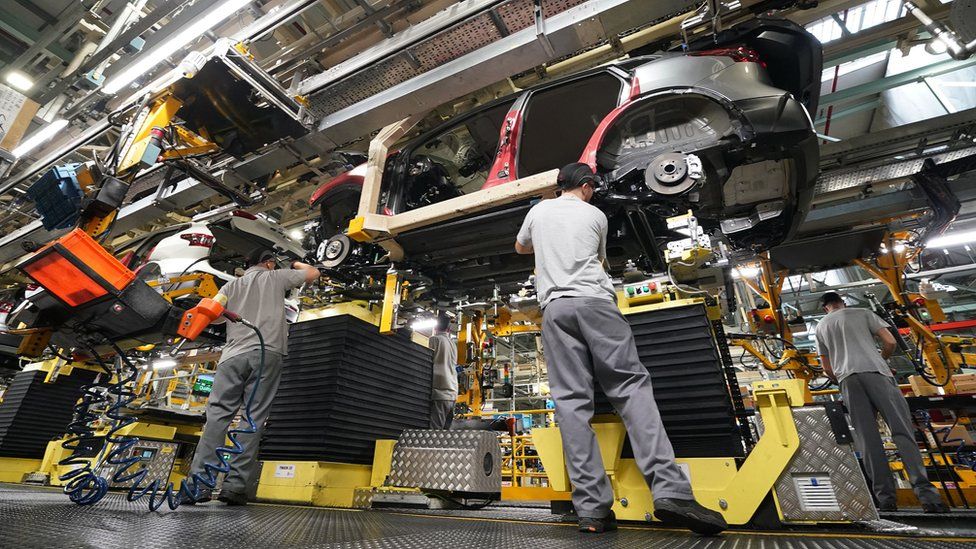
Nissan is to announce a major expansion of battery production in Sunderland creating thousands of new jobs both directly and in the supply chain.
The firm, which already makes the Leaf electric car in Sunderland, may also announce the launch of a brand new electric model.
The government is contributing to the overall cost of the project, which is expected to cost hundreds of millions.
The size of the government contribution has not been disclosed.
As a person familiar with the deal put it, the government announced a ban on the sale of new petrol and diesel cars from 2030, so it was prepared to support the transition.
It is hoped the new plant will be producing batteries in time for 2024 when the level of UK-made components in UK-made cars is required to start increasing in line with the terms of the UK's trade deal with the European Union - where most of Nissan's Sunderland-assembled cars are sold.
Industry sources expect the scale and size of the new facility may closely match that of a new facility in Douai, France recently announce by Renault - which is a major shareholder in Nissan and a partner in a global manufacturing alliance.
The government is also in talks with Vauxhall to secure production of electric vehicles at its Ellesmere Port plant. The BBC understands those talks are "going positively" and an announcement is expected in the next few weeks.
'Tiny fraction'
The market for electric cars is expanding rapidly.
The Brussels-based campaign group said that as recently as 2018, the UK produced roughly half of all electric cars built in Europe.
But it claimed a lack of investment by UK manufacturers meant that by the end of the decade that figure could fall to just 4%.
T&E also said Nissan's expansion plans for Sunderland - which would reportedly see the plant having a capacity of 6.5 Gigawatt hours (GWh) - amounted to "a tiny fraction of the 474GWh of production at 17 sites across Europe for which funding has already been secured".
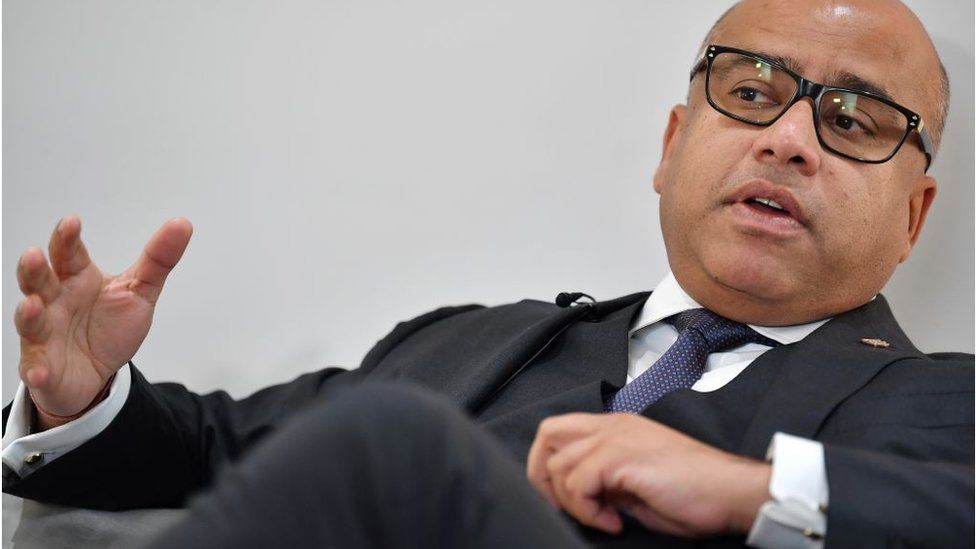
The UK's accountancy watchdog has launched an investigation into the auditor of Greensill Capital, the collapsed financial backer of industrialist Sanjeev Gupta.
The Financial Reporting Council has begun a probe into accountancy firm Saffery Champness.
It also announced an investigation into PwC, which audited financial statements made by Wyelands Bank.
The bank was controlled by Mr Gupta but also lent money to his other firms.
The FRC said it was looking into Saffery Champness's audit of Greensill Capital's financial statements for the year to 31 December 2019.
The supply chain finance company went bust in March, raising concerns over the future of GFG Alliance, the sprawling empire controlled by Mr Gupta and his family which owns the UK's Liberty Steel.
Following the collapse of Greensill, it emerged that the former prime minister David Cameron had unsuccessfully lobbied senior members of the government and former colleagues for loans on behalf of the company.
Greensill's founder, Lex Greensill, was an adviser to the government during Mr Cameron's time as prime minister.
In May, the Serious Fraud Office announced an investigation into "suspected fraud, fraudulent trading and money laundering in relation to the financing and conduct of the business of companies within the Gupta Family Group Alliance, including its financing arrangements with Greensill Capital".
A spokesman for Saffery Champness said: "As professional accountants we owe a duty of confidentiality to present and former clients and, with this matter the subject of investigation, it would not be appropriate to comment at this time save to say that Saffery Champness will of course be co-operating fully with the FRC."
The FRC said it was also examining PwC "in relation to its audit of the consolidated financial statements of Wyelands Bank for the year ended 30 April 2019".
There is no shortage of official enquiries into the collapse of Greensill Capital and the affairs of one of its main clients, GFG Alliance, the group of companies presided over by the metals tycoon Sanjeev Gupta.
Parliamentary select committees are doing a post mortem on the former, and trying to work out the future of the latter as part of a wider probe of the future of the steel industry.
The Serious Fraud Office is investigating suspected fraud, fraudulent trading and money laundering within GFG, including its relationship with Greensill.
Today's announcements, however, show a new front being opened and a new question asked. How was Greensill able to come so far, and to appear in decent financial health, only to cave in so suddenly? Were its accounts not to be trusted?
The FRC has also begun an inquiry into PwC's auditing of Wyelands Bank, part of the GFG network. Wyelands has been under a shadow for some time. It is expected to be sold or wound up after Mr Gupta said he would not provide any more funding.
If FRC staff are looking for some groundwork for their investigation, they may want to tune into Tuesday's evidence session at the Business, Energy and Industrial Strategy select committee. The first witness before MPs will be Stephen Rose, Wyelands' chief executive.
Mr Gupta bought Wyelands, formerly known as Tungsten Bank, in 2016 for £30m.
Last month, Bank of England governor Andrew Bailey said that in 2019, the Bank's Prudential Regulation Authority banking watchdog had launched an investigation into the business over concerns "connected lending in the context of the ultimate beneficial owner who is Mr Gupta".
He said the Bank notified the National Crime Agency and set out its concerns to the Serious Fraud Office in early 2020.
Earlier this year, the Bank of England forced Wyelands to hand back £210m in deposits to customers.
A spokesman for PwC said: "It's understandable that there is regulatory scrutiny in situations like this. We will co-operate fully with the FRC in its enquiries."
Stephen Rose, chief executive of Wyelands Bank, will appear in front of MPs on the Business, Energy and Industrial Strategy select committee on Tuesday to answer questions on Liberty Steel and "the future of the UK steel industry".
Mr Rose has been the boss of Wyelands since November 2020, taking over from Iain Hunter who was chief executive of the bank for five years after leading the sale of the business to Mr Gupta.
Milan Patel, a partner at King & King, which audited a number of companies within GFG Alliance, will also appear in front of the committee.