1 in 10 breakdown policies don’t cover running out of fuel
One in 10 breakdown policies has no cover for drivers who run out of fuel, analysis has found.
Some 89% of UK breakdown policies analysed by financial information business Defaqto will cover customers who run out of fuel.
Brian Brown, consumer finance expert at Defaqto, said: “With the current panic buying of fuel around the country, it is much more difficult to top up your vehicle.
“Inevitably, we are likely to see more people running out of fuel while driving. If this happens to you, and you have breakdown cover, your provider will most likely be able to help you out by towing you to a petrol station.
“Just because they will tow you to a petrol station, or give you enough fuel to get you to one, there’s no guarantee that the filling station will have fuel. And they will not tow you all over the country looking for fuel, so you still need to be careful.
“Even if you don’t have a standalone breakdown insurance policy, you may find that it is included with your vehicle insurance or even included as an extra with your bank account if you have a premium account. Not all policies have this cover, though, and so it is worth checking before you claim.”
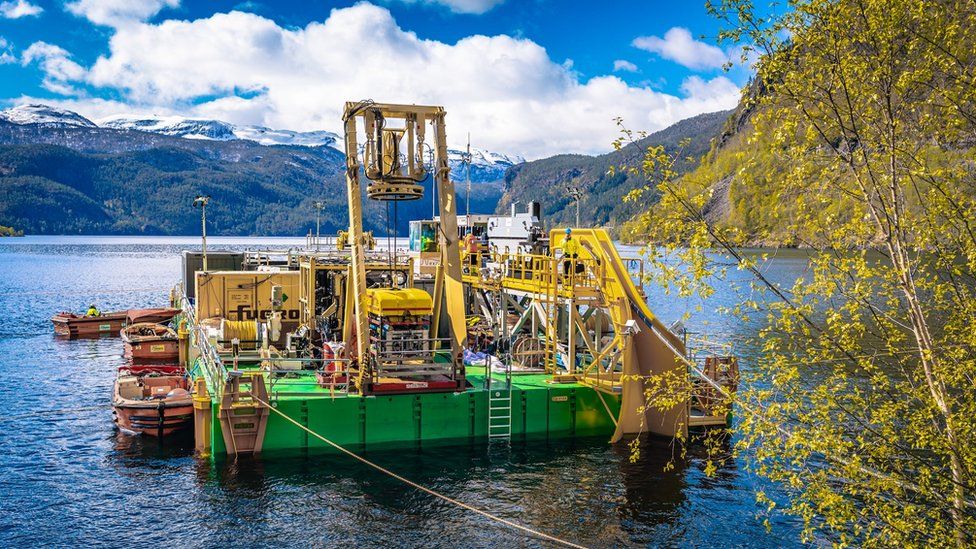
The world's longest under-sea electricity cable, transferring green power between Norway and the UK, has begun operation.
The 450-mile (725km) cable connects Blyth in Northumberland with the Norwegian village of Kvilldal.
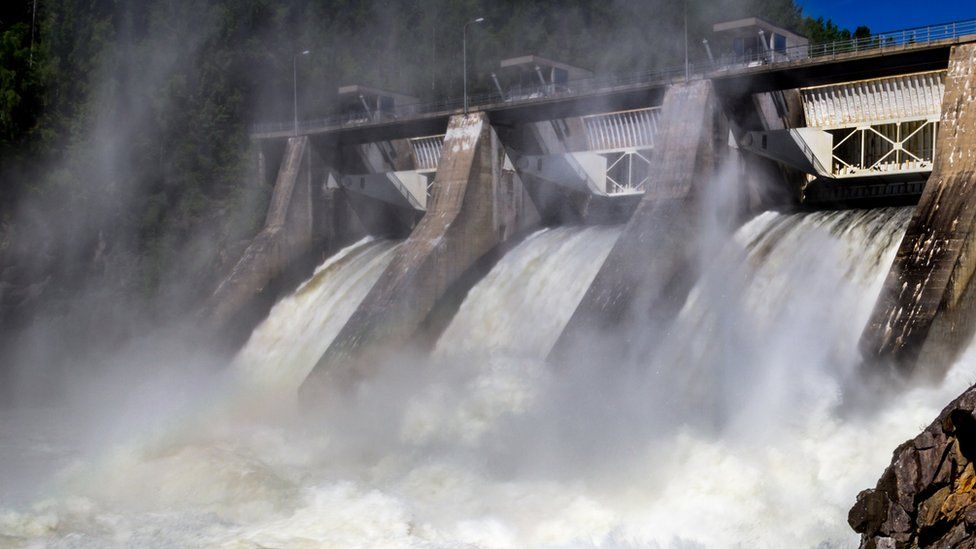
At full 1,400 megawatt capacity it will import enough hydro-power to supply 1.4 million homes, National Grid said.
National Grid Ventures president Cordi O'Hara said it was a "remarkable feat of engineering".
He added: "We had to go through mountains, fjords and across the North Sea to make this happen.
"North Sea Link (NSL) is also a great example of two countries working together to maximise their renewable energy resources for mutual benefit."
National Grid said the €1.6bn (£1.37bn) joint venture with Norwegian power operator Statnett would help the UK reduce carbon emissions by 23 million tonnes by 2030.
It has four other power cables running to Belgium, France and the Netherlands and said 90% of energy imported in this way would be from zero carbon sources by 2030.
PA Media
Hydropower in Norway and wind power in the UK are subject to weather conditions and fluctuations in demand.
Using NSL, renewable power can be exported from the UK when wind generation is high and electricity demand low, or be imported from Norway when demand is high and wind generation low.
Business, Energy and Industrial Strategy minister Greg Hands said NSL enabled both countries to "benefit from the flexibility and energy security that interconnectors provide".
He added: "This pioneering partnership shows first-hand how crucial international cooperation will be in helping us to deliver on our net zero ambitions."
A British logistics start-up backed by the Amazon founder Jeff Bezos and other titans of the technology world is raising tens of millions of pounds to help it satisfy booming demand for its services.
Sky News has learnt that Beacon, which helps companies to manage their supply chains more efficiently, has sealed a $50m (£37m) Series B funding round led by Northstar.vc, a leading venture capital investor.
Upper90, another investor in early-stage companies, is also participating in the fundraising as a new investor in the business.
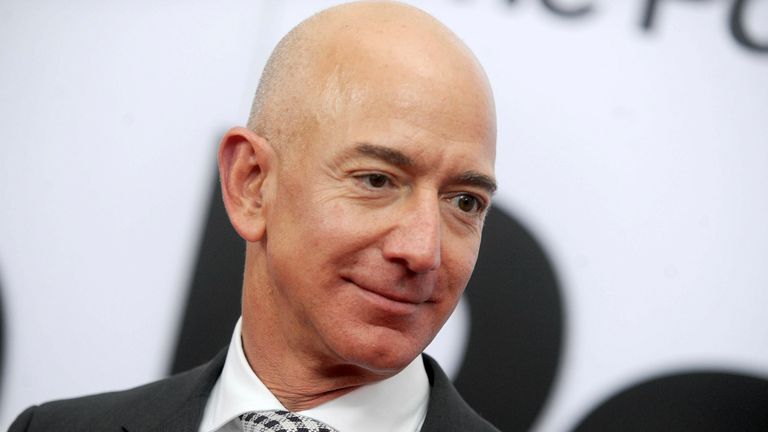
Image:Amazon's executive chairman is one of the world's wealthiest people. Pic: AP
Launched in 2018, Beacon uses artificial intelligence and cloud-based technology to improve operational efficiency for customers organising international trade in their products.
It provides services including global ocean, air and road freight, customs clearance, insurance and supply chain finance, all of which can be accessed and managed on a single platform.
Advertisement
The company helps importers to address cashflow needs by offering financing within 72 hours - a critical issue for importers who invariably have to pay suppliers before goods begin a shipment journey that can take several months.
Headquartered in London, it was founded by Fraser Robinson, chief executive, and Dmitri Izmailov, chief operating officer, two former Uber executives.
More on Amazon
Related Topics:
Beacon boasts one of the most stellar investor registers of any early-stage company in the world, with Eric Schmidt, the former Google chief executive, Travis Kalanick, the Uber Technologies founder, and Marc Benioff, the Salesforce founder, chairman and chief executive, among its backers.
The venture capital firms 8VC and Expa are also among its shareholders.
Mr Bezos, Amazon's executive chairman and one of the world's wealthiest people, is understood to be participating in Beacon's Series B round alongside other existing investors.
Freight forwarders act as agents between exporters and importers, taking a fee for the service they provide in arranging transport for goods from factories prior to their shipment.
They also administer relevant paperwork required for exports.
The industry's largest players include DHL, the global logistics group, and Kuehne + Nagel, although the sector as a whole is regarded as having been slow to embrace the digital age.
Beacon was set up to drive efficiencies in a historically fragmented industry, but has been a big beneficiary of the havoc that COVID-19 has wreaked on global supply chains.
One source close to the company said this weekend that since unveiling its $15m (£11m) Series A fundraising in May 2020, it had seen "hyper-growth", with revenue growing 12-fold in the last year.
It now employs 180 people, up from 24 18 months ago, and has expanded into Asia through the opening of an office in Hong Kong.
Demand for more efficient logistics operations has been driven by soaring freight rates, labour shortages and consumer demand for more rapid and reliable delivery times for goods purchased online.
The new funding, which could be announced early this week, is expected to be used to further expand Beacon's workforce, develop its technology and expand into new markets.
It was unclear at what valuation the capital was being injected.
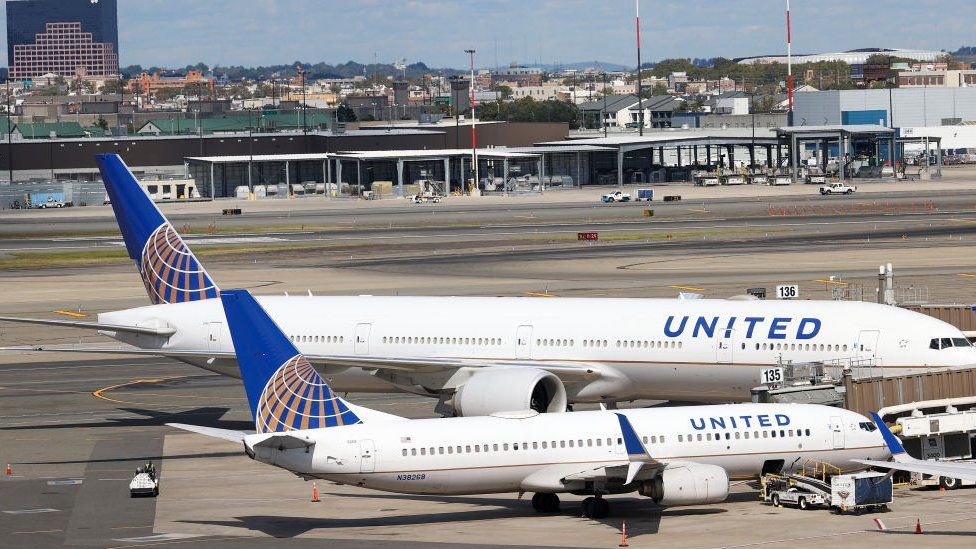
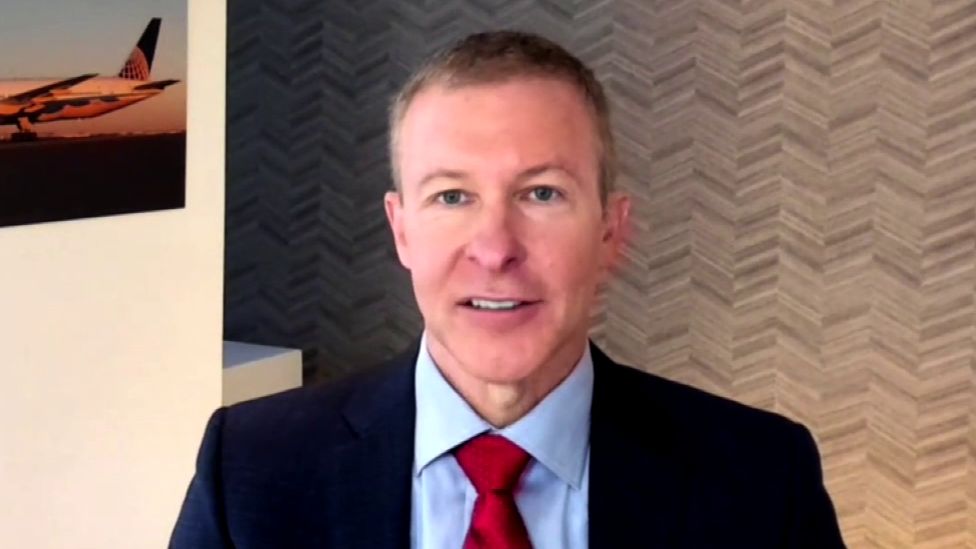
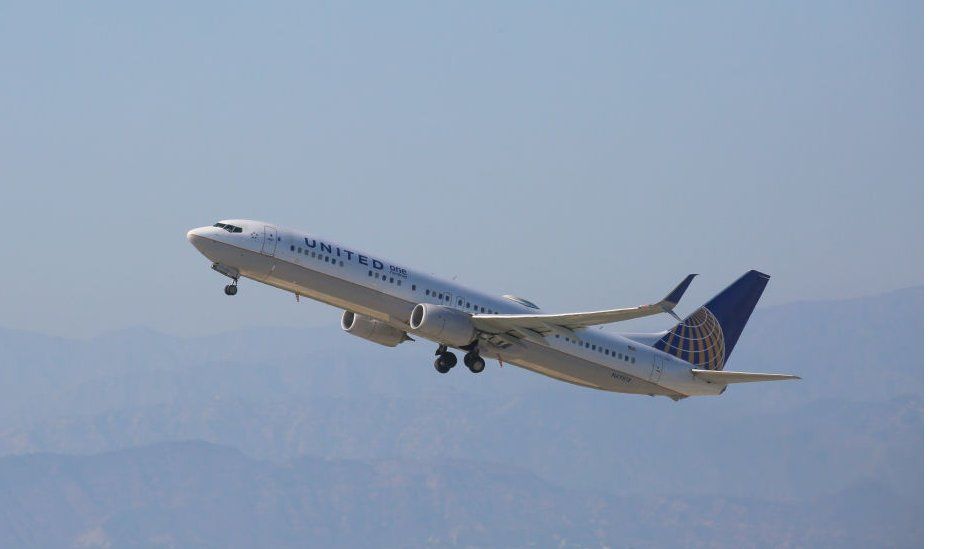
CEO Scott Kirby says United's strict policy is "about saving lives".
He adds that "when I retire someday, hopefully long in the future, I will look back at this and it will be one of the proudest moments of my career that we've made the tough decision, but the right decision to require vaccines."
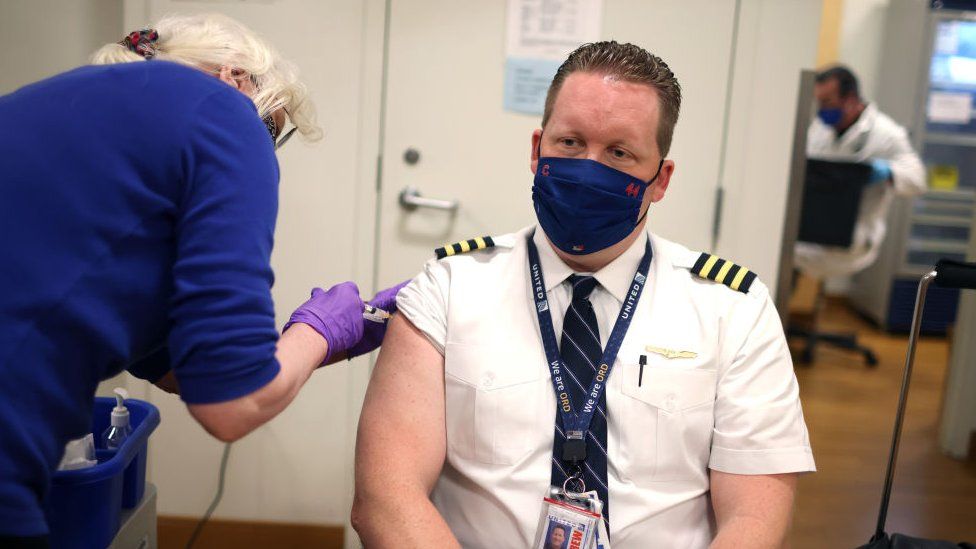
More than 250 staff have complied with United's policy since last week's deadline. A further 2,000 employees have requested an exemption on medical or religious grounds. They haven't all been granted, but final numbers won't be clear until legal processes are resolved.
Any dismissal process could take weeks or months as the company says it would follow agreements with trade unions.
Mr Kirby says his airline's experience holds a lesson for other companies too which has been applauded by an "awful lot" of customers.
"Despite all the rhetoric and all the challenges that business leaders may think they're going to have with the vaccine requirement, we did it. It was seven weeks from the time we announced it until we finished and we got to 99%."
Passengers vaccine struggles
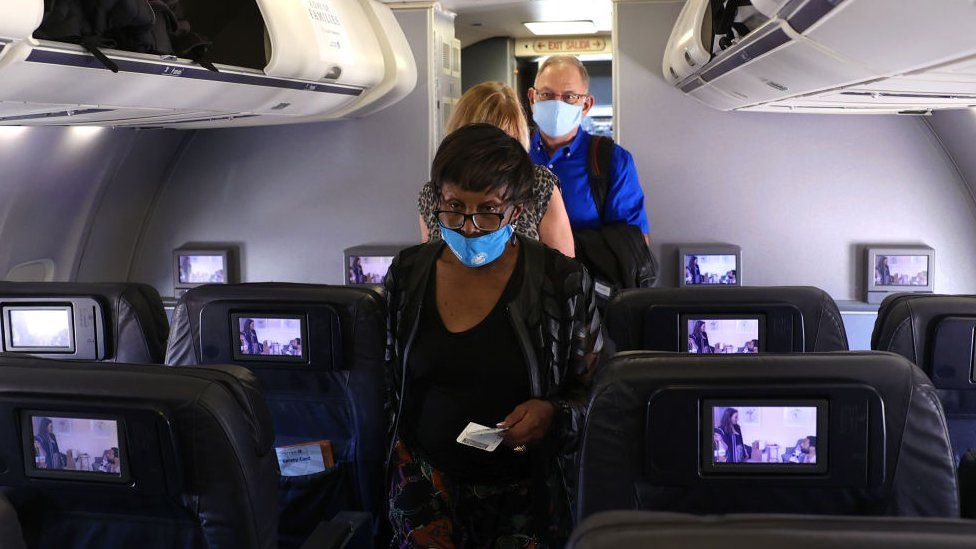
Whilst Mr Kirby is pleased about the influence he's been able to have over his staff there is frustration about the lack of a single global system for recognising the Covid vaccine and test status of passengers.
"It's really complicated, and I don't blame governments", says Mr Kirby. He points out that "there's different vaccines in different parts of the world, every country has their own regulatory apparatus".
Getty Images
"I've never thought that we would get to a world where we had a single system that applied broadly, it'd be great if we could, just it was always impractical".
So far the pandemic has led to losses of more than $8.7bn at United. Passenger numbers of 38.6m in the first six months of this year point to recovering demand. That is slightly higher than the same time last year, but is only 48.8% of pre-covid levels, when United was the world's fourth biggest airline.
The company had been predicting that autumn would bring a return to profitability, but "the Delta variant caused a setback", says Mr Kirby. He says that the forthcoming easing of travel restrictions that will essentially reopen transatlantic travel "is really important for us".
The hope is that the airline will reach "at least a breakeven [point] at the start of the next year, particularly as we get vaccination rates up, and as Delta variant cases start to come down".
Getty Images
Industry losing billions
"Widespread vaccine rollout is crucial to the recovery of the global aviation industry", says the independent aviation consultant Andrew Charlton. Last year, passenger numbers fell 60% to 1.8 billion and the industry lost $126bn, according to IATA, which said it was the worst year on record. Further big losses are forecast for this year.
"United, like the other big American carriers, have generally coped pretty well with the pandemic" says Mr Charlton. He explains this is because "around 75% of their operations are domestic travel which hasn't been disrupted as badly as international flights. Assuming there are no more big shocks that has given them financial resilience to reshape and resize themselves for after the pandemic".
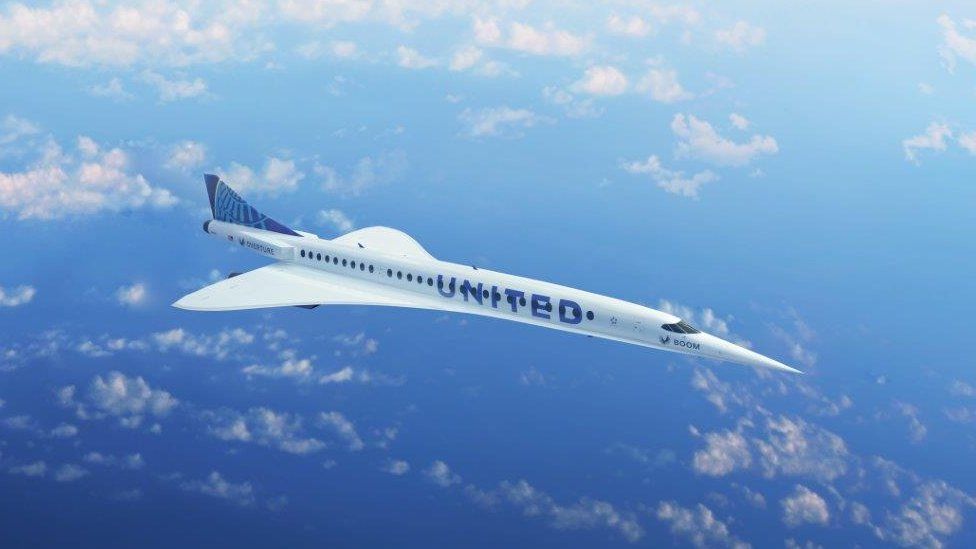
Despite getting more than $10bn of support from the US government to get through the pandemic, much of which has been repaid with private borrowing, the airline is still investing heavily in the future. As well as ordering 270 new aircraft it is planning to launch supersonic flights in 2029, they would be the first commercial flights that are quicker than the speed of sound since Concorde retired in 2003.
FG/Bauer-Griffin/Getty Images
Investing in speed
The planes are being made by Boom Supersonic and are expected to reach speeds of 1,122mph (1,805km/h). Going that fast requires more fuel than conventional aeroplanes, which has led to criticism about their environmental impact.
Mr Kirby says "it's been important that we've worked with Boom Supersonic to develop these aeroplanes in a sustainable way. This will be the first aeroplane, the first aircraft engines ever designed from scratch to run on 100% sustainable aviation fuel".
Mr Kirby is adamant that there is a need to travel so quickly. "It's much more productive for you as a business traveller or even as a leisure traveller to get there faster".
But it is business travellers that the airline has in mind for the $200m aircraft. When it comes to the economics, Mr Kirby says "an all-business class aeroplane at the kinds of business class fares that we charge today is profitable".
He is resolute that business travel will return in the pandemic despite the rise of video calls. "Business travel is about human relationships. It's not about the transaction".
"I think zoom and technology like this is going to replace phone calls. But it is not going to replace the need to be there in person".
Leisure travel will also recover says Mr Kirby, but he agrees with a recent Boeing forecast that it will take until 2024 for global aviation to fully recover from the pandemic.
He predicts domestic US travel, the majority of his business, will lead the way. "Certainly by 2023, probably by the end of next year, we're back to normal travel between the US and Europe". But, he adds "there are parts of the globe that are going to take longer".
You can watch Scott Kirby's full interview on "Talking Business with Aaron Heslehurst" this weekend on BBC World News at Saturday 23:30 GMT, Sunday 05:30 and 16:30 GMT, Monday 07:30 GMT and 16:30 GMT and Thursday at 07:30 GMT.
The temporary visa scheme was announced last week as panic buying hit filling stations across the UK, with a shortage of HGV drivers having affected supplies of petrol and diesel.
As well as foreign drivers, 5,500 poultry workers will also be allowed in to help keep supermarket shelves stocked with turkeys before Christmas.
But it added that the visas will not be a long-term solution and it wants to see employers make investments in the UK domestic workforce instead of relying on overseas labour.
It said it is also working with industry to find long-term solutions to the shortage of HGV drivers and to encourage more people to enter the logistics by improving pay and conditions.
Business Secretary Kwasi Kwarteng said: “Thanks to the immense efforts of industry over the past week, we are seeing continued signs that the situation at the pumps is slowly improving.
“UK forecourt stock levels are trending up, deliveries of fuel to forecourts are above normal levels, and fuel demand is stabilising.
“It’s important to stress there is no national shortage of fuel in the UK, and people should continue to buy fuel as normal. The sooner we return to our normal buying habits, the sooner we can return to normal.”
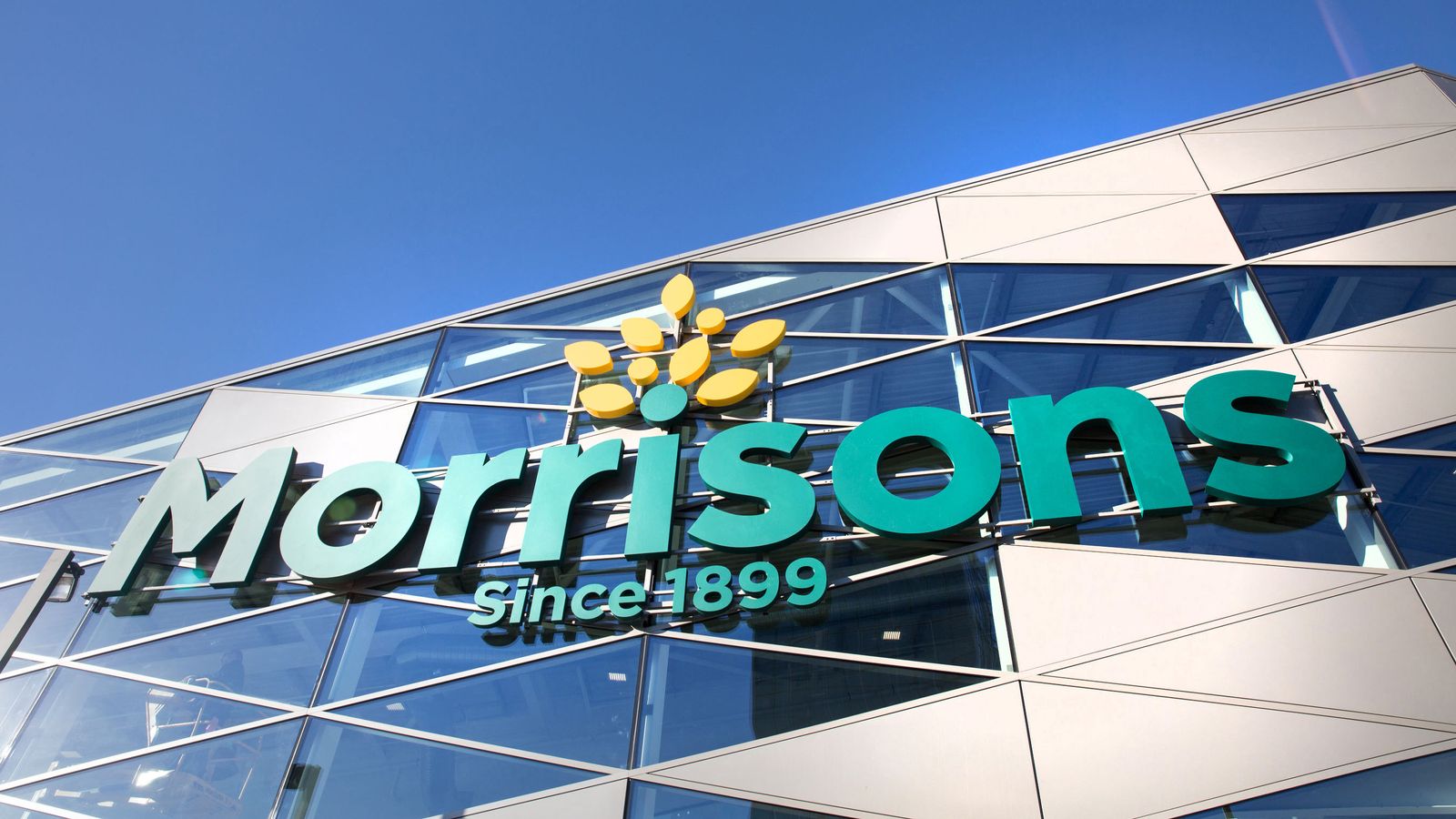
A US private equity firm has won the auction for British supermarket group Morrisons with a £7bn bid.
Clayton, Dubilier & Rice (CD&R) bid 287 pence per share.
Morrisons is Britain's fourth-biggest supermarket by market share, after market leader Tesco, Sainsbury's and Asda.
Based in Bradford, the business began as an egg and butter merchant in 1899.
The battle for Morrisons is the most high-profile among a spate of bids for British companies this year, reflecting private equity's appetite for cash-generating assets.
Advertisement
The Takeover Panel, which governs the process for M&A deals in Britain, moved to an auction because neither bidder had declared their offers final.
The panel said the US firm outbid a consortium led by the Softbank owned Fortress Investment Group, which had offered 286 pence.
More from Business
Morrisons' board, due to meet later, is now expected to recommend that shareholders accept the new offer at their meeting on 19 October.
If shareholders approve the offer, CD&R could complete its takeover of Morrisons by the end of the month.
CD&R's bid team is spearheaded by former Tesco chief executive Sir Terry Leahy.
Last month, Morrisons reported a 43% slump in half-year profits after COVID-19 costs took their toll and warned of price rises and product shortages amid current strains on supply chains.
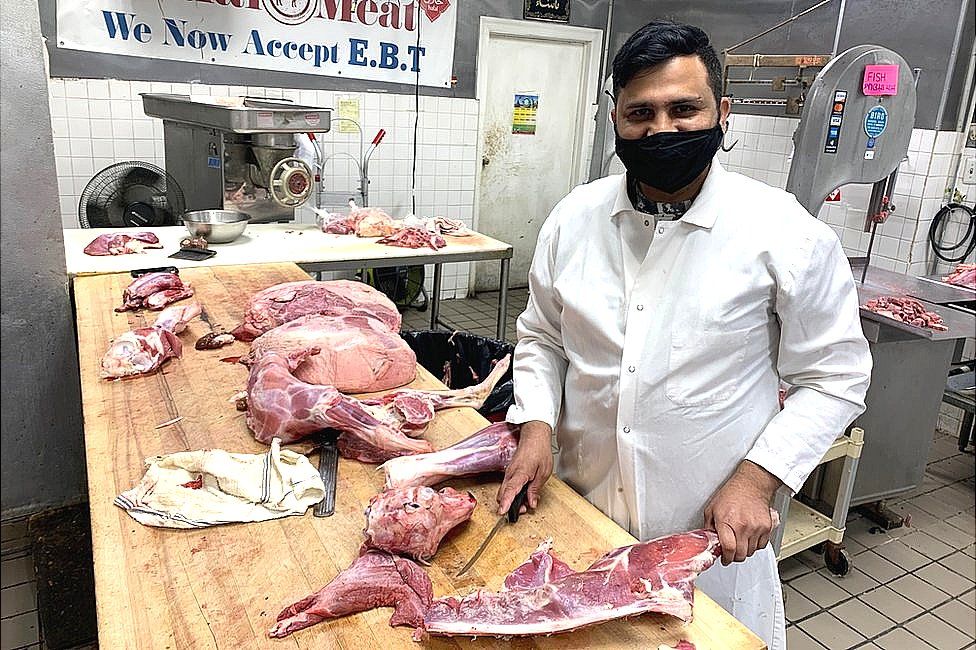
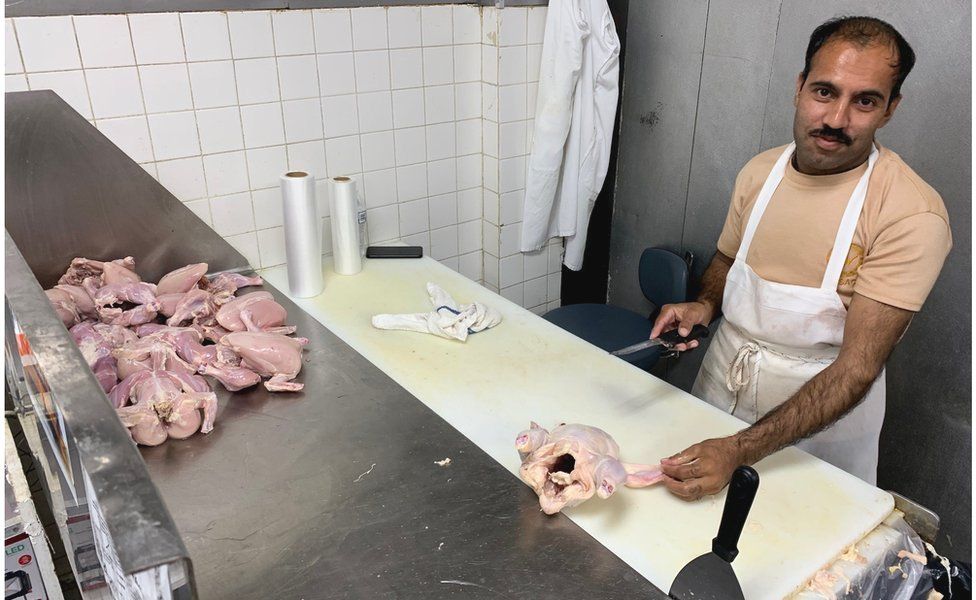
It is a typically bustling day in "Little India", a part of Queens in New York City that many South Asian immigrants call home. But things are much quieter at the Al Noor Meat Market, a local halal butchers on 73rd Street.
It's not Covid keeping shoppers away, but the price of meat, which has risen sharply across the US lately.
Shakeel Anjum, 36, a butcher at the shop, says the wholesale cost of goat meat has climbed from around $8 to $10 a pound, while beef is up from $5 to $6.
"When meat is expensive, people eat less," he says, adding that the shop has put up its own prices to cope. "Business is very slow."
According to his co-worker Raza Jawed, 50, it's big suppliers that are to blame. "They have come together and put up their prices," he says. "We can't do anything, they have all the power."
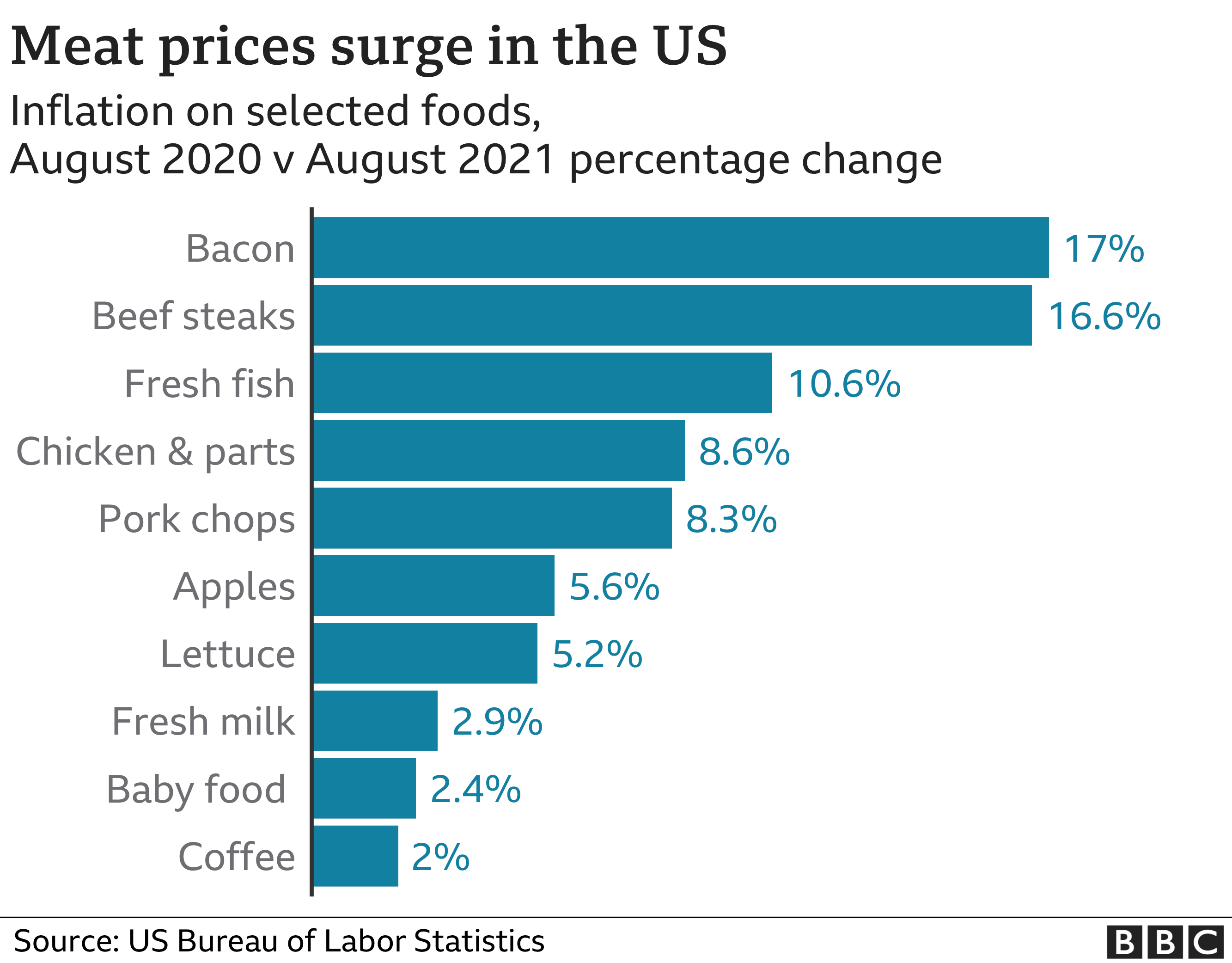
From cars to clothing, the cost of living has jumped for US consumers since the economy reopened. Yet average meat prices have risen unusually sharply, with beef up 14% since December 2020, pork by 12.1% and poultry 6.6%.
Consumers are increasingly concerned about rising grocery bills, and the White House has vowed to act. Part of the problem, it says, is a that a few big meat processing companies dominate US supply, allowing them to charge what they like.
In an executive order in July, the president pledged $500m in federal loans and grants to help new meat processors enter the market and compete with the big players, in an attempt to bring down prices.
The administration is investigating "price-fixing" in the chicken-processing industry (which has already led to a $107m fine for Pilgrim's Pride, a Colorado based supplier). And it plans to tighten the laws governing competition in the meat industry.
Yet the major processors say the administration is "scapegoating" them and has misunderstood the "fundamentals" of the market.
What's the beef about?
Concern about meat prices is nothing new in America. In 1921, President Woodrow Wilson passed the Packers and Stockyards Act (which is still in force today) to rein in big meat processors who were similarly reported to be controlling prices.
And in 1973 President Richard Nixon imposed ceilings on the price of beef, pork and lamb as the cost of living soared.
These moves had limited success, and since the 1980s the meat processing industry has become highly consolidated as regulators have struggled to keep up with a fast-changing industry.
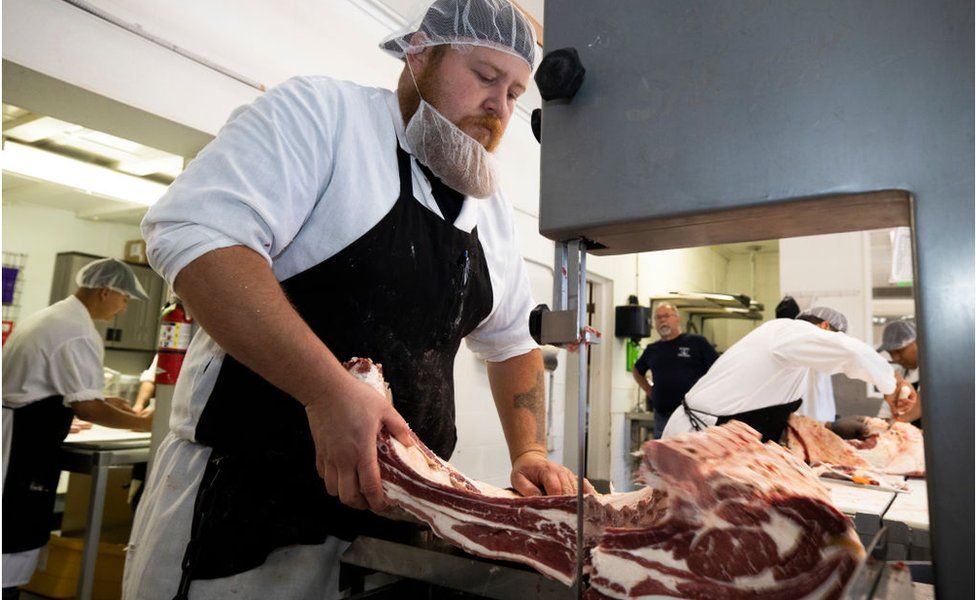
Just four giants - JBS, Cargill Meat Solutions, Tyson Foods, and National Beef Packing Co - control between 55% and 85% of the market, depending on the meat. In the 1970s and 80s, the four largest packing firms controlled just 25-35%.
The White House says this gives them too much power, not just over what they charge retailers and restaurants, but also over what they pay farmers for livestock.
It has come to a head during the pandemic, as consumer demand for meat hit record levels due to people stockpiling or splashing out. Wholesale meat prices jumped and livestock or poultry prices fell, leaving some farmers unable to make a profit.
Meanwhile, the biggest processors have seen record, or near record, profits and margins, leading the White House to accuse them of "pandemic profiteering".
"Since the 1980s we've had concentration without oversight [in the processing industry] and that is a problem," says Joshua Specht, an environmental historian at Notre Dame University in Indiana. "The meatpackers are capturing more and more of the US food dollar."
"Americans are experiencing firsthand what the Secretary refuses to acknowledge, the effects of COVID and lack of labor are hurting consumers, and nothing proposed by @SecVilsack on the structure of the meat and poultry industry will help families struggling to pay for groceries"
The industry adamantly denies the claims, saying the price rises are not due to consolidation. Instead it blames pandemic-related supply chain issues, including an "acute" labour shortage which led to plant closures last year.
"Multiple, unprecedented market shocks, including a global pandemic and severe weather conditions, led to an unexpected and drastic drop in meat processors' abilities to operate at full capacity," Tyson Foods said in a statement last month.
"This led to an oversupply of live cattle and an undersupply of beef, while demand for beef products was at an all-time high. So, as a result, the price for cattle fell, while the price for beef rose. Today, prices paid to cattle producers are rising."
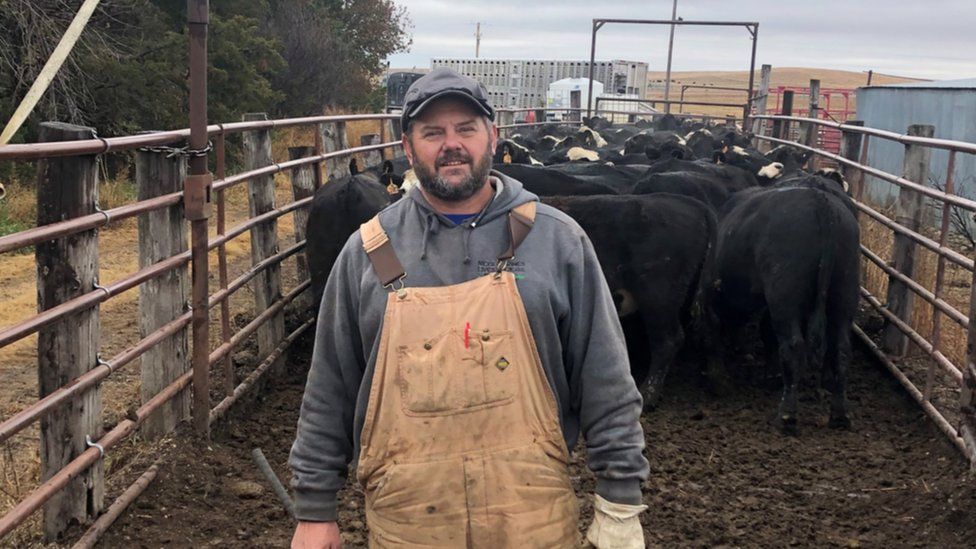
Brett Kenzy
Ranchers like Brett Kenzy are unconvinced. He thinks there are simply not enough processing firms out there to buy his cattle, sometimes forcing him to accept the one and only bid he gets. Like others, he also suspects the "Big Meat" industry intentionally tries to keep it that way - claims the processors deny.
The farmer, who rears over 3,000 cattle in South Dakota, welcomes the Biden administration's plans to make the sector more competitive. He says the trend for "cheap cattle and expensive beef" has been hurting his ranch since 2015.
"It's been really hard," he says. "We've seen some blips of profitability in recent years but some huge losses. We're just about treading water."
Like others, the 49-year-old has thought about selling up, but a certain stubbornness stops him. The ranch has been in his family for four generations and he wants to pass it on to his kids.
"I have to remain hopeful we can find a solution," he says.
R-Calf USA, a group that represents independent cattle farmers, is now suing the big four meat processors, accusing them of conspiring to suppress cattle prices to boost their profits. Tyson called the claims "baseless" while Cargill said they "lacked merit".
R-Calf USA says pricing problems are hastening the closure of cattle farms across the US, around 17,000 of which shut each year because they aren't profitable enough.
"It is hollowing out our rural communities and making it hard to recover from Covid," says chief executive Bill Bullford.
Getty Images
Will Biden's plans work?
The Biden administration is moving forward with its plans. In September, it said it would give $1.4bn of additional aid to small producers, processors, distributors, farmers markets, seafood processors and food and farm workers affected by Covid or extreme weather, to make the US food supply chain more resilient.
It has also begun working with Congress to improve transparency around cattle prices.
Yet some commentators doubt the plans will work, warning that smaller meat processors will never be able to compete with giants who can outspend them. The $500m to bankroll new market entrants is also unlikely to go far without further private investment.
Glynn Tonsor, an agricultural economist at Kansas State University, adds that "multiple things" affect meat prices over time, not just consolidation. He expects current high prices to come down gradually by themselves.
Yet Josh Specht welcomes the administration's intervention, saying it is seeking "a new approach" to an age-old problem.
"Ranchers have been complaining about this for 100 years, and now consumers are being hit, which has pushed it up the political agenda.
"The administration is trying to change an enormously powerful industry and an enormously important part of the US economy and it's going to take time."
Mr Kenzy also thinks the administration is on the right track - he just hopes it follows through.
"If we don't confront the consolidated power of the meat packers, no-one will be able to compete. We either have to mandate a minimum level of competition, or we go ahead and exercise our rights under anti-trust laws.