Kamis, 30 September 2021

Covid-19: UK furlough scheme ends but impact on NI workers unclear - BBC News

Bartender serving drinks
PACEMAKER

The UK's furlough scheme ends on Thursday but the impact on Northern Ireland workers is unclear.

The most recent official figures show that at the end of July, 36,000 people in Northern Ireland were still using the scheme.

The number has likely come down since then.

Furloughed workers will either retain a job with their employer, find new work, start claiming universal credit or leave the labour force.

The furlough scheme involved the government helping to pay the wages of people who could not work due to the coronavirus pandemic.

Last week, Stormont's Finance Minister Conor Murphy wrote to the chancellor urging him to extend the scheme beyond the end of September to help support businesses and workers.

The Sinn Féin minister said: "The approach taken by the British government is in contrast to the Irish government which is keeping its Employment Wage Subsidy Scheme in place until at least the end of December.

"This disparity of wage support across the island of Ireland could particularly impact businesses operating in border counties, especially in our hospitality and retail sectors who still continue to rely on these jobs support schemes, north and south."

Roger Pollen of the Federation of Small Businesses said the furlough scheme had been "a really effective tool for managing an extraordinary situation".

"The good thing is at least this scheme is coming to an end at a time when there are a lot of jobs available in the economy - that is probably unusual but is very welcome," he told BBC Radio Foyle.

But large parts of the economy remain under intense pressure, including the hospitality sector, he said.

Many businesses, he added, are concerned by the prospect of any further form of lockdown.

"I think many businesses are concerned by the noises coming from the executive because there is a complete lack of clarity as to what they are expecting for business," he said.

Damian Murphy, from the Association of NI Travel Agents, which represent about 700 people in the sector, said further support is needed for travel agencies.

"We're not in a position where we need all our staff back, nor are a lot of our agencies in a position where they can afford to make staff redundant," he told the BBC's Good Morning Ulster programme.

"A lot of people are in discussions about bringing staff back on reduced hours, delaying their comeback or even unpaid leave in some cases."

Mr Murphy said problems for travel agents are likely to persist until the end of the year.

Of the 36,000 people on furlough at the end of July, about half were on flexible furlough meaning they were able to work some of the time.

The largest number (6,400) of furloughed workers at that time was in the retail sector (6,400), followed by hospitality (5,500).
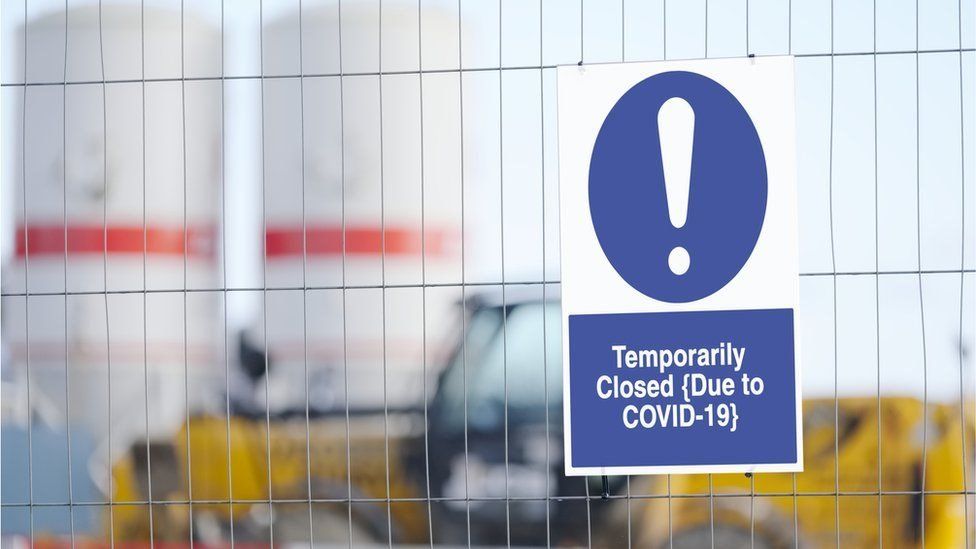
Covid-19 closure sign
Getty Images

The scheme was introduced in the spring of 2020 to stop people from being laid off by their employers during the lockdown.

The government paid 80% of the wages of people who could not work or whose employers could no longer afford to pay them - up to a monthly limit of £2,500.

In July, the government reduced its contribution to 70% of wages with employers paying 10%.

In August and September, the government contribution was 60% with the employer proportion rising to 20%.

The jobs market recovery has reduced fears that the end of the scheme will not lead to large scale job losses.

Company payrolls in Northern Ireland continued to increase even as the scheme began to taper and the number of redundancies being notified to the Department for the Economy has been low in recent months.

line

'No furlough, no money'

Seaneen Monaghan

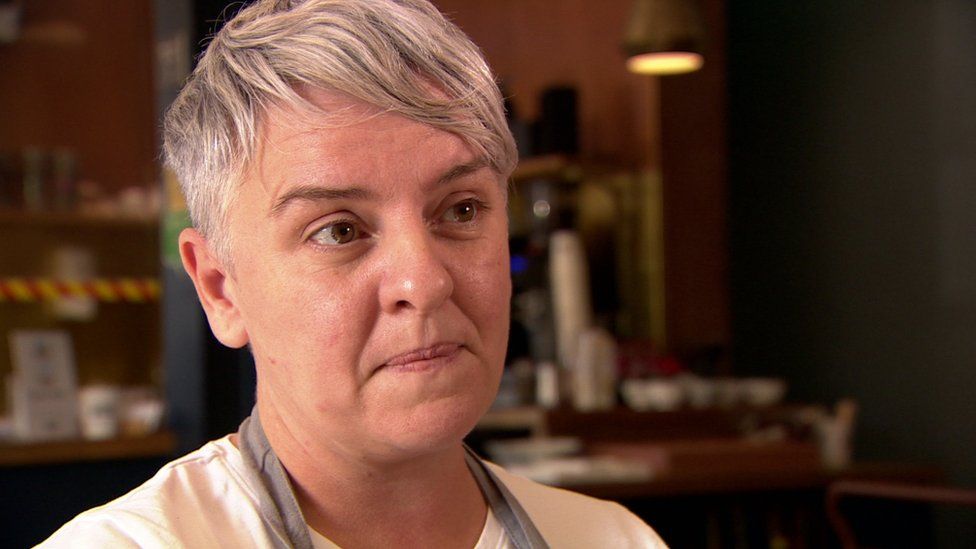
When the first Covid-19 lockdown descended 18 months ago, caterer Seaneen Monaghan was in the same boat as so many thousands of others - left to anxiously wonder about what may happen to her and her family at a time when neither she nor her husband could go to work.

"You didn't know where you stood at the time," she said.

"My husband and I, being in the same industry, we didn't know what we were going to do."

So when the furlough scheme was announced, it was a "blessing".

She said that "80% of our wage was better than not getting anything at all.

"We still had to cut back and we missed that extra 20% but we got there in the end."

For Mrs Monaghan's employers, the furlough scheme meant some certainty during some of the most unpredictable weeks of the pandemic.

But she remains concerned about what could yet come without the scheme.

"If there was another lockdown, this industry would be the first one to close - and if there's no furlough scheme, there's no money."

line

'Furlough was a godsend'

Diane Hill

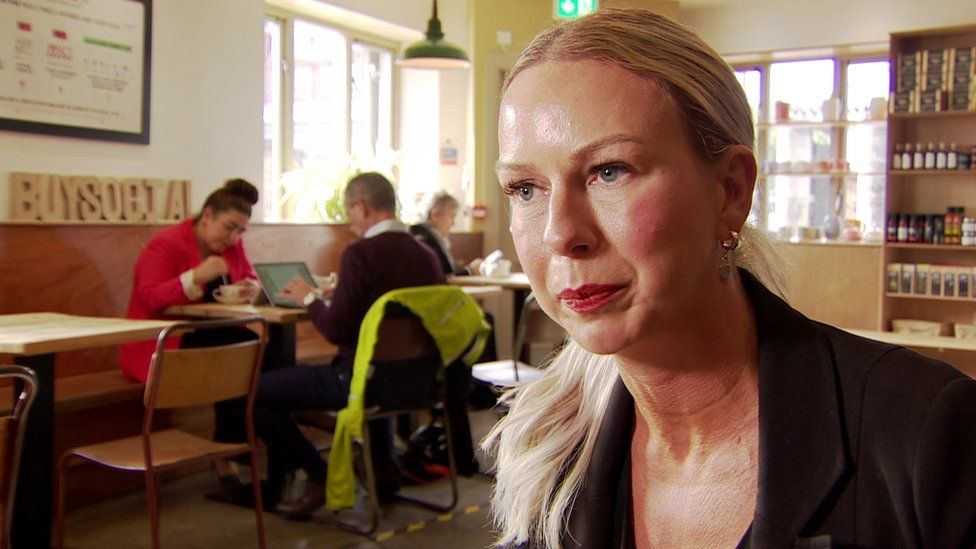
For Diane Hill, who is director of business and organisation development at Now Group, which runs Loaf Catering, "furlough was a godsend for us".

"And then when we went to being able to bring people back but were were changing our business - doing outside catering, home deliveries - we couldn't project how that business would be," she said.

"So having flexi-furlough so that we could bring people back and give them assurances that we would continue and give them an income from ourselves, as well as being able to flex around their personal lives - it's the reason we're still here today."

Adblock test (Why?)


https://news.google.com/__i/rss/rd/articles/CBMiN2h0dHBzOi8vd3d3LmJiYy5jby51ay9uZXdzL3VrLW5vcnRoZXJuLWlyZWxhbmQtNTg3MjYyOTjSATtodHRwczovL3d3dy5iYmMuY28udWsvbmV3cy91ay1ub3J0aGVybi1pcmVsYW5kLTU4NzI2Mjk4LmFtcA?oc=5

2021-09-30 08:24:51Z
52781910163614

Covid-19: UK furlough scheme ends but impact on NI workers unclear - BBC News

Bartender serving drinks
PACEMAKER

The UK's furlough scheme ends on Thursday but the impact on Northern Ireland workers is unclear.

The most recent official figures show that at the end of July, 36,000 people in Northern Ireland were still using the scheme.

The number has likely come down since then.

Furloughed workers will either retain a job with their employer, find new work, start claiming universal credit or leave the labour force.

The furlough scheme involved the government helping to pay the wages of people who could not work due to the coronavirus pandemic.

Last week, Stormont's Finance Minister Conor Murphy wrote to the chancellor urging him to extend the scheme beyond the end of September to help support businesses and workers.

The Sinn Féin minister said: "The approach taken by the British government is in contrast to the Irish government which is keeping its Employment Wage Subsidy Scheme in place until at least the end of December.

"This disparity of wage support across the island of Ireland could particularly impact businesses operating in border counties, especially in our hospitality and retail sectors who still continue to rely on these jobs support schemes, north and south."

Damian Murphy, from the Association of NI Travel Agents, which represent about 700 people in the sector, said further support is needed for travel agencies.

"We're not in a position where we need all our staff back, nor are a lot of our agencies in a position where they can afford to make staff redundant," he told the BBC's Good Morning Ulster programme.

"A lot of people are in discussions about bringing staff back on reduced hours, delaying their comeback or even unpaid leave in some cases."

Mr Murphy said problems for travel agents are likely to persist until the end of the year.

Of the 36,000 people on furlough at the end of July, about half were on flexible furlough meaning they were able to work some of the time.

The largest number (6,400) of furloughed workers at that time was in the retail sector (6,400), followed by hospitality (5,500).

Covid-19 closure sign
Getty Images

The scheme was introduced in the spring of 2020 to stop people from being laid off by their employers during the lockdown.

The government paid 80% of the wages of people who could not work or whose employers could no longer afford to pay them - up to a monthly limit of £2,500.

In July, the government reduced its contribution to 70% of wages with employers paying 10%.

In August and September, the government contribution was 60% with the employer proportion rising to 20%.

The jobs market recovery has reduced fears that the end of the scheme will not lead to large scale job losses.

Company payrolls in Northern Ireland continued to increase even as the scheme began to taper and the number of redundancies being notified to the Department for the Economy has been low in recent months.

line

'No furlough, no money'

Seaneen Monaghan

When the first Covid-19 lockdown descended 18 months ago, caterer Seaneen Monaghan was in the same boat as so many thousands of others - left to anxiously wonder about what may happen to her and her family at a time when neither she nor her husband could go to work.

"You didn't know where you stood at the time," she said.

"My husband and I, being in the same industry, we didn't know what we were going to do."

So when the furlough scheme was announced, it was a "blessing".

She said that "80% of our wage was better than not getting anything at all.

"We still had to cut back and we missed that extra 20% but we got there in the end."

For Mrs Monaghan's employers, the furlough scheme meant some certainty during some of the most unpredictable weeks of the pandemic.

But she remains concerned about what could yet come without the scheme.

"If there was another lockdown, this industry would be the first one to close - and if there's no furlough scheme, there's no money."

line

'Furlough was a godsend'

Diane Hill

For Diane Hill, who is director of business and organisation development at Now Group, which runs Loaf Catering, "furlough was a godsend for us".

"And then when we went to being able to bring people back but were were changing our business - doing outside catering, home deliveries - we couldn't project how that business would be," she said.

"So having flexi-furlough so that we could bring people back and give them assurances that we would continue and give them an income from ourselves, as well as being able to flex around their personal lives - it's the reason we're still here today."

Adblock test (Why?)


https://news.google.com/__i/rss/rd/articles/CBMiN2h0dHBzOi8vd3d3LmJiYy5jby51ay9uZXdzL3VrLW5vcnRoZXJuLWlyZWxhbmQtNTg3MjYyOTjSATtodHRwczovL3d3dy5iYmMuY28udWsvbmV3cy91ay1ub3J0aGVybi1pcmVsYW5kLTU4NzI2Mjk4LmFtcA?oc=5

2021-09-30 05:32:07Z
52781910163614

UK economy's coronavirus collapse no longer measured as worst in 300 years - Sky News

The UK economy is no longer believed to have suffered its biggest contraction in three centuries last year, according to revised official figures.

Gross domestic product (GDP) shrank by 9.7% last year, the Office for National Statistics (ONS) said, a change from the previous estimate of 9.8%.

The contraction, caused by the impact of the coronavirus pandemic crushing economic activity, has been described as the worst since the great frost of 1709.

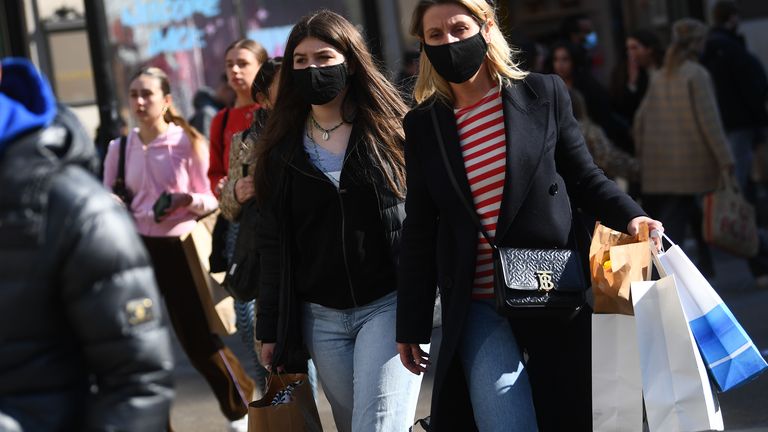
Shoppers on Regents Street, London, as England takes another step back towards normality with the further easing of lockdown restrictions. Picture date: Monday April 12, 2021.
Image: The second quarter of this year saw a spending splurge

But the latest figures put the 2020 collapse, to two decimal places, at 9.69%, just shy of the 9.71% plunge in 1921.

It means the annual GDP fall caused by the pandemic was the worst in 99 years - not 311.

The ONS said the revisions were the result of improvements to sources and methods including better data on the financial sector and removing some of the effects caused by price changes.

The revised figures also showed that the UK economy grew more strongly than previously thought in the second quarter of this year as consumers curbed their savings to fuel a spending splurge.

More from Business

GDP increased by 5.5% in the April-June period, according to the ONS, which had initially estimated growth of 4.8%.

It means that by the middle of this year, Britain was closer than previously thought to recovering the ground lost as a result of the coronavirus crisis.

Please use Chrome browser for a more accessible video player

Government has a week to save Christmas

The ONS now thinks that by the second quarter, GDP was 3.3% below where it was at the end of 2019, having initially estimated a 4.4% shortfall.

More recent figures suggest that the recovery has since experienced a sharp slowdown after supply chain issues such as a lack of 100,000 HGV drivers and global chip shortages, as well as the "pingdemic" forcing workers to isolate, took their toll.

With inflation pressures also building - as oil and natural gas prices climb - at the same time, Bank of England governor Andrew Bailey has warned the recovery is facing "hard yards" ahead.

But the second quarter was boosted by a 7.9% rebound in household spending after the economy reopened in the spring, which represented four percentage points out of the 5.5% growth figure.

The household saving ratio fell sharply to 11.7%, down from 18.4% in the first quarter, which was the second highest on record.

Among the industries to gain from the spending spree were the hotel and restaurant sector, up 87.6%, and the wholesale and retail trade, up 13.1%, while hairdressing saw a rise of 20.4%.

The ONS said the increases reflected the reopening of the economy as well as the economic boost from the Euro 2020 football tournament.

Ruth Gregory, senior UK economist at Capital Economics, said: "Overall, while the upward revisions to GDP are clearly welcome, Q2 was three months ago, and the recovery appears to have stagnated since.

"Even so, given that there is now thought to be less spare capacity in the economy that will only encourage the Bank of England to hike rates in the not too distant future."

Adblock test (Why?)


https://news.google.com/__i/rss/rd/articles/CBMiZmh0dHBzOi8vbmV3cy5za3kuY29tL3N0b3J5L3VrLWVjb25vbXktZ3Jldy1iZXR0ZXItdGhhbi1wcmV2aW91c2x5LXRob3VnaHQtb3Zlci10aGUtc3ByaW5nLW9ucy0xMjQyMTc1MtIBamh0dHBzOi8vbmV3cy5za3kuY29tL3N0b3J5L2FtcC91ay1lY29ub215LWdyZXctYmV0dGVyLXRoYW4tcHJldmlvdXNseS10aG91Z2h0LW92ZXItdGhlLXNwcmluZy1vbnMtMTI0MjE3NTI?oc=5

2021-09-30 07:41:15Z
52781911863122

Rabu, 29 September 2021

COVID-19: Warning of redundancies as £70bn furlough scheme ends - Sky News

The government's coronavirus furlough scheme ends today after supporting millions of workers during the pandemic.

Ministers say the wages of more than 11 million jobs were subsidised for at least some of the scheme's duration, at a cost of about £70bn.

There is now uncertainty over the almost one million people still thought to be on the scheme at the end of September, according to Office for National Statistics (ONS) estimates.

Economists say there is likely to be a rise in unemployment due to new redundancies, despite the fact some may be able to find work in recovering sectors such as travel and hospitality.

Job vacancies in the UK have hit a record of more than a million, according to recent ONS data, with openings in the hospitality and transport sectors up more than 75% in three months.

But Samuel Tombs, chief UK economist at Pantheon Macroeconomics, said he still had "doubts" about whether the economy had recovered enough to re-employ all those coming off furlough.

The winding up of the scheme could hit some especially hard as it comes at the same time as the £20 Universal Credit uplift ends, and amid a background of rising energy bills.

More on Covid-19

The Liberal Democrats have warned of a "tidal wave" of job losses and want furlough to continue for some sectors.

Please use Chrome browser for a more accessible video player

'More redundancies' at travel firms as furlough ends - ABTA boss

In a letter to the chancellor, Liberal Democrat Treasury spokesperson Christine Jardine said furlough should be maintained for another six months for 10 industries particularly badly affected by the pandemic, such as air travel.

"The withdrawal of furlough risks having a devastating impact on countless families already facing a winter of soaring energy bills," said Ms Jardine.

"The government needs to rethink its approach or the country could face a Coronavirus Black Thursday."

The party says the extension would cost about £600m.

Chancellor Rishi Sunak is also reportedly set to announce a programme of grants to help poorer households this winter.

The plan could see up to £500m distributed through local authorities, according to Bloomberg.

It would replace the COVID local support grant - which also ends on Thursday after helping people with food and bills during the pandemic.

The Treasury has not yet confirmed the reports.

Adblock test (Why?)


https://news.google.com/__i/rss/rd/articles/CBMiYWh0dHBzOi8vbmV3cy5za3kuY29tL3N0b3J5L2NvdmlkLTE5LXdhcm5pbmctb2YtcmVkdW5kYW5jaWVzLWFzLTcwYm4tZnVybG91Z2gtc2NoZW1lLWVuZHMtMTI0MjE3MDjSAWVodHRwczovL25ld3Muc2t5LmNvbS9zdG9yeS9hbXAvY292aWQtMTktd2FybmluZy1vZi1yZWR1bmRhbmNpZXMtYXMtNzBibi1mdXJsb3VnaC1zY2hlbWUtZW5kcy0xMjQyMTcwOA?oc=5

2021-09-30 03:28:09Z
52781910163614

Changing China: How Beijing's crackdowns are impacting business - BBC News

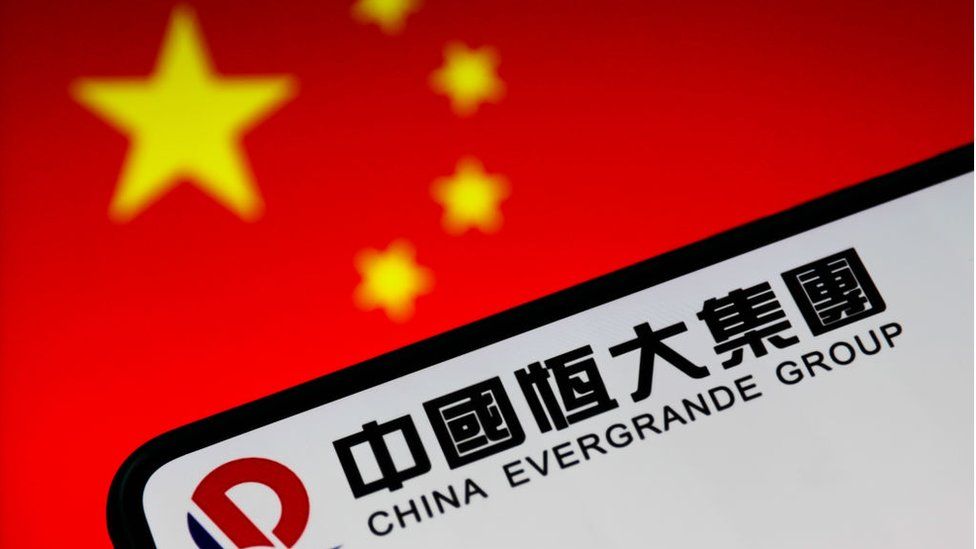
The evergrande logo is seen in front of a Chinese flag
Getty Images

Hardly a day has gone by in recent months without news of a fresh crackdown on one part of the Chinese economy or another.

The slew of announcements of tough new regulations and the stringent enforcement of existing rules have targeted many of the country's biggest companies.

As we explained in the first part of this series on the recent developments in China, these measures are part of President Xi Jinping's centrepiece policy initiative, known as "common prosperity".

The phrase is not a new one in China. It has been around since the 1950s, when it was used by the founding leader of the People's Republic of China Mao Zedong.

The sharp escalation of the term's use in the year that the Chinese Communist Party (CCP) also celebrates its 100th anniversary has been seen as a signal that it is now central to government policy.

Key to the common prosperity policies are Beijing's attempts to narrow the huge wealth gap between the nation's richest and poorest citizens.

It is an issue that some would argue both endangers the rise of the world's second largest economy and poses an existential threat to the CCP.

These latest measures are seen by some as a way to rein in the billionaire owners of some of China's biggest companies to instead give customers and workers more of a say in how firms operate and distribute their earnings.

'Local moves with a global impact'

The ramping up of rhetoric from Beijing in recent months has seen action being taken against a dizzying array of Chinese business interests.

Everything from insurance agents, private tutoring firms, real estate developers and even companies planning to sell shares in the US have come under intense scrutiny.

The technology industry, in particular, has seen a deluge of action against it, including crackdowns on ecommerce firms, online finance services, social media platforms, gaming companies, cloud computing providers, ride-hailing apps and cryptocurrency miners and exchanges.

An advertisement for an English training school
Getty Images

These moves are, of course, having a major impact on both China's economy and society, and effects are also being felt around the world.

The country has long been seen as the factory of the world, as well as a major engine of global economic growth.

Now, the uncertainty around the regulation of businesses in China is making it difficult for companies from overseas to make decisions about potential investments.

Although another way of looking at it is that while there will be some short-term upheaval as the new rules are implemented, the reworked regulatory framework will remove uncertainty in the long-term. Presumably, that's the way the Chinese government views it, at least.

Crushing the mighty Ant

Even before it became fully apparent that Mr Xi was looking to reshape China's economy with his common prosperity policies, Beijing unleashed a shock and awe display of its firepower.

Less than a year ago, Jack Ma, the multi-billionaire founder of Alibaba who was known for his flamboyant appearances at dazzling corporate events, was just about to oversee the world's biggest ever stock market debut.

The initial public offering of Ant Group, Alibaba's financial affiliate and owner of China's largest digital payment platform Alipay, was set to rake in $34.4bn (£25.4bn).

It would have made Mr Ma Asia's richest person, but then he made a controversial speech criticising China's financial system.

Within days of the address the share sale was called off and the once-high-profile Mr Ma was not seen again in public until January the following year.

Jack Ma, founder of China's e-commerce giant Alibaba, dressed as Michael Jackson at a party celebrating the 18th anniversary of Alibaba Group in 2017.
Getty Images

Since then Alibaba has been hit with a record $2.8bn fine after a probe found that it had abused its market position for years. Ant has also announced a drastic restructuring plan for its business.

Whether or not the episode was officially part of the common prosperity initiative we can leave to the historians of the future.

What we can say for sure is that Mr Ma's spectacular fall from grace and the action taken against his vast business empire served as a powerful opening act to the drama that is now reaching into every corner of China's economy.

Teetering tower of debt

China Evergrande Group is another vast company that has found its fate intertwined with common prosperity policies.

Its core business is real estate development but the company also has interests in wealth management, electric cars and food and drink manufacturing. It even owns one of China's biggest football teams - Guangzhou FC.

It is run by a multi-billionaire, Hui Ka Yan, who unlike Jack Ma actually did, briefly, become Asia's richest person - back in 2017, according to Forbes.

In recent weeks the debt crisis engulfing Evergrande has rocked global financial markets.

On its way to becoming one of China's biggest real estate developers it racked up debts of more than $300bn.

Beijing now views heavily-indebted property firms as a threat to the economy, so Evergrande was exactly the sort of company it had in mind when it introduced measures to cut borrowing in the sector.

Now, without enough fresh infusions of borrowed money, the company is struggling to meet the repayments on its existing debts.

Under the common prosperity doctrine, authorities seem more likely to help buyers of Evergrande's properties and the customers of its wealth management business rather than the company itself and its other creditors like bond holders and banks.

This notion was supported just this week when China's central bank, without directly mentioning Evergrande, vowed to protect consumers exposed to the housing market.

That all adds up to a major headache for financial markets as the firm has seen more than 80% wiped off its stock market value in just the last six months.

A boss battle for gaming

When in early August a Chinese state media outlet called online games "spiritual opium" it was viewed as a red flag.

The news sent shares in gaming firms like Tencent and NetEase sharply lower as the industry braced itself for tough new curbs.

To no-one's surprise, later the same month authorities unveiled plans to further clamp down on the country's young gamers and impose tighter regulations on gaming platforms.

Under-18s were told that they would be allowed to play for only an hour on Fridays, weekends and holidays and that gaming would only be allowed between 8pm to 9pm.

A group of teenage Chinese boys playing mobile video game.
Edwin Tan

The new regulations mean that it will be up to the gaming companies to prevent children from breaking the rules, while authorities have said they will increase their scrutiny of the firms to ensure the limits are enforced.

If all of this sounds like the Chinese government must be running out of businesses to hit with new rules, Beijing has signalled that the crackdowns will continue for years to come.

Just last month, it published a new 10-point plan, which runs to the end of 2025, outlining tighter regulation of much of the economy.

What is not yet clear is just how radically these new rules and much stricter enforcement of existing ones will reshape the world's second largest economy.

The outcome of that is likely to have major ramifications for all of us, whether we live in China or not.

This is the second in a three-part series looking at China's changing role in the world.

Part three will explore the global implications of Beijing's transformation of how the country's businesses operate.

Adblock test (Why?)


https://news.google.com/__i/rss/rd/articles/CBMiLGh0dHBzOi8vd3d3LmJiYy5jby51ay9uZXdzL2J1c2luZXNzLTU4NDE3MjM00gEwaHR0cHM6Ly93d3cuYmJjLmNvLnVrL25ld3MvYnVzaW5lc3MtNTg0MTcyMzQuYW1w?oc=5

2021-09-29 23:16:43Z
52781903091142

Customers of collapsed energy firms face 'weekly hit of up to £37' - Sky News

Customers of failed household gas and electricity providers face losing up to £37.40 a week as a rise in the industry price cap coincides with the withdrawal of coronavirus crisis aid, an energy watchdog has warned.

Citizens Advice (CA), which has powers to represent the interests of consumers in the energy market, released the estimate after three more small firms collapsed on Wednesday - all fatally injured by the spike in raw energy costs seen this year as economies have got back in gear following COVID-19 disruption.

A total of 10 energy providers with 1.8 million households on their books have joined the casualty list this month alone as UK wholesale gas costs for delivery next month reach unprecedented levels - up by 520% on the same time last year.

CA said its analysis showed that customers of the five largest failed suppliers were set to pay £6.70 more a week when moved on to the default tariffs of a replacement firm.

That calculation also took in the impact of the price cap hike on such tariffs which is due to rise on Friday by an average £139 annually and £153 for those on pre-payment meters.

The cap shift also coincides with the end of the furlough scheme, which risks tipping current recipients into the ranks of the unemployed, and the £20-a-week Universal Credit uplift.

CA said anyone losing their Warm Home Discount under a new supply contract allocated to them by industry regulator Ofgem could be £17.40 a week worse off in total.

More on Energy

It found that those people also on Universal Credit stood to lose a total of £37.40.

The charity repeated its call for the crisis-era Universal Credit increase to be maintained to help support the worst off amid warnings that surging inflation, driven by higher energy costs and global supply chain disruption, will squeeze consumer spending power even more in the months ahead.

Please use Chrome browser for a more accessible video player

Govt won't bail out failed energy companies

The energy price surge has led to warnings from market experts that the cap is likely to shoot up again next April following the next review due in February.

Dame Clare Moriarty, CA's chief executive, said: "We're particularly worried about those who'll face desperate choices this winter because of the cumulative impact of soaring bills, the planned cut to Universal Credit and inflation.

"The government and Ofgem must guarantee that the Warm Home Discount will be continued for people moving to new energy suppliers.

Please use Chrome browser for a more accessible video player

Your energy bills might shoot up - here's what to do

"People on the lowest incomes should be able to access emergency winter grants so they can stay warm in the cold months ahead."

There have been growing fears reflected on financial markets that the UK's economic recovery from the coronavirus public health emergency risks being hit badly by the web of challenges including the energy price surge and fuel delivery disruption.

It has given rise to the spectre of so-called stagflation - when growth stagnates and prices surge - reflected by a collapse in the value of the pound against the US dollar this week.

While the government has ruled out further extending the Universal Credit uplift as it seeks to make work pay, chancellor Rishi Sunak is coming under growing pressure from Tory benches to provide support to those households most in need of aid in his budget on 27 October.

Adblock test (Why?)


https://news.google.com/__i/rss/rd/articles/CBMiY2h0dHBzOi8vbmV3cy5za3kuY29tL3N0b3J5L2N1c3RvbWVycy1vZi1jb2xsYXBzZWQtZW5lcmd5LWZpcm1zLWZhY2Utd2Vla2x5LWhpdC1vZi11cC10by0zNy0xMjQyMTQxMtIBZ2h0dHBzOi8vbmV3cy5za3kuY29tL3N0b3J5L2FtcC9jdXN0b21lcnMtb2YtY29sbGFwc2VkLWVuZXJneS1maXJtcy1mYWNlLXdlZWtseS1oaXQtb2YtdXAtdG8tMzctMTI0MjE0MTI?oc=5

2021-09-30 00:35:19Z
CBMiY2h0dHBzOi8vbmV3cy5za3kuY29tL3N0b3J5L2N1c3RvbWVycy1vZi1jb2xsYXBzZWQtZW5lcmd5LWZpcm1zLWZhY2Utd2Vla2x5LWhpdC1vZi11cC10by0zNy0xMjQyMTQxMtIBZ2h0dHBzOi8vbmV3cy5za3kuY29tL3N0b3J5L2FtcC9jdXN0b21lcnMtb2YtY29sbGFwc2VkLWVuZXJneS1maXJtcy1mYWNlLXdlZWtseS1oaXQtb2YtdXAtdG8tMzctMTI0MjE0MTI

China power cuts, UK petrol woes: Why is there an energy crunch? - Al Jazeera English

Unprecedented power cuts in Northern China left millions without electricity, ground factories to a halt and sent workers to the hospital with carbon monoxide poisoning after ventilators lost power during a blackout.

“Sorry out of use” signs have become ubiquitous at petrol stations in many parts of the United Kingdom this week, while energy firms fold due to skyrocketing natural gas prices.

Energy prices across Europe are breaking records, too. Meanwhile, United States gas and coal producers are struggling to keep up with demand even before the Northern Hemisphere hits its winter period and heating demands skyrocket.

So what’s behind the global energy crunch? And how much worse could it get?

Here’s what you need to know.

First of all, how did we get here? Is the coronavirus pandemic to blame?

Partly, although analysts say the reasons behind the energy shortages are multifold and many of them predate the COVID-19 crisis.

It’s true that consumer and factory demand for energy has come roaring back after plummeting during the early months of the pandemic, leading to supply chain bottlenecks and production chain pain points.

But why the run on fossil fuels? I thought green energy was the future?

Many investors have pivoted to more renewable energy sources over the past five to 10 years as part of a global push to address climate change.

But the reality is that much of the world still relies on traditional sources of energy such as oil, coal and gas — especially as renewable sources get up and running.

And as they do, that has led to a lack of investment in fossil fuels, which is contributing to the current issues, analysts say.

“Gas, coal, oil, metals, mining — you pick — the old economy is significantly underinvested,” Jeff Currie, global head of commodities research at Goldman Sachs Group, explained in an interview with Bloomberg TV Tuesday. “We call it the revenge of the old economy. Poor returns saw capital redirected away from the old economy to the new economy.”

Does that mean we will see more investment in polluting fossil fuels?

Unclear, but the secretary-general of Organization of the Petroleum Exporting Countries (OPEC) warned that halting new investments in fossil fuel production would be “wrongheaded” as oil demand is expected to climb over the next several years even amid a push toward green energy.

Oil prices are currently hovering near $80 per barrel, a three-year high.

What about coal and gas?

Supply shortages in coal, gas and water have all driven energy prices sky-high in Europe. And China is scrambling to lay its hands on enough coal, driving up the price of the world’s dirtiest fossil fuel.

China uses more coal than the rest of the world combined, according to a guide on Chinese climate policy produced by Columbia University’s SIPA Center on Global Energy Policy. It is also the world’s leading coal producer, but the supply crunch has forced it to ration power and curb factory output.

Yikes. What’s causing the energy crunch in China?

There are several factors at play. Electricity prices are regulated in China, so even though coal prices are at record levels, firms can’t pass on the extra costs to consumers or factories. That means some power firms are losing money — and are hesitant to boost production to meet the current demand.

On Wednesday, China’s National Development and Reform Commission announced it would let firms increase prices to “reasonably reflect changes in demand, supply and costs,” Bloomberg News reported, but it’s unclear how high those prices will be allowed to go.

The Chinese government is also said to be considering hiking electricity prices for factories, people familiar with details of the plan told Bloomberg News.

So are higher prices a good thing?

No surprises here — for energy producers and firms, yes. For consumers, absolutely not.

Take the current petrol crisis in the UK, for example. Prices hit 136.50 British pence ($1.83) on average for a litre of unleaded petrol and 138.78 ($1.86) for a litre of diesel as of Tuesday, according to RAC, an automotive services company that tracks petrol prices across the country.

A sign informs customers that there is no more fuel at a petrol station in Northwich, United Kingdom on Wednesday [File: Jason Cairnduff/Reuters]
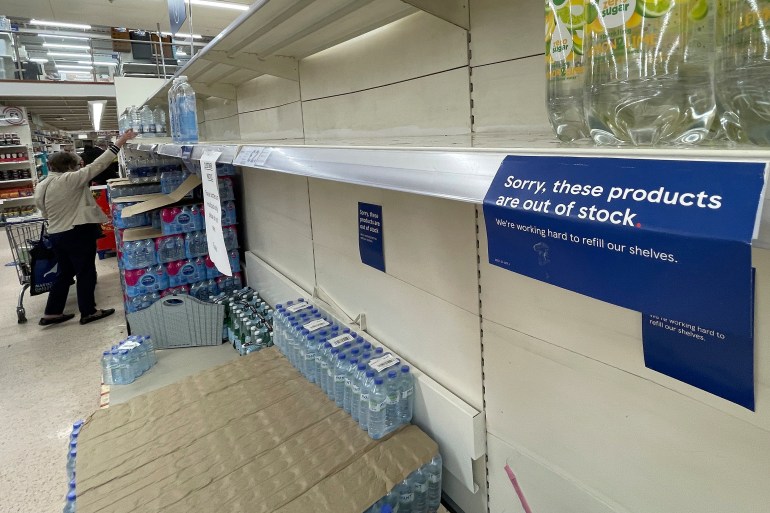
Those prices aren’t far off the record levels hit in April 2012, when a litre of unleaded petrol cost an average of 142.48 pence ($1.91) and diesel hit a record high of 147.93 pence ($1.99).

High prices aren’t the only problem. Motorists have also been lining up to fill their tanks and jerry cans, causing  90 percent of petrol pumps to run dry, the Petrol Retailers Association warned earlier this week. This panic buying is making the crisis worse — but Brexit is also to blame, say analysts.

What does Brexit have to do with it?

One of the reasons fuel isn’t being transported to petrol stations from storage facilities is a lack of lorry drivers. When the UK formally left the European Union, it tightened immigration rules so that EU citizens can no longer work visa-free in Britain.

Many of the nation’s lorry drivers were from other European countries, and a labour shortage has now left firms without the hauliers they need to distribute fuel, as well as a wide range of other goods.

“Undoubtedly, some of this shortage of drivers was caused by Brexit and the pandemic,” Kevin Wright, a lead analyst at Kpler, told Al Jazeera. “Drivers from Eastern Europe, in particular, left the UK in the last two years … The UK government has made it harder for drivers from outside the UK to be employed here.”

Retailers, manufacturers and food suppliers in the United Kingdom have reported disruptions due to a shortage of truck drivers linked to the pandemic and Britain’s departure from the European Union, which has made it harder for many Europeans to work in the UK [File: Frank Augstein/AP Photo]

What is the British government doing in response?

British Prime Minister Boris Johnson said he would issue temporary visas for up to 10,000 foreign lorry drivers, but this won’t solve the crisis — the country has a dearth of about 100,000 drivers currently, and it will take time to train domestic ones. The temporary foreign visas also expire on Christmas Eve of this year, making it very short-term work.

In the meantime, the British government has put members of the military on standby to drive the trucks.

Can’t oil and gas producers — like the US — simply ramp up production?

The US is likely going to face its own natural gas shortage this winter. That’s in part due to a lack of investment during the pandemic and ongoing labour shortages in the US that has made hiring workers in the oil sector more difficult.

In a report released Wednesday by the Dallas Federal Reserve Bank, 51 percent of the executives from oil and gas support service firms it surveyed said they had difficulty hiring workers. Seventy percent said a lack of qualified applicants was to blame, while 39 percent said workers were looking for more pay than they could offer.

Wow. So what happens next?

That remains to be seen. In China, for example, the demand for current coal-fired electricity continues to come up against emissions cuts that the Chinese government has laid out as part of its ambitious goal of going carbon neutral by 2060.

The push-pull — between meeting energy demands now and investing in renewable energy sources that help the planet long-term — is a big part of the current crisis worldwide.

And no matter where you are in the world, high energy prices are a surefire path to disgruntled citizens — so expect governments to take action within their own frameworks to ease the pinch in any way they can.

Adblock test (Why?)


https://news.google.com/__i/rss/rd/articles/CBMiaWh0dHBzOi8vd3d3LmFsamF6ZWVyYS5jb20vZWNvbm9teS8yMDIxLzkvMjkvY2hpbmEtcG93ZXItY3V0cy11ay1wZXRyb2wtd29lcy13aHktaXMtdGhlcmUtYW4tZW5lcmd5LWNydW5jaNIBbWh0dHBzOi8vd3d3LmFsamF6ZWVyYS5jb20vYW1wL2Vjb25vbXkvMjAyMS85LzI5L2NoaW5hLXBvd2VyLWN1dHMtdWstcGV0cm9sLXdvZXMtd2h5LWlzLXRoZXJlLWFuLWVuZXJneS1jcnVuY2g?oc=5

2021-09-29 20:45:09Z
52781900968852