Kamis, 01 Juli 2021

Sir Richard Branson sets 11 July to make spaceflight - BBC News

Richard Branson
Virgin Galactic

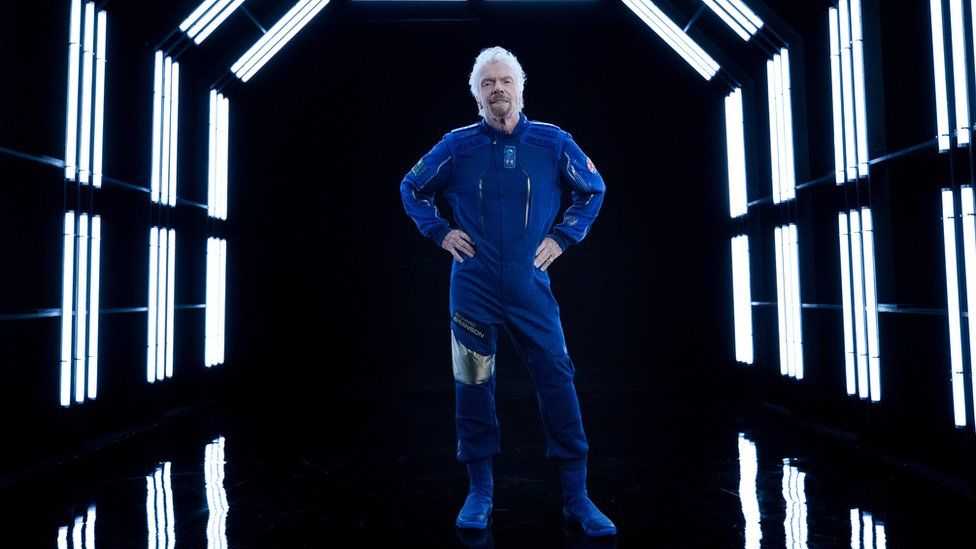
Sir Richard Branson has named the date he'll fly to the edge of space. It will be 11 July, or very soon after.

He'll be a passenger in the back of the Unity rocket plane his Virgin Galactic company has been developing in the US for the better part of two decades.

The vehicle can climb to an altitude of 90km (295,000ft), giving those onboard a few minutes of weightlessness and a view of the curvature of the Earth.

Sir Richard's intention is to introduce a commercial spaceflight service.

Some 600 individuals have already lodged deposits to take the ride.

Witnessing the British entrepreneur do it means those customers are now getting extremely close to having to hand over the full ticket price, which in some cases will be $250,000 (£180,000).

Sir Richard Branson said: "I truly believe that space belongs to all of us. After 17 years of research, engineering and innovation, the new commercial space industry is poised to open the Universe to humankind and change the world for good.

"It's one thing to have a dream of making space more accessible to all; it's another for an incredible team to collectively turn that dream into reality."

Unity spaceship
Mars Scientific

Absolutely key to Virgin Galactic moving forward with its business was the granting last week of a commercial spaceflight licence by the Federal Aviation Administration.

Sunday 11 July is the opening of what's termed a flight "window". The Galactic team will aim to make the ascent on that day, but it could of course be delayed because of unfavourable weather conditions or perhaps a technical issue.

If the mission does indeed go ahead on that Sunday, it would mean Sir Richard stealing a march on his rival in sub-orbital space tourism, fellow billionaire Jeff Bezos.

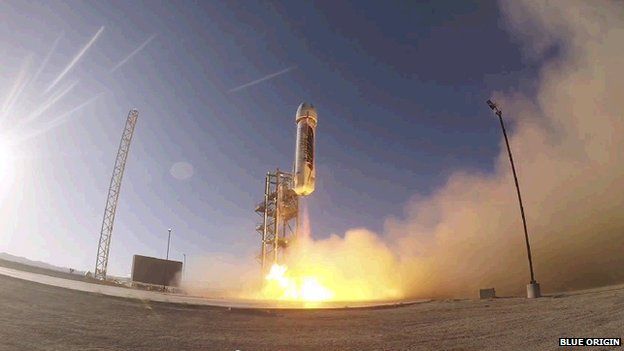
The founder of the online retail empire Amazon.com has sunk a fortune into his hobby of building rockets and has announced his own trip to the edge of space on 20 July.

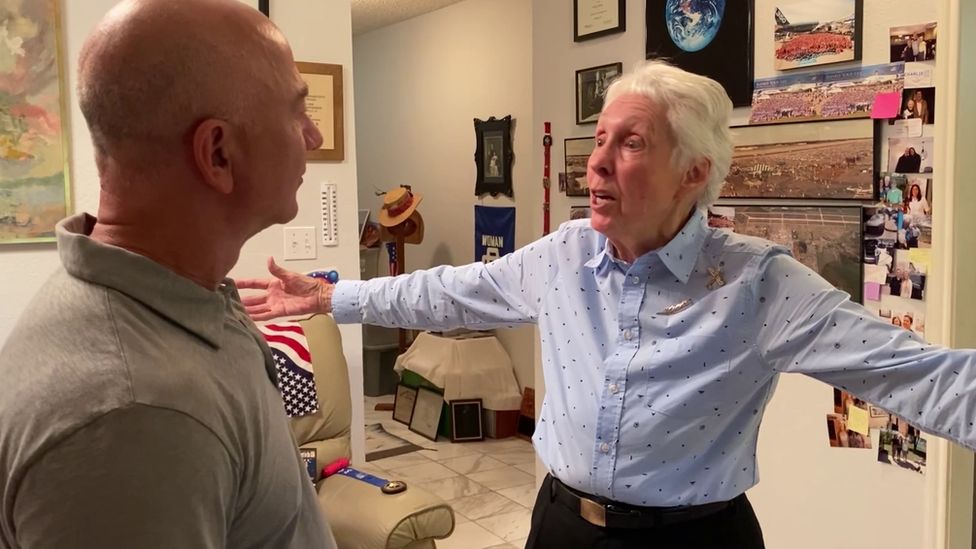
He's invited three individuals to join him in his New Shepard booster and capsule system: his brother Mark; a mystery person who paid $28m (£20m) at auction for a seat; and the famed female aviator Wally Funk.

Eighty-two-year old Funk trained to be an astronaut in the 1960s and will become the oldest ever spacefarer when she rockets to an altitude of 100km with Mr Bezos.

The Amazon man has yet to detail how he'll sell tickets more generally for New Shepard, but this is his plan.
Bezos and Funk
Blue Origin

Sir Richard has clearly moved his first flight up in response to Mr Bezos naming the date for his inaugural mission.

The original schedule for the next Unity flight called for four Virgin Galactic employees to ride as passengers to test the cabin experience for future tourists. Only after that outing was Sir Richard supposed to strap himself in.

He'll now be one of the four testers - alongside Beth Moses, Galactic's chief astronaut instructor; Colin Bennett, lead operations engineer; and Sirisha Bandla, vice president of government affairs.

The two pilots up front will be Dave Mackay and Michael "Sooch" Masucci.

Space tourism is a sector being rekindled after a decade's hiatus.

Throughout the 2000s, seven wealthy individuals paid to visit the International Space Station (ISS). But this adventurism, organised under the patronage of the Russian space agency, ceased in 2009.

Now, new initiatives abound, and some of these will be aiming much higher than the sub-orbital flights from Sir Richard and Jeff Bezos.

California tech entrepreneur Elon Musk has already lined up several private missions in his Dragon capsules. These vehicles reach several hundred km above the Earth and will stay up for days.

The Russians, too, are reprising their commercial flights to the ISS, and there are even those who want to launch private space stations for people to visit. Among these is Axiom, a company started by a former Nasa ISS programme manager.
Lift off
Blue Origin

Adblock test (Why?)


https://news.google.com/__i/rss/rd/articles/CBMiNWh0dHBzOi8vd3d3LmJiYy5jb20vbmV3cy9zY2llbmNlLWVudmlyb25tZW50LTU3Njg5ODU10gE5aHR0cHM6Ly93d3cuYmJjLmNvbS9uZXdzL3NjaWVuY2UtZW52aXJvbm1lbnQtNTc2ODk4NTUuYW1w?oc=5

2021-07-01 22:26:34Z
CBMiNWh0dHBzOi8vd3d3LmJiYy5jb20vbmV3cy9zY2llbmNlLWVudmlyb25tZW50LTU3Njg5ODU10gE5aHR0cHM6Ly93d3cuYmJjLmNvbS9uZXdzL3NjaWVuY2UtZW52aXJvbm1lbnQtNTc2ODk4NTUuYW1w


Lorry driver shortage threatens Haribo sweets - BBC News

Haribo sweets
Reuters

German confectionery giant Haribo has said it is struggling to deliver its sweets to shops in the UK because of a shortage of lorry drivers.

A spokesperson said that like many other manufacturers and retailers, it was "experiencing challenges" that were hampering supplies.

The problems affect all Haribo sweets, including Goldbears and Tangfastics.

The haulage industry has blamed the pandemic and Brexit for thousands of unfilled HGV driver jobs.

Haribo said it was "working with partners across the food and drink industry" to address the problem.

The Road Haulage Association believes there is currently a shortfall of about 60,000 drivers.

It estimates that some 30,000 HGV driving tests did not take place last year because of the Covid pandemic.

The haulage industry is one of a number of sectors having trouble finding suitable staff as the economy reopens, leading some experts to talk of the UK's missing workers.

Kate Shoesmith, deputy chief executive of the Recruitment and Employment Confederation, told the BBC last month that before the pandemic, many lorry drivers in the UK had been nationals of EU countries, particularly Romania and Bulgaria.

They stayed in the UK after the Brexit referendum, but started leaving when coronavirus struck, she said.

"They have either sourced work in their home countries or they feel it's not right to return to the UK, either because of Brexit or the pandemic," Ms Shoesmith added.

The Department for Transport said it was well aware of the shortage, but that progress was being made with regard to HGV driving tests and recruitment.

Adblock test (Why?)


https://news.google.com/__i/rss/rd/articles/CBMiLGh0dHBzOi8vd3d3LmJiYy5jby51ay9uZXdzL2J1c2luZXNzLTU3NjkwNTA10gEwaHR0cHM6Ly93d3cuYmJjLmNvLnVrL25ld3MvYnVzaW5lc3MtNTc2OTA1MDUuYW1w?oc=5

2021-07-01 23:01:04Z
CBMiLGh0dHBzOi8vd3d3LmJiYy5jby51ay9uZXdzL2J1c2luZXNzLTU3NjkwNTA10gEwaHR0cHM6Ly93d3cuYmJjLmNvLnVrL25ld3MvYnVzaW5lc3MtNTc2OTA1MDUuYW1w

Rishi Sunak says financial services deal with EU 'has not happened' - Sky News

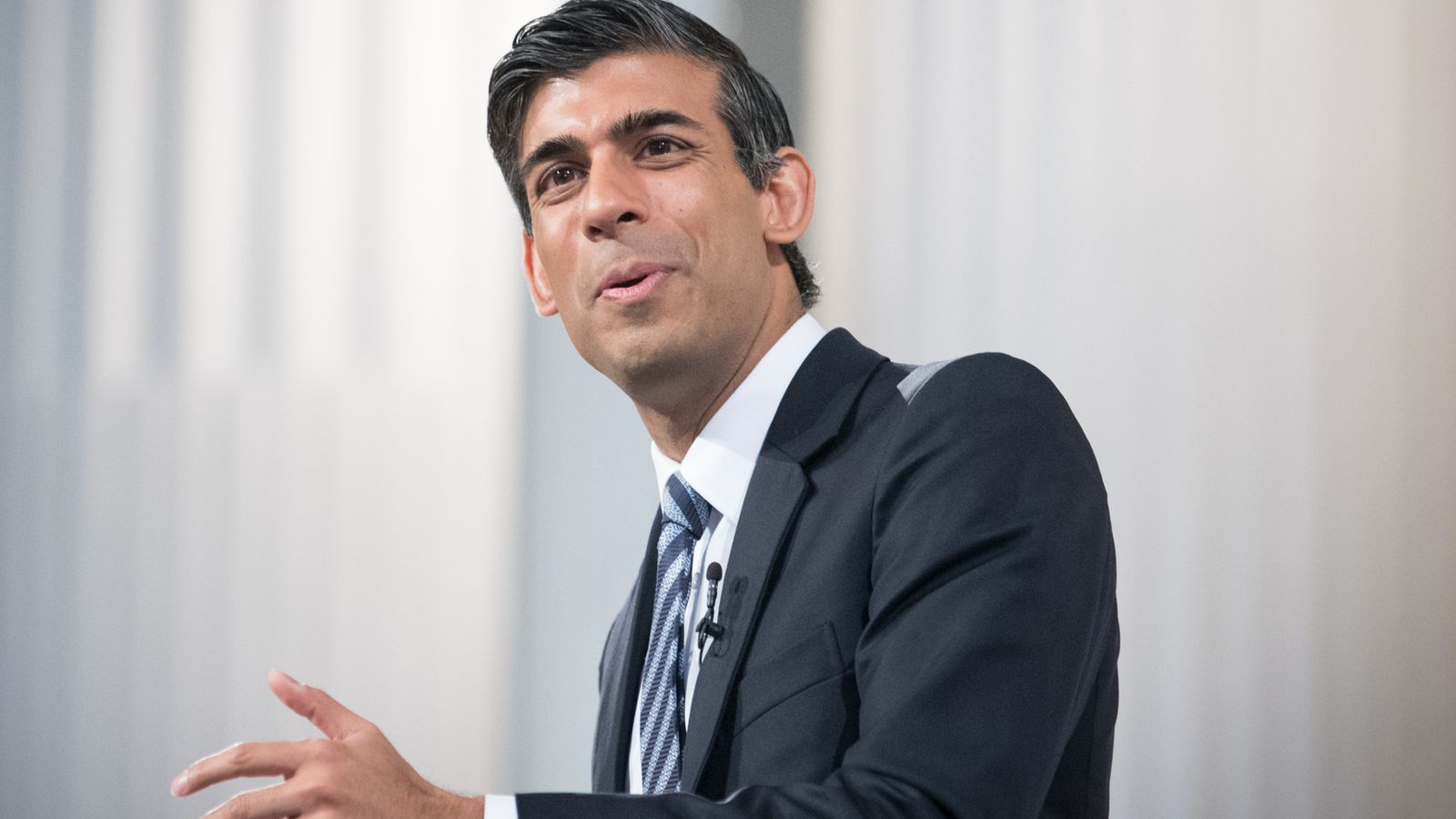
Britain's attempt to reach a post-Brexit financial services deal with the EU "has not happened", Rishi Sunak has told the City.

The sector was not covered in the UK's last-minute free trade agreement when the Brexit transition period ended in December and the government has since been seeking an "equivalence" arrangement with the bloc.

But in the chancellor's traditional Mansion House speech to the City, Mr Sunak said: "That has not happened.

Please use Chrome browser for a more accessible video player

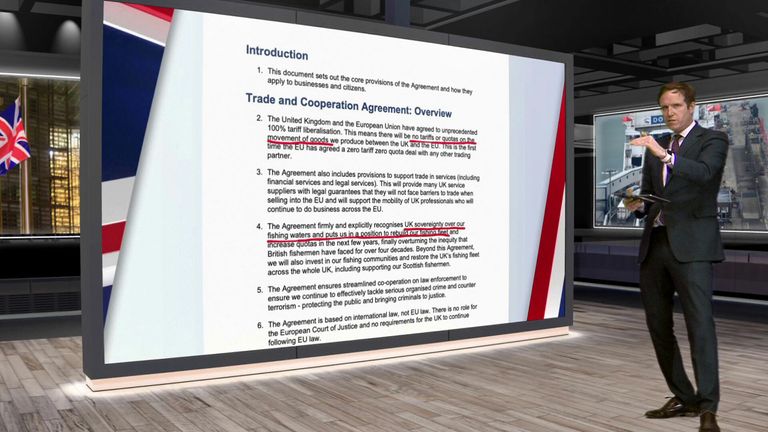
December 2020: What's in the Brexit trade deal?

"Now, we are moving forward, continuing to cooperate on questions of global finance, but each as a sovereign jurisdiction with our own priorities.

"We now have the freedom to do things differently and better, and we intend to use it fully."

The chancellor said Britain needed a plan for the industry "which sharpens our competitive advantage while acting in the interests of our citizens and communities".

Part of that will include reforms aimed at encouraging more firms to list on London's stock market and the abolition of some regulatory requirements for trading inherited from the EU.

More from Business

In his speech, Mr Sunak acknowledged the role of the financial services sector, contributing £76bn in taxes annually and employing 2.3 million people.

An estimated 7,500 financial jobs have shifted to EU hubs as a result of Brexit, which saw UK firms lose so-called "passporting" rights that had enabled them to trade more freely with European countries.

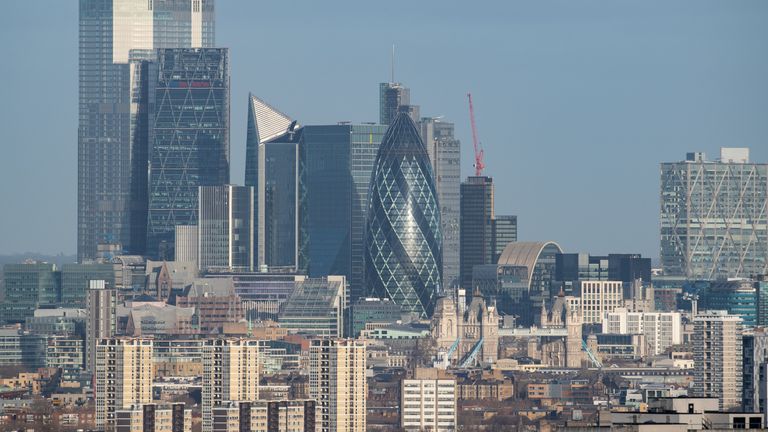
General view of the London skyline, as seen from One Tree Hill, showing skyscrapers in the City financial district, including (from left) Tower 42, the Leadenhall Building (also known as the Cheesegrater), 52 Lime Street (also known as the Scalpel), and 30 St Mary Axe (also known as the Gherkin), and Tower Bridge. PA Photo. Picture date: Tuesday February 4, 2020. Photo credit should read: Dominic Lipinski/PA Wire
Image: The financial services sector contributes £76bn a year in taxes

Since then efforts - now apparently abandoned - have focused on securing "equivalence" status, where Brussels and Whitehall would each recognise that the other holds to similar standards.

But there has been frustration on the UK side at Europe's apparent intransigence in granting access to the bloc in a way that has already been granted to Canada, the US, Australia, Hong Kong and Brazil.

In his speech on Thursday, Mr Sunak insisted: "The EU will never have cause to deny the UK access because of poor regulatory standards."

The chancellor also addressed London's dominant role in clearing - a business sometimes described as the plumbing of the financial market which deals with tens of trillions euros worth of transactions every year and which has also been the subject of a tussle with Brussels in recent months.

Mr Sunak insisted that he saw no reason why the UK "should not continue to provide clearing services for countries in the EU and around the world".

Other topics laid out in his Mansion House speech included safeguards for access to cash - a topic that has risen up the agenda as free-to-use ATMs and bank branches close - and requirements for companies to disclose the impacts they have on the environment.

The chancellor also set out hopes for a "ground-breaking" system of cross-border access for financial services with Switzerland.

Meanwhile, a few more details about plans by the Treasury to issue £15bn worth of green bonds have been revealed.

The three-year bonds will offer savers the chance to support green projects by investing between £100 and £100,000 over a three-year term at a fixed rate - which will be announced later this year.

Adblock test (Why?)


https://news.google.com/__i/rss/rd/articles/CBMiXmh0dHBzOi8vbmV3cy5za3kuY29tL3N0b3J5L3Jpc2hpLXN1bmFrLXNheXMtZXF1aXZhbGVuY2UtZGVhbC13aXRoLWV1LWhhcy1ub3QtaGFwcGVuZWQtMTIzNDYxOTbSAWJodHRwczovL25ld3Muc2t5LmNvbS9zdG9yeS9hbXAvcmlzaGktc3VuYWstc2F5cy1lcXVpdmFsZW5jZS1kZWFsLXdpdGgtZXUtaGFzLW5vdC1oYXBwZW5lZC0xMjM0NjE5Ng?oc=5

2021-07-01 10:52:30Z
52781705379365

Covid: UK's furlough scheme starts to wind down - BBC News

More than a million workers came off the furlough scheme in May as the economy reopened, leaving the scheme supporting the fewest people since the start of the pandemic.

At the end of May, 2.4 million people still relied on the scheme for their income, the latest HMRC figures show.

The furlough measures are being phased out by the end of September.

But with parts of the economy still limited by the virus, some firms are calling for an extension to the scheme.

Economists say the uncertainty facing many businesses, and the reduction in government support, will lead some companies to lay-off furloughed workers.

Terry George, who owns the Mission night club in Leeds as well as several other venues, said he expected some of his staff would be made redundant as a result of the phase out of furlough.

"We can't afford to pay people out of a pot that has no money coming in," he told the BBC's Today programme. "We're going to have to lose some staff."

He called for the scheme to be extended until businesses such as his were back up and running.

"We were told that we were going to be back in June, obviously that's been extended a month," Mr George said. "So the easiest thing to do would be to just extend the furlough scheme, as it was, until until things have got [back] to the same speed."

Over the next three months firms will have to shoulder more of the costs of the scheme as the government starts to wind down the scheme. Staff will continue to receive 80% of their wages, but employers will pay part of that for the first time.

The Institute for Fiscal Studies said shifting responsibility for paying workers back to their employers would lead to some job losses.

"The furlough scheme does need to be wound down as the economy recovers, rather than attempting to keep every job on life support. But this does mean that some will end up unemployed," said Tom Waters, a senior research economist at the IFS.

The Treasury says its furlough funding was still "substantial".

"We deliberately went long with our support to provide certainty to people and businesses over the summer.

"The furlough scheme is in place until September and is amongst the most generous schemes in the world," it added.

Labour questioned whether it was fair to ask bosses to start contributing towards the salaries of furloughed staff if they were not yet permitted to reopen.

"Nightclubs can't open today, they don't know what capacity and rules they will be working under when they do, they have no income, they are still racking up debts, and today they have to start paying towards furlough payments," said Jeff Smith MP.

line

What is changing?

From 1 July, employers must pay 10% of their furloughed workers' usual wage, while the government will continue to pay the other 70%.

From 1 August, the employers' contribution rises to 20%, with the government's contribution reducing further.

line

Estimates from the Office for National Statistics' weekly survey suggest that the numbers on furlough continued to fall in June, leaving between 1.3 million and 1.9 million people on the scheme.

The government has spent £66bn on the Coronavirus Job Retention Scheme, as furlough is officially known, and it has supported 11.6 million jobs since March 2020.

At the end of March this year, more than a third of employers still had staff on furlough. But since then, the gradual opening up of non-essential retail and large parts of the hospitality sector has allowed many of those workers to return.

Now only about one in 20 workers who are employed by businesses are either fully or partially furloughed.

However, some workers in sectors that have been particularly hard hit by measures to curb the pandemic, such as night clubs and international travel, have been furloughed for many months.

line

'I felt so guilty!'

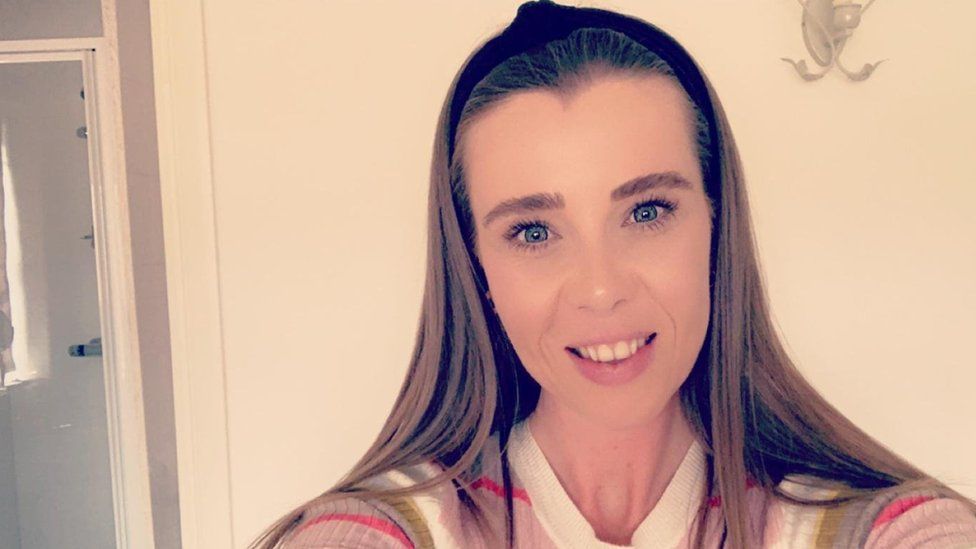
Gemma Walker
Gemma Walker

Gemma Walker, 36, from Bradford, loves her job as an account manager for Newmarket Holidays. But because she's on furlough she hasn't seen clients or gone into the office for 15 months.

She can see the scheme has been a lifeline for the business, but for her, the experience has been hard.

"I felt an overwhelming sense of guilt about the colleagues at Newmarket who are still working," she says. "They've really held the fort for the rest of our team."

She used to travel around the country, talking to clients and going to conferences.

"When something like that is completely taken away from you, you almost feel lost," she says. "My purpose is gone now because this is what I've worked towards my whole career, starting way back when I was 17 years old.

"I went through a stage of making sure I set an alarm every morning getting up," she says.

"You have to get yourself in a mindset of, 'I have to carry on, I have to do something,' because I don't know when I'm going to be going back."

line

'Critical' support

The furlough scheme has been praised for providing workers with some security. Unemployment has remained below 5%, despite early fears it would rise much higher as the pandemic pulled the rug from under the economy.

Employers welcomed the scheme as a way to retain staff that were trained and qualified, who they wanted to keep in place for when they were able to reopen.

"We've tried to retain as many people as possible," said Mark Vincent, chief financial officer at travel company, Newmarket Holidays.

"The furlough scheme has been critical. It's part of the difference between survival and not."

But he said that realistically, travel firms, which have had two summers of interrupted business, might need to reconsider staffing levels.

"In those winter months, we're all going to be loss-making and therefore, we're going to have to relook at what we do with our staffing."

line
Analysis box by Faisal Islam, economics editor

The hundreds of billions in support has been dizzying, historic, and effective at keeping unemployment much lower, but now the great rollback begins.

Though the economy is bouncing back strongly, this is a moment of acute sensitivity, as businesses start to discover which will keep going as government support is slowly withdrawn.

The most significant change will be a reduction in the generosity of the furlough scheme, which paid the equivalent of 80% of wages, but will now be funded at the rate of 70%.

Employers must find the equivalent of a tenth of their workers' wages, with that proportion increasing next month.

A report from the Resolution Foundation think tank warns that it is older workers who have been disproportionately left on the furlough scheme as younger workers have gone back to their jobs.

The holiday for stamp duty will also begin to be tapered, the business rates holiday becomes less generous, and delayed payments for VAT will restart.

All this comes with restrictions still in place, and some sectors, such as travel, very unlikely to get back to normal soon.

Business groups representing small businesses have warned of a serious economic flashpoint.

line

'A lot of people didn't come back'

Steve Haslam, who owns pub chain TLC Inns, is sceptical of the benefits of furlough.

"I am so grateful for the government to have supported my team because, by supporting the team on furlough, my employees, they managed to live and pay their bills."

But he says it has not helped him retain staff.

"A lot of people didn't come back to work... because they just didn't want to come back, either into the industry or they'd gone off and found second jobs. We had one site where 80% of staff left."

He believes the end of furlough will make it easier for hospitality businesses like his to recruit new staff.

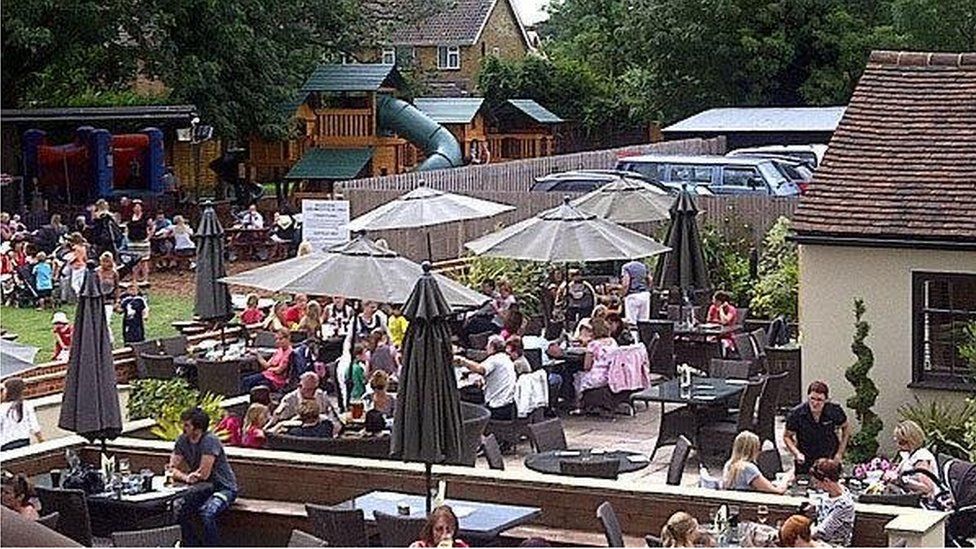
White horse Ramsden Heath
Holly Haslam

At the start of the pandemic, most of those on furlough were in younger age brackets. They were staff working in hospitality, travel, arts and leisure.

But as the economy has reopened, many younger workers have returned to work. Now about half of the people left on furlough are over 45, according to the Resolution Foundation.

The think tank says that older workers on furlough are now more likely to be let go, if businesses decide to restructure in the face of uncertainty.

"Reopening the economy has led to a surge in people returning back to work from furlough, particularly young people in sectors like hospitality and leisure," said Karl Handscomb, senior economist at the Resolution Foundation.

"But not everyone is back working. Over one in four older workers who were furloughed during the recent lockdown have remained parked on furlough during the reopening, and now face a higher risk of unemployment as the scheme starts to be unwound."

Low numbers

As furlough numbers fall the number of people leaving their jobs will rise, said Tony Wilson, director of the Institute for Employment Studies.

But he added: "Whether that leads to a significant rise in unemployment remains to be seen."

Given the strength of the economic recovery, the number of job vacancies being advertised, and the fall in the number of people on furlough since the beginning of the year, Mr Wilson said the number of people being made unemployed could be in the "low hundreds of thousands rather than the millions" as feared last year.

He said that by September, when the scheme ends, the number of people on full furlough "will be pretty low indeed".

Banner saying 'Get in touch'

Are you currently on furlough? You can share your experience by emailing haveyoursay@bbc.co.uk.

Please include a contact number if you are willing to speak to a BBC journalist. You can also get in touch in the following ways:

If you are reading this page and can't see the form you will need to visit the mobile version of the BBC website to submit your question or comment or you can email us at HaveYourSay@bbc.co.uk. Please include your name, age and location with any submission.

Adblock test (Why?)


https://news.google.com/__i/rss/rd/articles/CBMiLGh0dHBzOi8vd3d3LmJiYy5jby51ay9uZXdzL2J1c2luZXNzLTU3NjY1NzM10gEwaHR0cHM6Ly93d3cuYmJjLmNvLnVrL25ld3MvYnVzaW5lc3MtNTc2NjU3MzUuYW1w?oc=5

2021-07-01 10:18:50Z
52781706400477

Rishi Sunak says financial services deal with EU 'has not happened' - Sky News

Britain's attempt to reach a post-Brexit financial services deal with the EU "has not happened", Rishi Sunak has told the City.

The sector was not covered in the UK's last-minute free trade agreement when the Brexit transition period ended in December and the government has since been seeking an "equivalence" arrangement with the bloc.

But in the chancellor's traditional Mansion House speech to the City, Mr Sunak said: "That has not happened.

"Now, we are moving forward, continuing to cooperate on questions of global finance, but each as a sovereign jurisdiction with our own priorities.

"We now have the freedom to do things differently and better, and we intend to use it fully."

The chancellor said Britain needed a plan for the industry "which sharpens our competitive advantage while acting in the interests of our citizens and communities".

Part of that will include reforms aimed at encouraging more firms to list on London's stock market and the abolition of some regulatory requirements for trading inherited from the EU.

More from Business

In his speech, Mr Sunak acknowledged the role of the financial services sector, contributing £76bn in taxes annually and employing 2.3 million people.

An estimated 7,500 financial jobs have shifted to EU hubs as a result of Brexit, which saw UK firms lose so-called "passporting" rights that had enabled them to trade more freely with European countries.

Since then efforts - now apparently abandoned - have focused on securing "equivalence" status, where Brussels and Whitehall would each recognise that the other holds to similar standards.

But there has been frustration on the UK side at Europe's apparent intransigence in granting access to the bloc in a way that has already been granted to Canada, the US, Australia, Hong Kong and Brazil.

In his speech on Thursday, Mr Sunak insisted: "The EU will never have cause to deny the UK access because of poor regulatory standards."

The chancellor also addressed London's dominant role in clearing - a business sometimes described as the plumbing of the financial market which deals with tens of trillions euros worth of transactions every year and which has also been the subject of a tussle with Brussels in recent months.

Mr Sunak insisted that he saw no reason why the UK "should not continue to provide clearing services for countries in the EU and around the world".

Other topics laid out in his Mansion House speech included safeguards for access to cash - a topic that has risen up the agenda as free-to-use ATMs and bank branches close - and requirements for companies to disclose the impacts they have on the environment.

The chancellor also set out hopes for a "ground-breaking" system of cross-border access for financial services with Switzerland.

Meanwhile, a few more details about plans by the Treasury to issue £15bn worth of green bonds have been revealed.

The three-year bonds will offer savers the chance to support green projects by investing between £100 and £100,000m over a three-year term at a fixed rate - which will be announced later this year.

Adblock test (Why?)


https://news.google.com/__i/rss/rd/articles/CBMiXmh0dHBzOi8vbmV3cy5za3kuY29tL3N0b3J5L3Jpc2hpLXN1bmFrLXNheXMtZXF1aXZhbGVuY2UtZGVhbC13aXRoLWV1LWhhcy1ub3QtaGFwcGVuZWQtMTIzNDYxOTbSAWJodHRwczovL25ld3Muc2t5LmNvbS9zdG9yeS9hbXAvcmlzaGktc3VuYWstc2F5cy1lcXVpdmFsZW5jZS1kZWFsLXdpdGgtZXUtaGFzLW5vdC1oYXBwZW5lZC0xMjM0NjE5Ng?oc=5

2021-07-01 10:07:30Z
52781705379365

Right to repair rules will extend lifespan of products, government says - BBC News

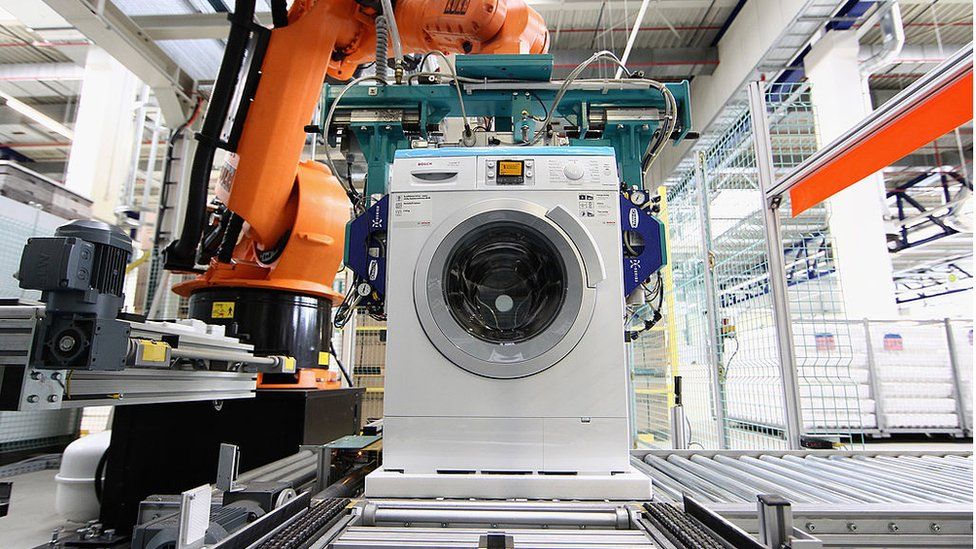
Washing machine
Getty Images

Washing machines, TVs and fridges will be cheaper to own under a new legal right for repairs, the government says.

From Thursday, manufacturers will have to make spares available to consumers, with the aim of extending the lifespan of products by up to 10 years, it said.

Higher energy standards this year will also knock an average of £75 per year off energy bills, the government said.

However, one company said that the new rules could make white goods more expensive.

The right to repair rules are designed to tackle "built-in obsolescence" where manufacturers deliberately build appliances to break down after a certain period to encourage consumers to buy new ones.

Manufacturers will now be legally obliged to make spare parts available to consumers so appliances can be fixed.

Changes to energy efficiency standards this year will also mean savings for consumers and cut eight megatonnes of carbon emissions in 2021 by reducing how power-hungry goods are, the government said.

Since March, there have also been changes to appliance energy efficiency labelling.

Energy minister Anne Marie Trevelyan said: "The tougher standards will ensure more of our electrical goods can be fixed rather than have to be thrown away when they stop working, putting more money back in the pockets of consumers."

Climate change minister Lord Callanan added: "We can all play our part in ending our contribution to climate change, even when we're choosing a new electrical appliance."

2px presentational grey line
Analysis box by Colletta Smith, Consumer affairs correspondent

These new rules should bring an end to the frustration of having to throw away an item because a small part is no longer working and no longer in stock.

Often the seal around a fridge, the detergent drawer on a washing machine, or the runners on a dishwasher break. Rather than having to buy a whole new product, replacement parts must now be sold directly by the manufacturer for 10 years, whether or not they are still selling the complete item in their range.

This isn't a law about who is responsible for the repair. If it's still within warranty, then the manufacturer or the retailer should repair it, but after that, you are at least now guaranteed access to a replacement part. You'll probably have to buy it, and you may have to pay someone to fit it if it's a complicated internal part, but at least you should be able to get hold of it.

Having the right to repair is a step removed from having the confidence to actually attempt one, though. It's a much bigger cultural shift to convince people to fix it and not to fling it.

2px presentational grey line

Environmental expert Libby Peake, head of resource policy at Green Alliance, said that the new regulations "represent a small, first step towards giving people the long-lasting repairable products they want".

However, she said it was not accurate to say the new rules create a "legal right to repair".

"The government hasn't given consumers any such right, as the spare parts and repairability criteria are only directed at professional repairers, not at the people who own products," she said.

"There is also no guarantee that spare parts and repair services will be affordable, so considerable barriers remain to making this the easiest, default option," she added.

Green Alliance called on the government to "increase its ambition in this area, so that it really is as easy as possible for people to repair and upgrade the products they own".

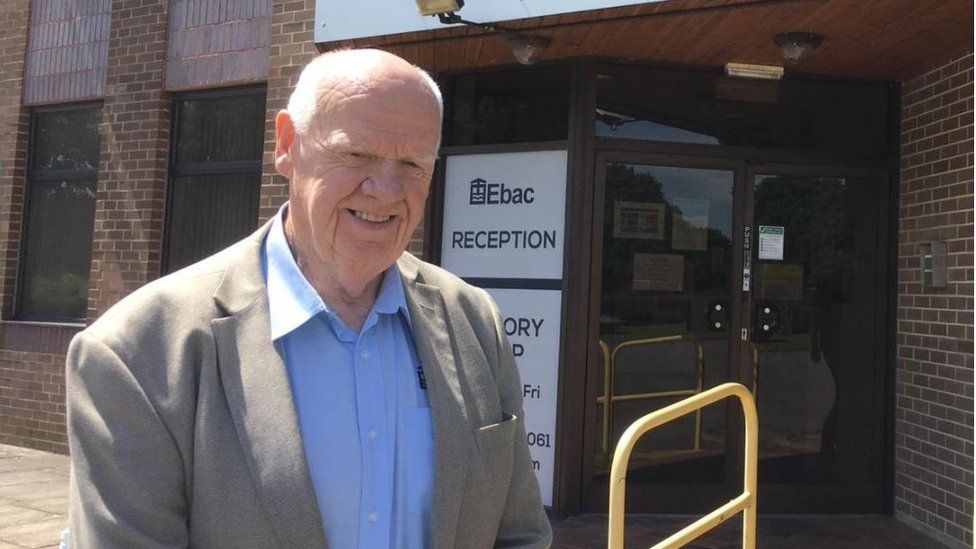
John Elliot

'Race to the bottom'

One company said the legislation could make appliances more expensive. John Elliot, executive chairman of Ebac, said his business had always focused on the long-term reliability of a product.

"We don't look to make the cheapest washing machine. We look for one that's going to do the job and last a long time," he said.

The firm has been manufacturing dehumidifiers, water coolers and washing machines for five decades, at Newton Aycliffe, County Durham.

"Our focus is reliability - not just a low initial cost," Mr Elliot said. "The secret of a product that's easy to repair and long-lasting is in the design."

Overall, Mr Elliot said, the legislation will not make much difference to his business. But it will to competitors, who have been in a race to the bottom on prices for many white goods.

"I can't think of one example where we could not repair a product," he added. "I checked, and the oldest machine we repaired was 25 years old."

Engineer fix

Rob Johnson, operations director at repair business Pacifica, said that his firm was now hoping to recruit engineers because of the new rules.

The company already has 400 qualified engineers going into homes to fix about 6,000 appliances per week.

He said the legislation "gives customers real choice" about whether to repair or replace their product.

Google and YouTube had built confidence in tackling some basic repairs at home. However, he said that business was still brisk for quick fixes to items such as dishwasher filters, washing machine seals and broken fridge or freezer doors.

There's also an upside for the environment, too, he said, adding: "The legislation is designed to reduce impact of electrical waste.

"So we really want consumers to take that opportunity to think about whether they should repair it rather than replace it. And that can mean trying to repair it themselves or call someone out like ourselves."

Do-it-yourself repairs

People have different comfort levels when it comes to the thought of tackling home repairs on appliances, according to YouGov research for BBC News.

Men said they felt more comfortable than women in trying to fix appliances across the board.

Most of the appliances featured in the new legislation can be found in the kitchen. However, data suggests few feel comfortable taking advantage of the increased availability of spare parts.

Of the kitchen appliances covered under the new rules, Britons are most comfortable repairing their washing machines (22%) including some one-in-three men (32%) and half as many women (14%). But people are less comfortable with dishwashers (16%).

Adblock test (Why?)


https://news.google.com/__i/rss/rd/articles/CBMiLGh0dHBzOi8vd3d3LmJiYy5jby51ay9uZXdzL2J1c2luZXNzLTU3NjY1NTkz0gEwaHR0cHM6Ly93d3cuYmJjLmNvLnVrL25ld3MvYnVzaW5lc3MtNTc2NjU1OTMuYW1w?oc=5

2021-07-01 09:02:01Z
52781706518287

Nissan announces £1bn 'gigafactory' boosting electric car production and creating thousands of jobs - Sky News

Nissan has announced details of a new battery "gigafactory" that will enable its Sunderland car plant to massively increase production of electric vehicles.

The Japanese manufacturer said the £1bn battery plant, built in partnership with Chinese manufacturer Envision, will create 900 jobs at Nissan plus 750 at Envision - and an overall 6,200 when the impact on suppliers is included.

Prime minister Boris Johnson hailed Nissan's investment, to which the government is thought to have provided some financial support, as a "major vote of confidence in the UK".

The plant would become the largest battery "gigafactory" in the UK.

The term, coined by Tesla founder Elon Musk, comes from the unit of measurement representing billions.

Envision already produces lithium-ion batteries for Nissan's short-range Leaf model at Sunderland in a plant with capacity for 1.7 gigawatt hours (GWh) per-year.

The new plant will be much larger and is expected to have capacity for 9GWh, sufficient to produce batteries for up to 100,000 vehicles a year.

More on Nissan

The announcement was welcomed by Britain's car industry body, the Society of Motor Manufacturers and Traders - but it said more was needed for the UK to achieve net-zero goals.

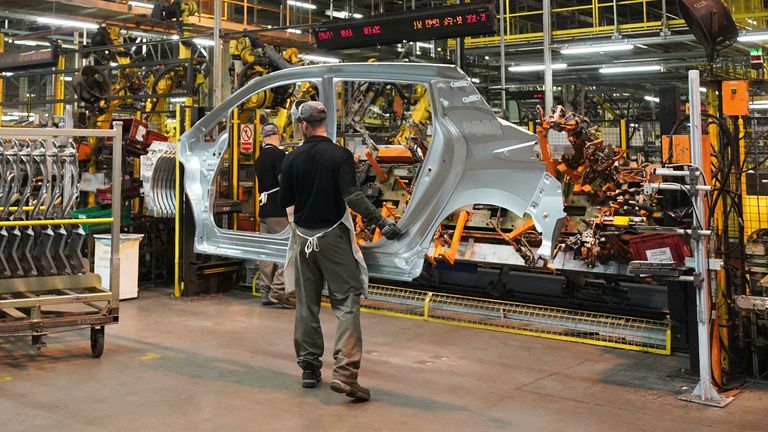
Workers on the production line at Nissan's plant in Sunderland
Image: Workers on the production line at Nissan's plant in Sunderland

As part of the announcement, Nissan is committing £432m to produce a new-generation all-electric vehicle in the UK which it says will build on the success of the Leaf models already produced at Sunderland.

The commitment to battery production at the UK's largest car plant will be a fillip to manufacturing as the industry races to meet the government's target of banning new petrol and diesel internal combustion engine vehicles by 2030.

The prime minister said: "Nissan's announcement is a major vote of confidence in the UK and our highly-skilled workers in the North East.

"Building on over 30 years of history in the area, this is a pivotal moment in our electric vehicle revolution and securing its future for decades to come."

Nissan's chief operating officer Ashwani Gupta, said: "This is a landmark day for Nissan, our partners, the UK and the automotive industry as a whole. Nissan EV36Zero will transform the idea of what is possible for our industry and set a roadmap for the future for all."

UK battery production already lags well behind European competitors Germany and France with only one other gigafactory currently planned.

Britishvolt intends to build a plant on the former Blyth power station site in Northumberland promising 3,000 jobs and batteries for 300,000 vehicles a year.

Nissan believes investing in battery technology post-Brexit will give it a competitive advantage over its rivals.

Listen and subscribe to The Ian King Business Podcast here

New "rules-of-origin" requirements for vehicles set out in the Brexit deal mean that by 2027 vehicles with batteries produced outside the UK or the European Union will attract tariffs when exported to EU states.

By producing them in Sunderland, Nissan will ensure tariff-free access to European markets, as well as avoiding the financial and environmental costs of transporting batteries long distances.

Business secretary Kwasi Kwarteng is in talks with Vauxhall owner Stellantis over securing electric vehicle manufacturing at the company's Ellesmere Port plant when production of the current ICE Astra ends.

Stellantis says the 2030 ICE ban means making anything other than an electric vehicle at Ellesmere Port would not be viable, but it wants significant support to choose the North West over its other plants in Europe.

Adblock test (Why?)


https://news.google.com/__i/rss/rd/articles/CBMifGh0dHBzOi8vbmV3cy5za3kuY29tL3N0b3J5L25pc3Nhbi10by11bnZlaWwtbmV3LXN1bmRlcmxhbmQtZ2lnYWZhY3RvcnktdGhhdC13aWxsLWhlbHAtYm9vc3QtZWxlY3RyaWMtY2FyLXByb2R1Y3Rpb24tMTIzNDU5NTDSAYABaHR0cHM6Ly9uZXdzLnNreS5jb20vc3RvcnkvYW1wL25pc3Nhbi10by11bnZlaWwtbmV3LXN1bmRlcmxhbmQtZ2lnYWZhY3RvcnktdGhhdC13aWxsLWhlbHAtYm9vc3QtZWxlY3RyaWMtY2FyLXByb2R1Y3Rpb24tMTIzNDU5NTA?oc=5

2021-07-01 06:22:30Z
52781705441270