Selasa, 27 Februari 2024

UK grocery price inflation falls to two-year low amid supermarket price war - The Guardian

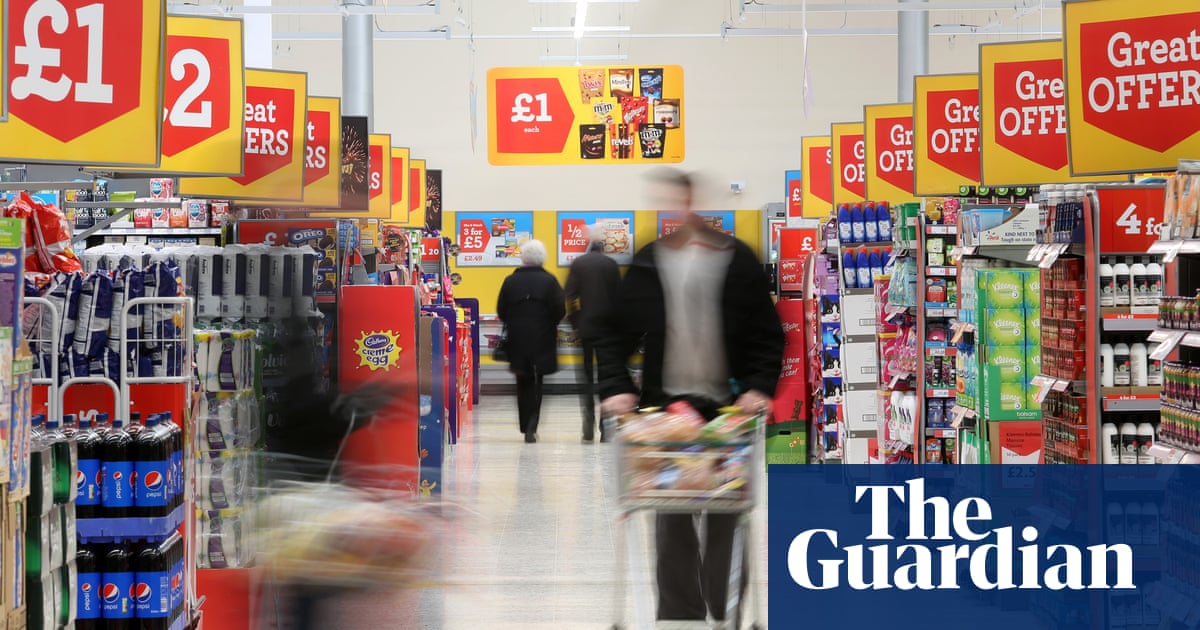
Grocery price inflation in the UK has slowed to a two-year low as fierce competition among supermarkets offset the impact of the Red Sea shipping crisis on goods prices.

In a boost to households, supermarket prices were 5.3% higher than a year earlier in February, the lowest rate since March 2022 and down from January’s 6.8%, according to the analyst Kantar. Grocery sales grew by 5.1% in the four weeks to 18 February.

Tom Steel, the strategic insight director at Kantar, said: “Things are looking up for shoppers this February. Consumers have been navigating a grocery inflation rate of more than 4% for two years now, so this latest easing of price rises is especially welcome.

“Though there’s been lots of discussion about the impact the Red Sea shipping crisis might have on the cost of goods, supermarkets have been pulling out all the stops to keep prices down and help people manage their budgets.”

A separate report from the British Retail Consortium showed food inflation fell to 5% in February from 6.1% in January, amid tumbling energy costs and a supermarket price war.

As the price war intensified among retailers, Morrison’s became the latest retailer to launch a price match scheme with Aldi and Lidl, after Asda made the move in January.

Promotions picked up again after a post-Christmas slowdown, and consumers spent £586m more on them than in February last year, up 4%, according to Kantar. Sainsbury’s and Iceland were the only retailers to attract more shoppers through their doors.

People celebrated Valentine’s Day by spending 12% more on steak and 16% more on boxed chocolate than last year.

But they were on the hunt for value, spending £36m on meal deals costing £10 or more in the week leading up to 14 February. This figure is slightly down on 2023 when spend hit £43m, but that was because consumers chose to make more savings this year through price cuts, Kantar said. Sales of chilled ready meals and desserts on promotion did particularly well this year.

As “Dry January” ended, alcohol sales volumes jumped by 18% on the previous month, with consumers buying 28% more wine and 16% more beer and lager. Red wine was particularly popular, with 8m more bottles bought this month than in January.

Lidl was the only retailer to achieve double-digit growth: its sales rose by 10.9% over the 12 weeks to 18 February, making it the fastest-growing grocer for the sixth month running. It increased its share of the market to 7.5%.

Its fellow discounter Aldi also grew faster than the overall market, with sales up by 5.7%, maintaining its 9.4% share.

Sainsbury’s and Tesco, Britain’s largest grocer, increased their share of the market, as their sales grew by 7.6% and 6.2% respectively.

Adblock test (Why?)


https://news.google.com/rss/articles/CBMibWh0dHBzOi8vd3d3LnRoZWd1YXJkaWFuLmNvbS9idXNpbmVzcy8yMDI0L2ZlYi8yNy91ay1ncm9jZXJ5LXByaWNlLWluZmxhdGlvbi1zdXBlcm1hcmtldC1wcmljZS1mZWJydWFyeS1rYW50YXLSAW1odHRwczovL2FtcC50aGVndWFyZGlhbi5jb20vYnVzaW5lc3MvMjAyNC9mZWIvMjcvdWstZ3JvY2VyeS1wcmljZS1pbmZsYXRpb24tc3VwZXJtYXJrZXQtcHJpY2UtZmVicnVhcnkta2FudGFy?oc=5

2024-02-27 09:57:00Z
CBMibWh0dHBzOi8vd3d3LnRoZWd1YXJkaWFuLmNvbS9idXNpbmVzcy8yMDI0L2ZlYi8yNy91ay1ncm9jZXJ5LXByaWNlLWluZmxhdGlvbi1zdXBlcm1hcmtldC1wcmljZS1mZWJydWFyeS1rYW50YXLSAW1odHRwczovL2FtcC50aGVndWFyZGlhbi5jb20vYnVzaW5lc3MvMjAyNC9mZWIvMjcvdWstZ3JvY2VyeS1wcmljZS1pbmZsYXRpb24tc3VwZXJtYXJrZXQtcHJpY2UtZmVicnVhcnkta2FudGFy

February dip sends UK food price inflation to nearly two-year low - The Guardian

Tumbling energy costs and a price war between Britain’s supermarkets have slowed food inflation to its lowest rate for nearly two years in a boost for households trying to cope on stretched budgets.

The cost of meat, fish and fruit dipped in February, meaning food prices rose 5% on last year, down from 6.1% in January and the lowest since May 2022, according to the British Retail Consortium (BRC) shop price index.

Although the figures show prices are still rising, the rate is far lower than the double-digit increases consumers have consistently faced since rising energy prices triggered rampant inflation over the past two years.

The index showed food prices fell 0.1% in February on the previous month, its first monthly fall since last September.

“This was driven by easing input costs for energy and fertiliser while retailers competed fiercely to keep prices down,” said Helen Dickinson, the chief executive of the BRC.

A sharp fall in the wholesale price of gas has fed through into household energy bills, with the industry regulator Ofgem announcing last week that its price cap will fall 12%, or £238 to £1,690, from April. Meanwhile, there are increasing signs the major supermarkets are ramping up efforts to compete on price.

The cost of living crisis has weighed on retailers’ attempts to maintain their profit margins while attracting customers tackling increases in household bills and shopping budgets.

Last week, Morrisons launched a campaign to tell customers it offers the same or cheaper prices than discounters Aldi and Lidl, echoing similar marketing drives by Tesco, Asda and Sainsbury’s.

Overall, shop price inflation eased to 2.5% in February, from 2.9% in January. Nonfood prices rose, up 1.3% on a year earlier and 0.7% on January.

Richard Walker, the executive chair of frozen food chain Iceland, said a cost squeeze in its supply chain had eased and it had seen “strong sales” after cutting prices, including on pizzas, beef burgers and ready meals.

“Cost pressures throughout manufacturing are coming down and this is starting to come through,” Walker said. “We are passing on the biggest falls faster than wholesale prices are coming down for us to get ahead of the game. For our customers, offering great value is more important than ever.”

The BRC figures showed the price of furniture, electricals, and health and beauty products rose, but clothing fell as retailers attempted to lure shoppers with promotions.

Dickinson said that easing inflation was “good news” for shoppers, but warned that the increase in shipping costs due to disruption in the Red Sea could push up the cost of non-food items, and reiterated calls for government help on retailers’ business rates bills ahead of next month’s budget.

Separate data from the CBI showed retail sales in the year to February fell at a modest pace after a sharp drop last month. Its quarterly survey predicted the rate at which sales would fall will accelerate next month.

Adblock test (Why?)


https://news.google.com/rss/articles/CBMiW2h0dHBzOi8vd3d3LnRoZWd1YXJkaWFuLmNvbS9idXNpbmVzcy8yMDI0L2ZlYi8yNy91ay1mb29kLXByaWNlLWluZmxhdGlvbi1lbmVyZ3ktc3VwZXJtYXJrZXTSAVtodHRwczovL2FtcC50aGVndWFyZGlhbi5jb20vYnVzaW5lc3MvMjAyNC9mZWIvMjcvdWstZm9vZC1wcmljZS1pbmZsYXRpb24tZW5lcmd5LXN1cGVybWFya2V0?oc=5

2024-02-27 00:01:26Z
CBMiW2h0dHBzOi8vd3d3LnRoZWd1YXJkaWFuLmNvbS9idXNpbmVzcy8yMDI0L2ZlYi8yNy91ay1mb29kLXByaWNlLWluZmxhdGlvbi1lbmVyZ3ktc3VwZXJtYXJrZXTSAVtodHRwczovL2FtcC50aGVndWFyZGlhbi5jb20vYnVzaW5lc3MvMjAyNC9mZWIvMjcvdWstZm9vZC1wcmljZS1pbmZsYXRpb24tZW5lcmd5LXN1cGVybWFya2V0

Senin, 26 Februari 2024

Housebuilders face probe from competition watchdog - BBC

New build homeGetty Images

Some of the UK's biggest housebuilders are being investigated over whether they have been sharing information which could influence house prices.

The Competition and Markets Authority has launched the probe after a year-long investigation into housebuilding in England, Wales and Scotland.

It also said "significant intervention" in the market was needed to ensure enough homes were built to meet demand.

The watchdog also raised concerns over the quality of new homes.

The CMA said that its investigation had uncovered evidence suggesting "information sharing", which "could be influencing the build-out of sites and the prices of new homes".

CMA chief executive Sarah Cardell told the BBC: "Through our investigation we've seen evidence of potential exchanges of confidential, commercially sensitive information relating to sales prices and sale rates between some of the UK's major housebuilders.

"Now we don't believe that that's a key driver of the fundamental poor outcomes in this market, but it is clearly critically important that all companies comply with competition law so today, we're also announcing the launch of a new Competition Act investigation to look into that further."

The housebuilders being investigated are:

  • Barratt
  • Bellway
  • Berkeley
  • Bloor Homes
  • Persimmon
  • Redrow
  • Taylor Wimpey
  • Vistry

The CMA said it had not yet reached any conclusions as to whether or not competition law has been broken.

Housebuilding companies listed on the London Stock Exchange saw their share prices fall in early trading. Persimmon shares fell by 2.8% to £13.74 each, closely followed by Taylor Wimpey down 2.7% at 142p.

A spokesperson for Bellway said: "We are reviewing the CMA's report. Bellway has engaged and co-operated fully with the CMA throughout its market study - and will continue to do so."

Redrow, which recently agreed to be taken over by Barratt for £2.5bn, said that it has "fully co-operated with the CMA throughout its market study" and continues to work with the watchdog.

Berkeley declined to comment.

The BBC has contacted all the named housebuilders for comment.

In its wider report into the housebuilding market in England, Wales and Scotland, the CMA said there were "persistent shortfalls" in the number of homes being built.

Last year, less than 250,000 were built across the whole of the UK, far below a target of 300,000 for England alone.

In its 2019 manifesto, the Conservative Party promised to build 300,000 homes a year by the mid-2020s and pledged to make the planning system "simpler".

But the CMA said that the planning system was one of the key factors slowing down construction of new homes, describing it as "complex and unpredictable".

It said planning often takes a long time for builders to navigate before construction can start. It found that many planning departments are under resourced, don't have up-to-date local plans and lack clear targets or incentives to deliver a certain number of homes in their area.

Builders also often have to consult with a wide range of people and slow responses to planning proposals can delay construction.

The CMA said that recommendations to streamline the planning system as well as other measures would mean more homes could be built each year and help "make homes more affordable".

But it said: "Even then, further action may be required to deliver the number of homes Great Britain needs in the places it needs them."

Adblock test (Why?)


https://news.google.com/rss/articles/CBMiLGh0dHBzOi8vd3d3LmJiYy5jby51ay9uZXdzL2J1c2luZXNzLTY4NDAwNTA00gEwaHR0cHM6Ly93d3cuYmJjLmNvLnVrL25ld3MvYnVzaW5lc3MtNjg0MDA1MDQuYW1w?oc=5

2024-02-26 10:26:55Z
CBMiLGh0dHBzOi8vd3d3LmJiYy5jby51ay9uZXdzL2J1c2luZXNzLTY4NDAwNTA00gEwaHR0cHM6Ly93d3cuYmJjLmNvLnVrL25ld3MvYnVzaW5lc3MtNjg0MDA1MDQuYW1w

Train delays and cancellations as South East hit by signal failure - BBC

Passengers waiting at Brighton Station

Rail services across Sussex and Surrey have been severely disrupted due to a major signalling fault.

A power failure in the early hours of Monday has caused delays and cancellations to Southern and Thameslink services.

Govia Thameslink said it expected the disruption between East Croydon and Brighton to continue until 15:00 GMT.

Network Rail apologised and told passengers to check with train operators before travelling.

The disruption includes:

  • No Gatwick Express trains are running until further notice
  • Services between Brighton and Chichester reduced to one train an hour
  • No Thameslink services between Cambridge and Brighton
  • Delays and cancellations between Brighton, Portsmouth and Chichester

A Network Rail spokesperson said: "At 03:04 there was a loss of power across some the UK Power Networks which significantly impacted our Three Bridges Signalling Centre which controls the signalling across the majority of our Sussex route.

"All signalling was restored at 06:30 and while some Southern services have resumed operating across the Sussex route, a number of Southern and Thameslink services remain significantly disrupted and there are currently no Gatwick Express services in operation until further notice.

"We're really sorry to any passengers disrupted this morning and we encourage passengers to check with their train operator before travelling for the latest information and updates."

Passengers waiting at Brighton Station
Eddie Mitchell

Southern said there had been points failures at both Haywards Heath and Hove.

Passengers are being advised to allow at least an extra 60 minutes for their journeys.

Matt Daymond returned to Brighton station for a second attempt to get into work, after initially being told there were no trains at all.

"I need to get into the office, I've got some important meetings to go to" he said.

"I work somewhere they expect you to be in so you end up having to go in late and then stay in late, because they expect you to put the hours in."

Matt Daymond at Brighton station

Ben Jackson and Arabella Saucell were trying to travel home from Brighton to Manchester.

"We woke up this morning and realised there were a few delays" said Mr Jackson.

"I've got the half-day off work so I might have to let them know that I can't make it in."

Ms Saucell said: "We're kind of used to it by now. It's always like this. When I went back for Christmas it was the same."

Ben Jackson and Arabella Saucell at Brighton station
Presentational grey line

Follow BBC South East on Facebook, on X, and on Instagram. Send your story ideas to southeasttoday@bbc.co.uk.

Related Internet Links

The BBC is not responsible for the content of external sites.

Adblock test (Why?)


https://news.google.com/rss/articles/CBMiNWh0dHBzOi8vd3d3LmJiYy5jby51ay9uZXdzL3VrLWVuZ2xhbmQtc3Vzc2V4LTY4NDAwMDg00gE5aHR0cHM6Ly93d3cuYmJjLmNvLnVrL25ld3MvdWstZW5nbGFuZC1zdXNzZXgtNjg0MDAwODQuYW1w?oc=5

2024-02-26 09:54:14Z
CBMiNWh0dHBzOi8vd3d3LmJiYy5jby51ay9uZXdzL3VrLWVuZ2xhbmQtc3Vzc2V4LTY4NDAwMDg00gE5aHR0cHM6Ly93d3cuYmJjLmNvLnVrL25ld3MvdWstZW5nbGFuZC1zdXNzZXgtNjg0MDAwODQuYW1w

Investigation launched into eight homebuilders after 'persistent under delivery' of new houses - Sky News

The UK has seen a "persistent under delivery" of new homes, according to the competition watchdog, which has launched an investigation into eight major housebuilders.

Too few new homes are being delivered due to a "complex and unpredictable" planning system and the gap between what private developers are building and what people need is widening, the Competition and Markets Authority (CMA) said.

Its report into the housebuilding industry also identified "substantial concerns" about estate management charges - with homeowners "often facing" high and unclear charges for the management of roads, drainage and green spaces.

Less than 250,000 new homes were built last year across Britain - well below the 300,000-target for England alone, the CMA said.

Reason for missed targets

Targets have only been met when local authorities build houses, the CMA said, but the majority of building currently comes from the private sector, it added.

"It is notable that housebuilding has only reached the levels that are currently being targeted in periods where significant
supply was provided via local authority building".

More on House Prices

Along with planning problems, a key reason for this is the system of development where homes are built without knowing in advance who will buy them or for how much, a system known as speculative private development.

Read more
NatWest boss who earns £764,000 says not 'that difficult' to buy a house
Sir Keir Starmer outlines desire for 'patriotic economy' through boosting home ownership

The majority (60%) of houses built from 2021 to 2022 came through this system which allows builders to respond to market changes but has led to a gap between what people need and what is being built.

"The evidence shows that private developers produce houses at a rate at which they can be sold without needing to reduce their prices, rather than diversifying the types and numbers of homes they build to meet the needs of different communities (for example providing more affordable housing)," the CMA said of the system.

Please use Chrome browser for a more accessible video player

Housing minister Lee Rowley spoke to Sky News in December.

Quality concern

Concern about the quality of housing was also identified.

The number of owners reporting issues increased over the last decade, the CMA found, as housebuilders don't have strong incentives to compete with each other on quality and consumers have unclear routes to have problems solved.

Serious problems, such as collapsing staircases and ceilings, were experienced in a "substantial minority" of new houses.

Investigation into major housebuilders

An investigation into eight housebuilders has been launched as the CMA suspects them of sharing commercially sensitive information, which could be influencing the prices of new homes.

While the issue is not one of the main drivers high house prices and the shortfall in delivery number, the CMA said it is important that it tackles anti-competitive behaviour if found.

Developers being investigated include Barratt, Bellway, Berkeley, Bloor Homes, Persimmon, Redrow, Taylor Wimpey, and Vistry.

The CMA said it has not reached any conclusions at this stage as to whether competition law has been infringed.

Roughly two-fifths of the homes built between 2021 to 2022 were delivered by the largest, national housebuilders, many of whom are the subject of the CMA investigation, while more than 50,000 homes were delivered by thousands of smaller, regional builders.

Growing estate management charges

A "growing trend" of housing estates with privately managed public amenities such as green spaces was found by the CMA.

Of new homes sold by the biggest builders in 2021 to 2022, 80% were subject to estate management charges which, the CMA said are "often high and unclear".

The average charge was £350, the CMA found, but one-off, unplanned charges for significant repair work can cost thousands of pounds and cause considerable stress to homeowners.

"Many homeowners are unable to switch estate management providers, receive inadequate information upfront, have to deal with shoddy work or unsatisfactory maintenance, and face unclear administration or management charges which can often make up 50% or more of the total bill", it added.

Please use Chrome browser for a more accessible video player

Levelling Up Secretary Michael Gove in December pledged to intervene if there are delays to housebuilding as a result of poor performance by councils.

Planning

A streamlining of the planning system has been recommended by the CMA as it said many planning departments are under resourced, do not have up to date local plans and no clear targets or strong incentives to deliver the numbers of homes needed.

Groups that planners are legally required to consult often hold up projects by submitting holding responses or give late feedback to consultations on proposed developments, it added.

A Bellway spokesperson said: "Bellway has engaged and co-operated fully with the CMA throughout its market study - and will continue to do so. We remain focused on the delivery of high-quality new homes that meet local demand and enhance the communities we build in as we work to increase the supply of UK housing."

A spokesperson for the Home Builders Federation said: "We welcome recognition that the planning system is a fundamental barrier to delivery and adds unnecessary delay and cost into the development process, and the need for local authorities to have plans in place and properly resourced planning departments."

"Housebuilders do not want to be long-term managers of estates and make absolutely no profit from the management companies that are required to be put in place."

The National Federation of Builders' said: "The CMA report has confirmed that the housing crisis is caused by the planning process and government failure.

"Planning has stopped new homes being built, especially social houses... We didn't need a CMA report to confirm this, but it certainly helps drag the politicians over the coals for their utter failure on housing, planning, and the impact on the consumer through ever increasing housing costs."

Adblock test (Why?)


https://news.google.com/rss/articles/CBMigAFodHRwczovL25ld3Muc2t5LmNvbS9zdG9yeS9pbnZlc3RpZ2F0aW9uLWxhdW5jaGVkLWludG8tZWlnaHQtaG9tZWJ1aWxkZXJzLWFmdGVyLXBlcnNpc3RlbnQtdW5kZXItZGVsaXZlcnktb2YtbmV3LWhvdXNlcy0xMzA4MTM0NdIBhAFodHRwczovL25ld3Muc2t5LmNvbS9zdG9yeS9hbXAvaW52ZXN0aWdhdGlvbi1sYXVuY2hlZC1pbnRvLWVpZ2h0LWhvbWVidWlsZGVycy1hZnRlci1wZXJzaXN0ZW50LXVuZGVyLWRlbGl2ZXJ5LW9mLW5ldy1ob3VzZXMtMTMwODEzNDU?oc=5

2024-02-26 08:15:00Z
CBMigAFodHRwczovL25ld3Muc2t5LmNvbS9zdG9yeS9pbnZlc3RpZ2F0aW9uLWxhdW5jaGVkLWludG8tZWlnaHQtaG9tZWJ1aWxkZXJzLWFmdGVyLXBlcnNpc3RlbnQtdW5kZXItZGVsaXZlcnktb2YtbmV3LWhvdXNlcy0xMzA4MTM0NdIBhAFodHRwczovL25ld3Muc2t5LmNvbS9zdG9yeS9hbXAvaW52ZXN0aWdhdGlvbi1sYXVuY2hlZC1pbnRvLWVpZ2h0LWhvbWVidWlsZGVycy1hZnRlci1wZXJzaXN0ZW50LXVuZGVyLWRlbGl2ZXJ5LW9mLW5ldy1ob3VzZXMtMTMwODEzNDU
Minggu, 25 Februari 2024

Former Prince Andrew aide eyes role in takeover bid for Currys - Sky News

A former private secretary to Prince Andrew is playing a key role in the deliberations of a Chinese online retail giant over a possible bid for Currys, the high street electrical goods chain.

Sky News has learnt that Amanda Thirsk, who quit as the Duke of York's private secretary nearly four years ago, is working in a senior business development role at JD.com.

Amanda Thirsk was Prince Andrew's private secretary
Image: Ms Thirsk was Prince Andrew's private secretary

A former banker, Ms Thirsk worked at Buckingham Palace for Prince Andrew from 2004 until the spring of 2020, when she reached a settlement to terminate her role in the aftermath of his disastrous interview with the BBC's Panorama programme.

She is understood to have been working with JD, one of China's biggest e-commerce groups, for much of the period since she left the Palace.

Ms Thirsk also quit her role as chief executive of Pitch@Palace, Prince Andrew's flagship business venture, shortly after stepping down as Prince Andrew's private secretary.

Sources said she was now involved in JD.com's evaluation of a possible bid for Currys, which saw its shares soar last week after Sky News revealed that it had attracted takeover interest from Elliott Advisors, the private equity firm.

JD.com has yet to submit a formal offer for the London-listed retailer, but has been set a mid-March deadline by the Takeover Panel to do so or walk away.

More on Prince Andrew

Listed on New York's Nasdaq exchange and in Hong Kong, JD.com has over 600m customers globally.

It operates more than 1,600 warehouses in China, making it a vast logistics player even by the standards of the world's most populous nation.

A spokesman for JD.com and Ms Thirsk both declined to comment.

Adblock test (Why?)


https://news.google.com/rss/articles/CBMiYmh0dHBzOi8vbmV3cy5za3kuY29tL3N0b3J5L2Zvcm1lci1wcmluY2UtYW5kcmV3LWFpZGUtZXllcy1yb2xlLWluLXRha2VvdmVyLWJpZC1mb3ItY3VycnlzLTEzMDgwODQy0gFmaHR0cHM6Ly9uZXdzLnNreS5jb20vc3RvcnkvYW1wL2Zvcm1lci1wcmluY2UtYW5kcmV3LWFpZGUtZXllcy1yb2xlLWluLXRha2VvdmVyLWJpZC1mb3ItY3VycnlzLTEzMDgwODQy?oc=5

2024-02-25 14:36:53Z
CBMiYmh0dHBzOi8vbmV3cy5za3kuY29tL3N0b3J5L2Zvcm1lci1wcmluY2UtYW5kcmV3LWFpZGUtZXllcy1yb2xlLWluLXRha2VvdmVyLWJpZC1mb3ItY3VycnlzLTEzMDgwODQy0gFmaHR0cHM6Ly9uZXdzLnNreS5jb20vc3RvcnkvYW1wL2Zvcm1lci1wcmluY2UtYW5kcmV3LWFpZGUtZXllcy1yb2xlLWluLXRha2VvdmVyLWJpZC1mb3ItY3VycnlzLTEzMDgwODQy

'Liz Truss's tax cuts would have worked wonderfully for Britain' - The Telegraph

Britain faces “destitution” if Chancellor Jeremy Hunt does not cut taxes, one of America’s most prominent economists has warned.

Arthur Laffer, known for his Laffer Curve tax theory and a former adviser to two US presidents, said Mr Hunt will cripple the UK economy if he does not take steps to reduce Britain’s tax burden.

In an interview with The Telegraph, Mr Laffer said: “You’ll be reversing back to the days of destitution in Britain, if you could continue to have those high tax rates.”

Britain’s tax burden is on track to become larger than at any time since the Second World War, according to forecasts from the Government’s fiscal watchdog.

The burden is rising because income tax thresholds have been frozen until 2028. It means millions of people will be dragged into higher tax brackets as their salaries rise, an effect known as fiscal drag.

Mr Laffer, 83, said a failure to reduce the burden would return Britain to the 1970s when the country was forced into a bailout by the International Monetary Fund (IMF). Then, Britain was crippled by runaway inflation and low growth, sparking a run on the pound. The highest income tax rate at the time stood at 83pc.

Mr Laffer said: “If you keep raising the highest rate and have more inflation and don’t index the tax [thresholds], you will be moving back towards those days pre-Thatcher.”

He urged the Chancellor to use his upcoming Budget to scrap the top rate of income tax, arguing it would “be a very major benefit to the country.”

Fiscal drag means an extra three million people will be paying the higher rate of tax by the end of the decade, while an additional 400,000 will be forced to pay the top rate charged at 45pc on earnings above £125,141.

Mr Laffer said the rise in the number of people paying the top rate would be the biggest barrier to economic growth.

He said: “The top rate is far more important for the economy than cutting lower rates. It is much more important.”

Mr Laffer is known as the modern father of supply-side economics – the theory that the best way to achieve economic growth is through low taxes, low regulation and free trade.

The root of his fame began with a napkin in 1974. Then, America was mired in “stagflation”, or the toxic combination of inflation and stagnant growth. In a meeting with several advisers to President Gerald Ford at the Two Continents restaurant in Washington, Mr Laffer made a rudimentary sketch of what became known as the Laffer Curve – an illustration of the relationship between tax rates and government revenues.

It visualises the idea that high taxes can be self-defeating. The curve shows that, initially, rising tax rates boosts government income. But at a certain point, as the rates get higher, the returns start to diminish. This is because high taxes begin to trigger behavioural changes: wealthy individuals move abroad, or pay more into their pensions; businesses decide not to invest.

“What do these rich people do? When you raise the tax rate on them, they change their behaviour. They hire lawyers, they hire accountants. They hire deferred income specialists. They hire business planners, they hire lobbyists,” Mr Laffer said.

The concept long pre-dated Mr Laffer. The 14th century Arab philosopher Ibn Khaldun, Scottish Enlightenment economist Adam Smith and John Maynard Keynes had all expressed similar arguments.

Arthur Laffer pictured with Ronald Reagan
Arthur Laffer was an adviser to Ronald Reagan in the 1980s Credit: Bettmann

However, it was Mr Laffer who fired the idea into Republican ideology. After the napkin, the Republicans became the party of tax cuts. Mr Laffer went on to serve as a member of President Ronald Reagan’s Economic Policy Advisory Board in the 1980s. In 2016, he was an economic adviser to Donald Trump’s election campaign.

The theory remains relevant. In December, the Scottish National Party announced plans to raise the top rate of Scottish income tax from 47pc to 48pc. In theory, this should bring in an extra £53m in tax revenues, according to the Scottish Fiscal Commission (SFC). In practice, the watchdog expects so much behavioural change that the gain for the Scottish taxman will in fact only be £8m.

Mr Laffer’s proposal to scrap the top rate of tax in Britain is unlikely to land well at the Treasury, given the ill-fated September 2022 mini-Budget. Then prime minister Liz Truss and chancellor Kwasi Kwarteng announced plans to, among other things, abolish the UK’s 45pc top tax rate.

It was billed as “the Growth Plan” but imploded spectacularly. Mr Kwarteng was sacked and Ms Truss was forced to reverse course days later after markets effectively exploded. Gilt yields soared as investors lost confidence in Britain, betting that the unfunded tax cuts would drive up inflation and government debt. Ms Truss’s premiership lasted only a few weeks longer.

Mr Laffer is adamant that Ms Truss’s mini-Budget was the right approach, however poorly executed the plan was.

“It was an excellent thing,” he said. “The thing that was not excellent was that it didn’t get implemented. It’s amazing how tax cuts don’t work until they’re actually put into effect. If it had been tested, it would have worked wonderfully for Britain.”

Other economists may disagree but nobody can deny that the British economy needs growth.

The UK tipped into a technical recession at the end of last year and, while early data suggests the downturn is already over, the outlook remains anaemic. The International Monetary Fund (IMF) expects the economy to grow by just 0.6pc this year.

The contrast with the US is stark, where the IMF has forecast 2.1pc growth in 2024.

The UK and Europe have been left scrambling to find an answer to President Joe Biden’s 2022 Inflation Reduction Act, which has injected $500bn into the economy through spending and tax breaks designed to reduce carbon emissions and improve healthcare.

Despite strong growth, Mr Laffer is critical of President Biden’s approach. He believes the President is inflating an economic bubble that will burst.

He said: “Biden doesn’t understand economics. We have been way overspending. In my view, the key to prosperity is spending restraint. Joe Biden has been the antithesis of spending restraint. 

“I’m for reducing government spending and reducing tax rates and letting markets really drive the system.”

President Biden is likely to face Mr Trump in the upcoming November election and Mr Laffer said a second Trump presidency would likely see a similar economic approach to his first.

Then, Mr Trump cut the top rate of tax from 39.6pc to 37pc – a move that President Biden has proposed reversing in spending plans he released last March.

Mr Trump’s top rate tax cuts had more success than Ms Truss’s. So did Prime Minister Margaret Thatcher’s. When she came to power in 1979, the top rate was 83pc. By the end of her premiership, it was 40pc. 

“That led to an extraordinary period of exceptional growth and prosperity in the UK,” Mr Laffer said.

Baroness Thatcher was a personal friend.

“She and Sir Dennis used to stay at our house in California when she came to the US,” Mr Laffer recalled. “I’ve got all of these pictures of her hugging my kids.”

Mr Laffer would have dinner with her twice a year at her home in Chester Square after her premiership.

“She wasn’t this austere piece of marble. She was a person with a personality and with feelings and humour and sadness. And she was very, very real.”

A Treasury spokesman said: “We will not speculate on whether further tax cuts will be affordable in the upcoming Budget, however our tax burden remains lower than any major European economy and inflation has more than halved.”

Adblock test (Why?)


https://news.google.com/rss/articles/CBMiaWh0dHBzOi8vd3d3LnRlbGVncmFwaC5jby51ay9idXNpbmVzcy8yMDI0LzAyLzI1L2JyaXRhaW4tZmFjZXMtZGVzdGl0dXRpb24taHVudC1uby10YXgtY3V0cy1hcnRodXItbGFmZmVyL9IBAA?oc=5

2024-02-25 12:00:00Z
CBMiaWh0dHBzOi8vd3d3LnRlbGVncmFwaC5jby51ay9idXNpbmVzcy8yMDI0LzAyLzI1L2JyaXRhaW4tZmFjZXMtZGVzdGl0dXRpb24taHVudC1uby10YXgtY3V0cy1hcnRodXItbGFmZmVyL9IBAA