Jumat, 31 Juli 2020

Coronavirus: 650 jobs lost as burger chain Byron flips out of administration - Sky News

More than half of the workforce at Byron, the upmarket burger chain, will this weekend join the army of hospitality industry employees being made redundant because of the COVID-19 crisis.

Sky News has learnt that only 20 of Byron's 51 restaurants will transfer to its new owner, Calveton UK - with just 550 of its 1,200 employees being retained.

The deal, which was due to be completed through a pre-pack administration process on Friday afternoon, will be the latest example of the carnage being wreaked across Britain's restaurant sector.

Byron
Image: During the COVID-19 outbreak, the majority of Byron staff have been furloughed

Sources said that Calveton, whose principals have experience as investors in chains including Caffe Nero, would own a majority of Byron's new parent company, with existing investors Three Hills Capital Partners holding a minority stake.

KPMG, the administrator to Byron, had been on standby for several weeks after being appointed to find a buyer for the business.

Like other hospitality businesses, Byron struggled to access financial support under the Treasury's emergency loan schemes, and has been hit by the confusion over reopening guidelines, the prospect of a second wave of the coronavirus pandemic and the restraints imposed by social distancing.

In recent weeks, companies including Casual Dining Group, the owner of Las Iguanas and Café Rouge, and Bella Italia-owner Azzurri Group have fallen into administration.

More from Covid-19

Others, including Prezzo, Wahaca, Wasabi and Pizza Hut Restaurants, have hired advisers to explore a sale or company voluntary arrangement (CVA).

Founded in 2007 with two sites, Byron was among many casual dining chains which expanded too aggressively and agreed to rent deals that they ultimately could not afford.

The chain's profile was inadvertently boosted by pictures of the then chancellor, George Osborne, eating one of its burgers the night before he delivered the government's comprehensive spending review in 2013.

Its existing majority shareholder, Three Hills Capital Partners, helped secure its survival in 2018, when it undertook a restructuring to wipe out its debts and close to underperforming sites.

During the COVID-19 outbreak, the majority of its staff have been furloughed under the Coronavirus Job Retention Scheme.

Last year, the company recorded turnover of £70.9m, with a gross profit of £31.6m.

Sources have said the pandemic came at "a frustrating time for Byron", which was making progress in its turnaround plan under chief executive Simon Wilkinson.

Mr Wilkinson, a former boss of La Tasca, joined last year.

He is understood to have placed all of Byron's hourly employees on minimum-hour payment terms to ensure they were protected during the lockdown.

Byron, Calveton and KPMG declined to comment.

Let's block ads! (Why?)


https://news.google.com/__i/rss/rd/articles/CBMib2h0dHBzOi8vbmV3cy5za3kuY29tL3N0b3J5L2Nvcm9uYXZpcnVzLTY1MC1qb2JzLWxvc3QtYXMtYnVyZ2VyLWNoYWluLWJ5cm9uLWZsaXBzLW91dC1vZi1hZG1pbmlzdHJhdGlvbi0xMjA0MDAwM9IBc2h0dHBzOi8vbmV3cy5za3kuY29tL3N0b3J5L2FtcC9jb3JvbmF2aXJ1cy02NTAtam9icy1sb3N0LWFzLWJ1cmdlci1jaGFpbi1ieXJvbi1mbGlwcy1vdXQtb2YtYWRtaW5pc3RyYXRpb24tMTIwNDAwMDM?oc=5

2020-07-31 15:04:41Z
52780967095360

BA parent IAG launches €2.75bn rights issue as losses swell - Financial Times

British Airways owner International Airlines Group has launched a €2.75bn emergency fundraising, supported by its biggest shareholder Qatar Airways, to see it through the Covid-19 pandemic that has thrust the industry into a historic crisis. 

The group confirmed the rights issue, which it said it was considering last week, as it unveiled a second-quarter loss for the three months to the end of June of more than €2bn after its passenger business collapsed.

Willie Walsh, chief executive at IAG, said the airline group had lost more in this quarter than it had ever lost in a year and was “facing an unprecedented crisis”. 

“Anybody who thinks these are short-term issues and challenges that can be resolved by short-term measures, I think fails to understand the scale of the challenge,” he said.

The news drove IAG shares down 7 per cent to 168p — their lowest since 2012 — by Friday afternoon. The stock has lost about 60 per cent of its value in the past 12 months. 

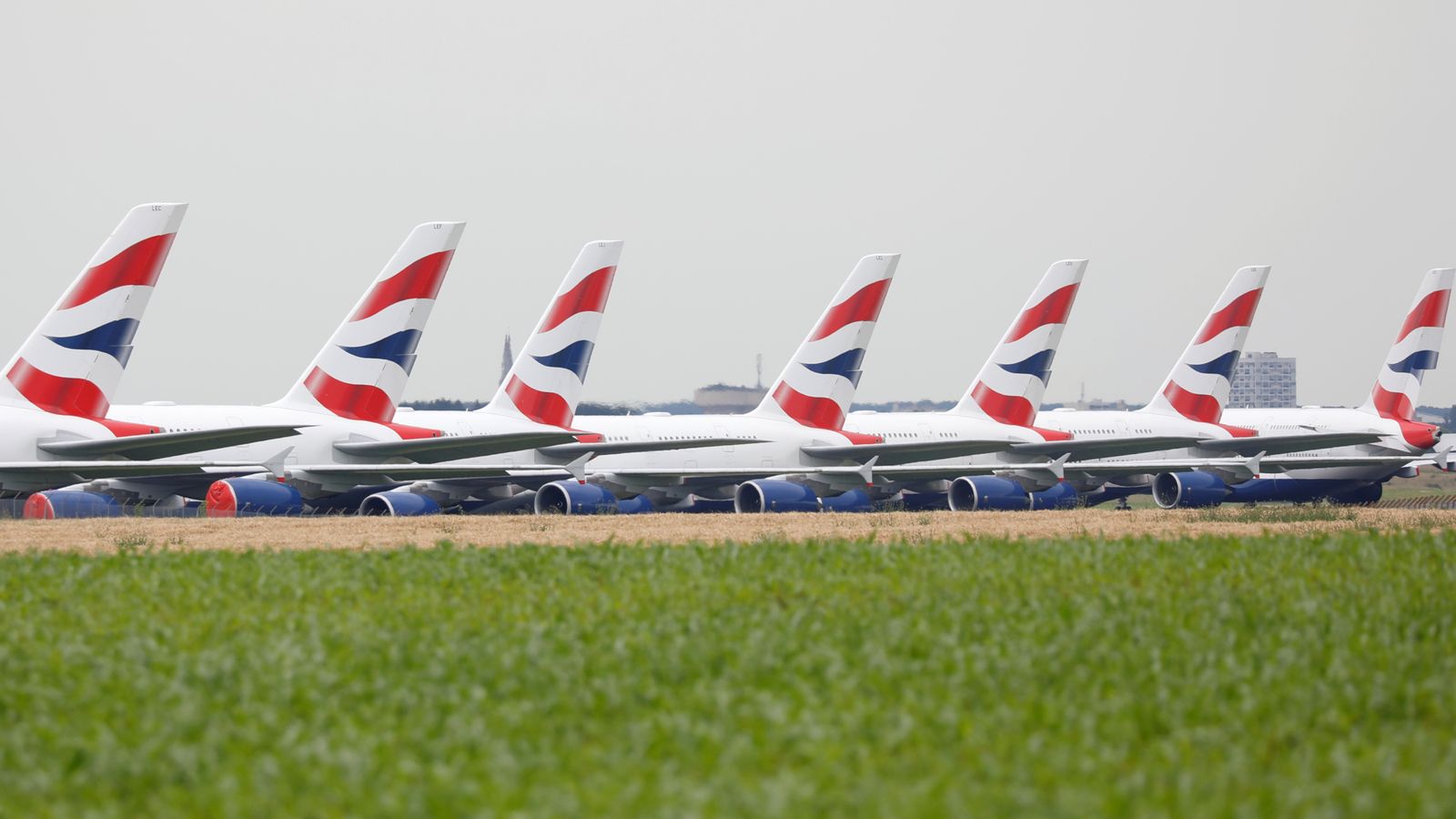
IAG, which also owns Iberia, Aer Lingus and Vueling, has already announced plans to cut up to 12,000 jobs at BA as well as retire its entire fleet of 31 Boeing 747 jumbo jets because of the travel downturn.

The slower recovery faced by network carriers such as IAG was highlighted by the group downgrading its passenger capacity outlook for the peak summer months — July, August and September — to just 26 per cent of last year’s levels, compared with its previous plan to fly about 45 per cent.

Mr Walsh said the move was down to uncertainty on travel restrictions in light of a new surge of coronavirus infections across Europe and elsewhere. He pointed to the recent decision by the UK government to reimpose 14-day quarantine restrictions on travellers arriving from Spain after the country reported a rise in infections in some regions.

He said airlines such as BA, which has about 80 per cent of its capacity in long-haul international flying, would face a greater challenge compared with budget rivals such as Ryanair and easyJet, as long-haul and business travel take longer to recover than short-haul leisure flying.

The group said passenger traffic fell 98 per cent in the second quarter because it was “only able to operate a skeleton passenger schedule”. It does not expect the aviation industry to recovery from the pandemic until at least 2023.

The second-quarter operating loss included about €812m of exceptional costs related to impairment of IAG’s aircraft fleet. It had posted a profit of €960m in the same quarter last year.

Airlines across the world have been hit hard by the crisis and IAG is just the latest to seek emergency funding to shore up its finances through the savage aviation downturn.

EasyJet last month sought to raise £450m with an equity placing representing almost 15 per cent of its share capital. Virgin Atlantic has also agreed a £1.2bn rescue package and most carriers are slashing jobs.

As part of IAG’s capital raising, Qatar Airways has decided to take up its right to propose two directors to join the IAG board. The capital increase is dependent on shareholder approval at its general meeting on September 8.

In a separate announcement, IAG announced that Spanish executive Javier Ferrán will become its new chairman in January, replacing the long-serving Antonio Vázquez.

Let's block ads! (Why?)


https://news.google.com/__i/rss/rd/articles/CBMiP2h0dHBzOi8vd3d3LmZ0LmNvbS9jb250ZW50LzU1YTc5MmUzLWRkNzYtNGUzYS05YzBiLWMyMmJlYmQ5ZTFkZtIBP2h0dHBzOi8vYW1wLmZ0LmNvbS9jb250ZW50LzU1YTc5MmUzLWRkNzYtNGUzYS05YzBiLWMyMmJlYmQ5ZTFkZg?oc=5

2020-07-31 13:55:00Z
52780966217429

House prices spike to 11-year high - but there are fears it is 'a false dawn' - Sky News

UK house prices saw their biggest rise in 11 years this month as the property market bounced back quicker than expected with the easing of lockdown restrictions.

However, economists have cautioned reading too much into the increase in terms of the economic recovery, warning it may prove "a false dawn" as the fallout of the coronavirus pandemic makes itself felt on jobs and temporary support measures end.

Prices were up by 1.7% in July, according to a closely watched survey - the largest monthly hike since August 2009, when the market was recovering from the financial crisis.

preview image
'We need to squeeze brake pedal'

The Nationwide Building Society said the average price of a home sold in the last month was £220,936, up from £216,403 in June.

The mortgage lender said it expected price gains to continue in the short term, helped by a temporary cut in stamp duty, which Chancellor Rishi Sunak announced to help what he saw as an ailing market.

Nationwide's chief economist Robert Gardner said: "The bounce back in prices reflects the unexpectedly rapid recovery in housing market activity since the easing of lockdown restrictions."

But he also said the pandemic itself might be influencing people's behaviour.

More from Covid-19

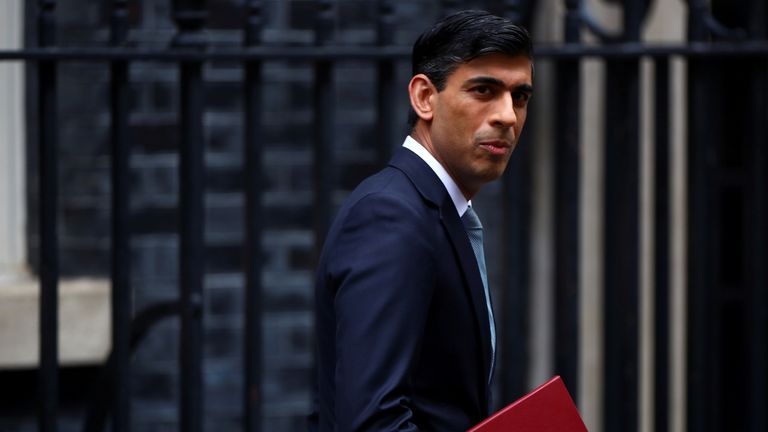
Chancellor of the Exchequer Rishi Sunak
Image: A temporary cut in stamp duty by the chancellor will help price gains in the short term

In May, a survey by the building society showed that around 15% of people were thinking of moving as a result of lifestyle changes caused by the COVID-19 crisis.

But Mr Gardner warned homeowners not to assume the market had recovered based on one month's results.

He said: "There is a risk this proves to be something of a false dawn.

"Most forecasters expect labour market conditions to weaken significantly in the quarters ahead as a result of the after-effects of the pandemic and as government support schemes wind down.

"If this comes to pass, it would likely dampen housing activity once again in the quarters ahead."

Guy Harrington, the chief executive of property lender Glenhawk, said: "The UK housing market is in a honeymoon phase: post-lockdown, with sentiment boosted as both banks remain desperate to lend and by government stamp duty and Help to Buy proposals.

"The reality is very different.

"The UK is staring down the barrel of a period of unprecedented pain, underpinned by mass unemployment as the furlough scheme ends and a likely second spike, which will hit consumer confidence in unimaginable ways and undo all the gains seen in recent months.

"If you think we've seen the worst, 2021 may just top it."

Let's block ads! (Why?)


https://news.google.com/__i/rss/rd/articles/CBMiYGh0dHBzOi8vbmV3cy5za3kuY29tL3N0b3J5L2hvdXNlLXByaWNlcy1zcGlrZS10by0xMS15ZWFyLWhpZ2gtYnV0LWZlYXJzLW9mLWEtZmFsc2UtZGF3bi0xMjAzOTg4MNIBZGh0dHBzOi8vbmV3cy5za3kuY29tL3N0b3J5L2FtcC9ob3VzZS1wcmljZXMtc3Bpa2UtdG8tMTEteWVhci1oaWdoLWJ1dC1mZWFycy1vZi1hLWZhbHNlLWRhd24tMTIwMzk4ODA?oc=5

2020-07-31 13:11:04Z
52780966074668

Eurozone suffers deepest contraction on record - BBC News

Spain has been plunged into its deepest recession in modern times by the coronavirus pandemic.

Its economy shrank by 18.5% in the April-to-June period, having already fallen by 5.2% in the first three months of the year.

The country was the worst performer in the eurozone, which saw its overall GDP decline by a record 12.1%.

France's economy has also been badly hit, with GDP there falling by 13.8% in the second quarter.

The French statistics agency said the low point had come in April, with a gradual recovery in May and June as lockdown restrictions eased, but economic activity was still well below normal.

Italy, which was among the first European countries to be hit by the pandemic, has reported a similar drop, with the economy contracting by 12.4%. However, the fall was less steep than expected.

Across the EU, the economic contraction was 11.9%.

The official Eurostat agency said the falls were the largest since it began recording the figures in 1995.

The figures are dreadful, but not a surprise. The eurozone includes some of the countries most severely affected by deaths from coronavirus.

Lockdowns earlier in the pandemic were draconian and in any case, many people have been wary of exposing themselves to the risk of infection. The result was some extraordinary declines in economic activity.

In the case of Spain, a group of service industries which includes transport, restaurants and accommodation suffered a decline of more than 50% in the first half of 2020.

Even Germany was hit hard, in spite of a less severe health situation and being less exposed to the damage done to the tourist industry. German consumers cut back. It is also a big goods exporter and global trade has been severely disrupted by the pandemic.

The US and Germany both announced huge falls in national output on Thursday, showing the global economic impact of Covid-19.

The US saw its sharpest contraction in decades, with the economy shrinking at an annual rate of 32.9% between April and June.

Germany reported its deepest quarterly decline on record, as total production of goods and services fell by 10.1%.

The Spanish figures, which were worse than forecast, have wiped out the growth of the past six years.

Economic activity in Spain has declined by a total of more than a fifth so far this year. Service industries including transport, restaurants and accommodation have been hardest hit, as they have been most affected by the restrictions on movement imposed to fight the pandemic.

Spain has suffered a large number of deaths in the course of the health crisis, and a correspondingly dramatic impact on the economy was seen as inevitable, says BBC World Service economics correspondent Andrew Walker.

Our correspondent adds that although many of the restrictions on commercial activity in Spain have now been eased, any rebound is sure to be impaired by the recent resurgence of coronavirus infections in some areas.

Let's block ads! (Why?)


https://news.google.com/__i/rss/rd/articles/CBMiLGh0dHBzOi8vd3d3LmJiYy5jby51ay9uZXdzL2J1c2luZXNzLTUzNjA2MTAx0gEwaHR0cHM6Ly93d3cuYmJjLmNvLnVrL25ld3MvYW1wL2J1c2luZXNzLTUzNjA2MTAx?oc=5

2020-07-31 10:30:00Z
52780963998143

House prices bounced back in July, says Nationwide - BBC News

House prices bounced back in July, climbing 1.7% during the month compared to a 1.5% fall in June, according to the Nationwide.

"The bounce back in prices reflects the unexpectedly rapid recovery in housing market activity since the easing of lockdown restrictions," it said.

Activity has been boosted by pent-up demand and the stamp duty holiday.

But the lender warned: "There is a risk this proves to be something of a false dawn."

The average price in July was £220,936, according to the Nationwide. However, while prices were up 1.5% from a year earlier, July's price was 1.6% lower than in April at the beginning of lockdown.

However, it was a marked change to June's prices when the market posted its first annual fall in eight years.

The rebound in prices reflected a number of factors, said Robert Gardner, Nationwide's chief economist.

He said pent up demand was coming through, from people who had already decided to move before lockdown began. But some people were moving because of their lockdown experience, he said.

"Behavioural shifts may be boosting activity, as people reassess their housing needs and preferences as a result of life in lockdown," he said.

"Moreover, social distancing does not appear to be having as much of a chilling effect as we might have feared, at least at this stage."

He said the upward trends look set to continue in the near term, and will be further boosted by the recently-announced stamp duty holiday.

But he added a note of caution. "Most forecasters expect labour market conditions to weaken significantly in the quarters ahead as a result of the after effects of the pandemic and as government support schemes wind down.

"If this comes to pass, it would likely dampen housing activity once again in the quarters ahead."

Lenders cautious

Mark Harris, chief executive of mortgage broker SPF Private Clients, also warned that the future may not be so positive for the housing market.

"Lenders remain keen to lend but also cautious as to borrowers' financial positions, given the impending end of the furlough scheme and a number of redundancies which have already been announced," he said.

Anna Clare Harper, author of Strategic Property Investing, warned: "What no one can forecast is what happens next, with some nerves among homeowners, investors and economists as to what the future may hold."

Jonathan Hopper, chief executive of Garrington Property Finders, said lockdown would have a lasting effect on the property market.

"Like so much else that has been transformed by the pandemic, the property market map is being redrawn as people reassess what they want from their homes and when, or even if, they need to travel to work," he said.

"Three months of being cooped up in the same four walls has led many people to consider a move."

Let's block ads! (Why?)


https://news.google.com/__i/rss/rd/articles/CBMiLGh0dHBzOi8vd3d3LmJiYy5jby51ay9uZXdzL2J1c2luZXNzLTUzNjA2ODY50gEwaHR0cHM6Ly93d3cuYmJjLmNvLnVrL25ld3MvYW1wL2J1c2luZXNzLTUzNjA2ODY5?oc=5

2020-07-31 08:38:45Z
52780966074668

Record losses cannot be sustained without action, says BA owner - Sky News

The chief executive of British Airways' owner IAG has warned record losses cannot be sustained as he defended cutbacks to the airline.

Speaking to Sky News' Ian King Live programme, Willie Walsh stressed the unprecedented challenge posed by the coronavirus pandemic and warned it was "going to involve pain for everybody".

He was speaking as IAG, which also owns Iberia and Aer Lingus, reported an operating loss of €1.4bn (£1.3bn) euros for the second quarter.

The aviation industry globally has been devastated by the halt to flying caused by the COVID-19 crisis, forcing tens of thousands of redundancies, state bailouts and the collapse of some carriers.

The gradual return to operations, needed to salvage airlines' peak summer season when they make most of their profits, has also been threatened by a resurgence of coronavirus cases in some popular holiday destinations such as Spain and France.

British Airways has warned it needs to slash 12,000 jobs and plans to change the contracts of its remaining 30,000 staff, including pay cuts.

This has provoked a furious reaction from the cabin crew union Unite, which has threatened strike action.

More from Covid-19

Mr Walsh said: "I am not going to deny that pay cuts are part of the proposal, but we have put in place a plan that would limit the pay cut to 20% so there are actions being taken to soften the blow.

"I recognise it is a serious blow. This is a really worrying time for everybody. We want people to work with us and we want to get through this and remove the uncertainty as quickly as we can.

"But it is going to involve pain for everybody. It's not just about cabin crew it's about everybody in the airline and we want to make sure we can get back to flying our customers, doing what we do best, as quickly as we can, but doing it in a way that will guarantee our future.

"That's absolutely critical. We cannot sustain the level of losses that we are sustaining at the moment. Our business just cannot support those level of losses so we do have to change for the future."

"This isn't just about British Airways. Every company that you talk to is facing some sort of challenge as we go through this. And I think for many the challenge is actually going to get worse.

"We are not through the peak of this, there is a lot more to go. It's going to be a very tough time and the more we work with one another and the more we support one another the better for everybody."

Mr Walsh pointed out the scale of the challenge "goes way beyond" anything experienced in the wake of the 9/11 terror attacks and the 2008 financial crash.

He said: "This is an absolute necessity.

"Anyone who argues that this is opportunism, or that we don't need to do this or this can be addressed through temporary measures seriously underestimates the scale of the challenge that the industry is facing.

"We need to take action, not just to survive through this crisis but to make sure we can secure the maximum number of jobs possible in the business going forward."

Let's block ads! (Why?)


https://news.google.com/__i/rss/rd/articles/CBMiYmh0dHBzOi8vbmV3cy5za3kuY29tL3N0b3J5L3JlY29yZC1sb3NzZXMtY2Fubm90LWJlLXN1c3RhaW5lZC13aXRob3V0LWFjdGlvbi1zYXlzLWJhLW93bmVyLTEyMDM5NjU00gFmaHR0cHM6Ly9uZXdzLnNreS5jb20vc3RvcnkvYW1wL3JlY29yZC1sb3NzZXMtY2Fubm90LWJlLXN1c3RhaW5lZC13aXRob3V0LWFjdGlvbi1zYXlzLWJhLW93bmVyLTEyMDM5NjU0?oc=5

2020-07-31 08:43:02Z
52780966217429

Coronavirus plunges Europe’s leading economies into historic recessions - Financial Times

The coronavirus pandemic has plunged Europe’s leading economies into historic recessions, figures published on Friday showed.

France, Italy and Spain all reported double-digit quarter-on-quarter falls in economic output in the three months to June.

The figures came after both the US and Germany on Thursday reported a loss of about a tenth of their gross domestic product in the second quarter.

Spain’s economy was worst hit, with its GDP declining 18.5 per cent, according to preliminary estimates by the National Statistics Institute.

The fall was worse than analysts had expected and followed a contraction of 5.2 per cent in the first quarter, wiping out seven years of growth since the country’s last recession and leaving output at levels last seen in 2002.

“It’s the kind of drop one would see in a war,” said José Ignacio Conde Ruiz, a professor of economics at Madrid’s Complutense University. “The only sector that grew was agriculture.”

Line chart of Real GDP (rebased, 2015 = 100) showing Pandemic wipes  years of growth from Spain's economy

France suffered its largest contraction in output since the second world war. Its GDP was down 13.8 per cent quarter on quarter in the three months to June, although the fall was slightly smaller than analysts anticipated.

This marked the country’s third consecutive quarter of contraction, according to the official statistics agency Insee.

The decline was driven by a 25.5 per cent decline in exports and a 20 per cent drop in government investment. Insee also revised its figure for France’s first-quarter contraction down by 0.6 percentage points, to a contraction of 5.9 per cent.

Italy’s GDP fell by 12.4 per cent between the first and the second quarter, and by 17.3 per cent year on year, its national statistics office said — the steepest contraction in 25 years but slightly better than analysts had expected.

The country is mired in its fourth recession in just over a decade and its economy had already been shrinking before the pandemic hit. The second-quarter contraction took output back to levels last seen in the early 1990s.

Italy’s official forecast is for a full-year GDP contraction of 8 per cent but Roberto Gualtieri, the economy minister, said this could be revised lower.

However Spain’s performance means that Italy is less likely to be the worst hit European economy, as European Commission forecasts had previously suggested.

Jack Allen-Reynolds, at the consultancy Capital Economics, said real-time data suggested that Italian economic activity had continued to pick up in July, while the government announced new stimulus measures which are likely to be spent on extending wage subsidies and supporting the tourism sector.

By contrast, the fallout from the initial lockdown is likely to be compounded in Spain by the fresh rise in new coronavirus cases that threatens the reopening of its crucial tourism sector.

Barring another full lockdown, Spain should see a double-digit rebound in GDP in the third quarter, Mr Conde Ruiz said — but he added that, even so, it would still be “a disaster” compared with the same period in 2019.

Additional reporting by Ian Mount in Madrid

Let's block ads! (Why?)


https://news.google.com/__i/rss/rd/articles/CBMiP2h0dHBzOi8vd3d3LmZ0LmNvbS9jb250ZW50L2M0NWNmODY3LTI4MjEtNGQzYS1hYjQ4LTBiYzgwOWY4Y2YyNtIBP2h0dHBzOi8vYW1wLmZ0LmNvbS9jb250ZW50L2M0NWNmODY3LTI4MjEtNGQzYS1hYjQ4LTBiYzgwOWY4Y2YyNg?oc=5

2020-07-31 08:16:00Z
52780966136809