Senin, 01 Juni 2020

Thousands of Ikea shoppers face three-hour queues as it reopens 19 stores - The Sun

THOUSANDS of Ikea shoppers have been queuing for up to three hours to get into stores this morning after the Swedish furniture giant reopened 19 branches.

Images from shops across the country show lines of customers queuing around store car parks, with some shoppers having arrived as early as 5.30am.

Huge queues can be seen forming around the Ikea Nottingham branch today

18

Huge queues can be seen forming around the Ikea Nottingham branch todayCredit: SWNS:South West News Service

Some Ikea shoppers reported having to wait up to three hours to get inside the Warrington branch in Cheshire, according to the Liverpool Echo.

Customers have also faced 30 minute waits in their vehicles just to get into store car parks.

Elsewhere, one shopper described how the queues to get into the Reading branch took up three levels of car park.

In some stores, customers are seen being separated by metal barriers and red tape.

As well as queuing outside, shoppers have also been lining up across inside car parking spaces.

Aerial shots show customers waiting to get inside in Warrington

18

Aerial shots show customers waiting to get inside in WarringtonCredit: Getty Images - Getty
Ikea has reopened 19 of its stores

18

Ikea has reopened 19 of its storesCredit: Getty Images - Getty
Shoppers face three hour queues to get into stores

18

Shoppers face three hour queues to get into storesCredit: Zenpix
Ikea shoppers seen queuing outside its Warrington store

18

Ikea shoppers seen queuing outside its Warrington storeCredit: Mercury Press
Customers waiting to get inside Ikea in Lakeside, Essex

18

Customers waiting to get inside Ikea in Lakeside, EssexCredit: PA:Press Association
Ikea shoppers forming large queues in Tottenham this morning

18

Ikea shoppers forming large queues in Tottenham this morningCredit: Reuters
Long lines of shoppers outside the Greenwich branch

18

Long lines of shoppers outside the Greenwich branchCredit: London News Pictures
Shoppers are being separated by metal barriers - picture taken in Warrington

18

Shoppers are being separated by metal barriers - picture taken in WarringtonCredit: Mercury Press
Shoppers have even been queuing around inside car parks - picture taken in Tottenham

18

Shoppers have even been queuing around inside car parks - picture taken in TottenhamCredit: Reuters
Shoppers at the till with their items in Edmonton

18

Shoppers at the till with their items in EdmontonCredit: Press Association
Customers carrying away their purchases in Edmonton

18

Customers carrying away their purchases in EdmontonCredit: Press Association
Another shopper leaving an Ikea store with their new items

18

Another shopper leaving an Ikea store with their new itemsCredit: PA:Press Association

Tweeting an image of the scene at their local branch, the shopper said: "Three parking floors of queue at Reading."

Another shopper tweeted: "Just at the Ikea in Warrington, being told 30 minute queue to get into the car park and then a 2 hour wait to get into the store. Apparently about 1,000 people waiting."

A third Ikea fan said: "Queue for Ikea Leeds [looks] horrendous. Must be 1,000 people here. If you haven't set off yet then I wouldn't bother."

Another tweeted: "Ikea Belfast reopened today. Apparently the queue can be seen from space."

Meanwhile, this customer said: "I am pretty desperate for a few things from Ikea but learning people have been queuing at my local one since 5:30am makes me very glad I didn’t brave it today."

The reopening of Ikea comes after the government eased restrictions on homeware retailers and garden centres.

Other stores that have already reopened across the UK include Dunelm, DFS and Matalan - plus car showrooms and outdoor markets have been allowed to open again from today.

Shoppers visiting newly reopened Ikea stores will have to follow strict social distancing measures, and Ikea will only allow one adult and one child per household inside at any one time.

Which Ikea stores have reopened?

THE following Ikea stores have reopened today:

  • Belfast
  • Birmingham
  • Bristol
  • Croydon
  • Exeter
  • Gateshead
  • Greenwich
  • Lakeside
  • Leeds
  • Manchester
  • Milton Keynes
  • Norwich
  • Nottingham
  • Reading
  • Sheffield
  • Southampton
  • Tottenham
  • Warrington
  • Wembley

Play areas and restaurants will remain shut, although customers will still be able to buy food, including Ikea’s popular meatballs, from food courts.

Bosses said they aim to limit customer numbers via a staggered entry system and are asking shoppers to “come prepared with ready-made lists and own bags”.

Extra hand sanitiser and more deep cleans of bags, trolleys, bathrooms, equipment and touchscreens will take place.

Click and collect facilities are also available again from today.

Due to separate lockdown measures, stores in Scotland, Wales and the Republic of Ireland will remain closed for browsing, though.

Car showrooms also reopened today, with social distancing measures in place

18

Car showrooms also reopened today, with social distancing measures in placeCredit: PA:Press Association
Pictures show staff and customers separated by screens

18

Pictures show staff and customers separated by screens Credit: PA:Press Association
Car showrooms are the latest establishments that have been allowed to reopen

18

Car showrooms are the latest establishments that have been allowed to reopenCredit: London News Pictures
People shopping at Leicester market

18

People shopping at Leicester marketCredit: EPA
Leicester market reopened today, June 1

18

Leicester market reopened today, June 1Credit: EPA

Ikea has 22 shops in the UK, three order and collection points, and two planning studios in London.

The planning studios, and order and collection points are yet to reopen.

Ikea temporarily closed its stores on March 22, in line with government lockdown restrictions.

An Ikea spokesperson told The Sun: "We’re really pleased to be welcoming our customers and co-workers back to our stores today.

"Their health and safety remains our top priority, which is why have put extensive and enhanced measures in place to create a safe and comfortable experience. 

"Whilst we understand it’s frustrating for customers to face delays due to these measures, they are in place for everyone’s safety, and we’re grateful for everyone’s patience in respecting them."

Meanwhile, images show car showrooms and outdoor markets open for the first time since lockdown came into place.

Images show market workers wearing masks, while car showrooms have been fitted with plastic screens at desks to help keep staff safe.

The new measures mean shoppers will be able to visit their local market and buy a new car once more.

Let's block ads! (Why?)


https://news.google.com/__i/rss/rd/articles/CBMiP2h0dHBzOi8vd3d3LnRoZXN1bi5jby51ay9tb25leS8xMTc1NDkyOS9pa2VhLXF1ZXVlLW9wZW4tc3RvcmVzL9IBQ2h0dHBzOi8vd3d3LnRoZXN1bi5jby51ay9tb25leS8xMTc1NDkyOS9pa2VhLXF1ZXVlLW9wZW4tc3RvcmVzL2FtcC8?oc=5

2020-06-01 13:30:12Z
52780825506427

Manufacturers urge bailout as sector suffers - BBC News

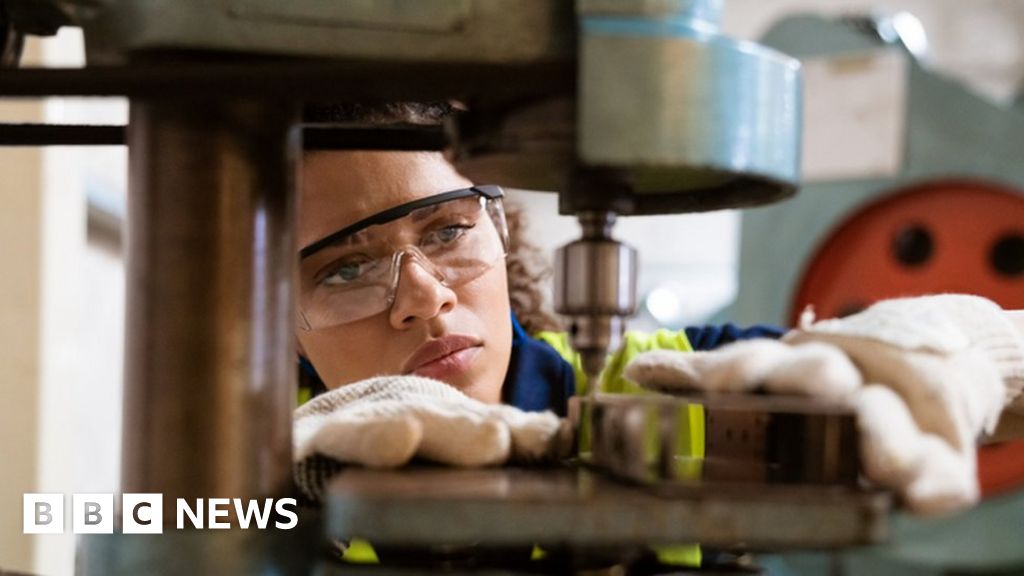
The coronavirus crisis has left many manufacturers on the "cliff edge" and in need of government intervention, an industry body has warned,

The government should step in to support key sectors, in line with other countries, Make UK urged.

It said support should especially be targeted at the aerospace, carmaking and steel sectors.

Its plea came as new figures showed the sharp downturn in UK manufacturing continued last month.

The closely watched IHS Markit/CIPS Purchasing Managers' Index (PMI) for the sector gave a reading of 40.7 for May.

It was up from April's record low of 32.6, suggesting the sector was not declining as quickly as before. Anything below 50 indicates contraction.

Rob Dobson, director at IHS Markit, said: "Those who typically see the glass half-empty will note that the UK manufacturing sector remained mired in its deepest downturn in recent memory.

"However, the glass-half-full perspective is one where the rate of contraction has eased considerably since April, meaning - absent a resurgence of infections - the worst of the production downturn may be behind us."

Uncharted territory

Make UK chief executive Stephen Phipson said: "We are now in such uncharted territory that what would until recently been thought of as unthinkable is now very much the reality.

"While the support schemes in operation are providing significant support to the economy, there are some sectors and companies who are fundamentally sound businesses and were trading positively before the pandemic.

"Instead, however, they have now been driven to the cliff edge by the nature of this crisis and may not survive without direct government intervention."

Mr Phipson said the firms in question were in "key strategic sectors for the UK internationally" and that the government should therefore "intervene directly to provide support and ensure their survival".

Make UK said its research showed that almost three-fifths of manufacturers believed it would take more than a year for trading conditions to return to normal.

Commenting on the PMI figures, the EY Item Club said they lent support to the belief that UK economic activity could improve as lockdown restrictions are progressively eased over the coming weeks.

But it added: "Nevertheless, the UK seems on course for a record GDP contraction in the second quarter."

It said it expected the UK economy to shrink about 15% quarter-on-quarter in the April-to-June period.

"While the EY Item Club expects the economy to return to clear growth from the third quarter, we still see the economy contracting around 8% over 2020," it added.

"This assumes that there is a gradual further lifting of the lockdown over the coming weeks, following the latest moves that came into effect on 1 June."

Let's block ads! (Why?)


https://news.google.com/__i/rss/rd/articles/CBMiLGh0dHBzOi8vd3d3LmJiYy5jby51ay9uZXdzL2J1c2luZXNzLTUyODc3NTUx0gEwaHR0cHM6Ly93d3cuYmJjLmNvLnVrL25ld3MvYW1wL2J1c2luZXNzLTUyODc3NTUx?oc=5

2020-06-01 10:32:17Z
52780822946622

Holiday firms in fresh plea over 2-week flight quarantine plans - BBC South East Wales

A group of 200 travel companies has written to Home Secretary Priti Patel asking for current quarantine plans for people entering the UK to be scrapped.

It follows calls last week from MPs and travel bosses to reconsider the rules.

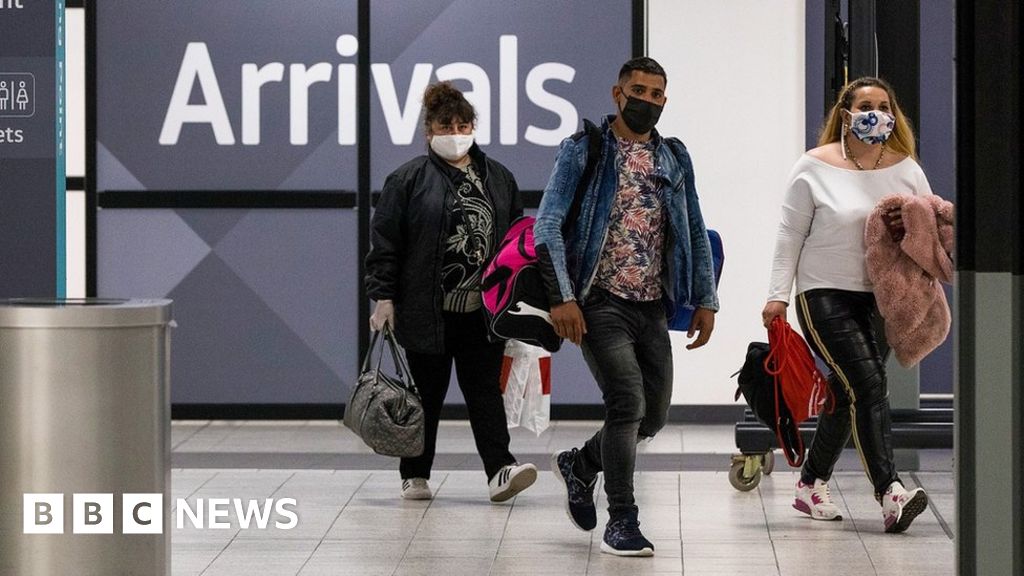
From 8 June, people entering the UK from abroad will be told to isolate for 14 days.

The letter suggests travel should be possible for people - without quarantine - between destinations "deemed safe from coronavirus".

So-called air bridges would allow visitors from countries where coronavirus infection rates are low into the UK, without having to self-isolate for two weeks.

The lead author of the letter, George Morgan-Grenville, boss of tour operator Red Savannah, said: "This is not just a group of company bosses complaining, but employees from bottom to top calling for the quarantine plans to be quashed."

£1,000 fine

Other firms and travel bosses who have signed include hotelier Sir Rocco Forte, hotels The Ritz, The Connaught and Mandarin Oriental, and upmarket travel agent Kuoni.

Last month, in a letter to the prime minister, bosses of airlines such as EasyJet, Tui, Jet2 and Virgin Atlantic, as well as industry bodies Airlines UK, the British Chambers of Commerce, UK Hospitality and manufacturing association Make UK said that while they fully support the government's commitment to public health, they have "serious reservations" about a "blanket approach" to all arrivals into Britain.

Passengers arriving in the UK by plane, ferry or train - including UK nationals - will have to provide an address where they will remain for 14 days. There is a £100 penalty for anyone found to have not filled in this ''contact locator'' form.

Surprise visits will be used to check they are following the rules. Those in England could be fined up to £1,000 if they fail to self-isolate, while governments in Scotland, Wales and Northern Ireland can also impose penalties.

Passengers will be asked to drive in their own car to their destination, where possible. If they do not provide an address, the government will arrange accommodation.

They must then not go to work, school, or public areas, or use public transport or taxis. They should also not have any visitors unless they are providing essential support, and should not go out to buy food or other essentials where they can rely on others.

Let's block ads! (Why?)


https://news.google.com/__i/rss/rd/articles/CBMiLGh0dHBzOi8vd3d3LmJiYy5jby51ay9uZXdzL2J1c2luZXNzLTUyODczNjg50gEwaHR0cHM6Ly93d3cuYmJjLmNvLnVrL25ld3MvYW1wL2J1c2luZXNzLTUyODczNjg5?oc=5

2020-06-01 08:31:07Z
52780824966286

Coronavirus: Primark rules out fire sale of excess stock when UK stores reopen - Sky News

The owner of Primark has ruled out a fire sale of excess stock as trading prepares to resume in the UK following the coronavirus lockdown.

Associated British Foods (ABF) said it was aiming to reopen all 153 stores in England on 15 June - in line with government guidance covering operations for non-essential retailers as the COVID-19 health crisis eases.

The company said it anticipated that Primark stores in Scotland, Northern Ireland and Wales would follow later in the month, but it cautioned that the go ahead was yet to be granted by the authorities in those nations.

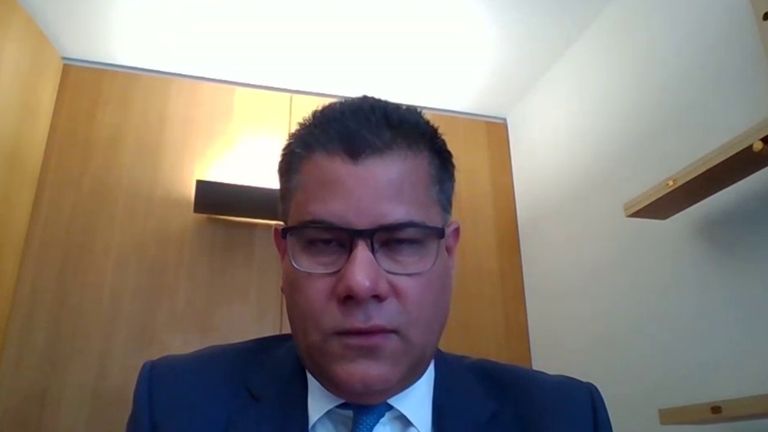
Alok Sharma
Business Secretary: 'This is a sensitive time'

It has reopened some sites in mainland Europe with "reassuring and encouraging" results.

All UK sites were shut in March as the lockdown forced high streets to effectively shut down.

ABF told investors that it had no plans to launch an online operation despite the shuttering of Primark costing it around £650m for each month of the shutdown.

It said it had limited the financial damage by cutting costs by more than 50% and would roll unsold stock over rather than move to shift it at a loss to margins.

More from Business

Shares in the company, which has wider interests including grocery and sugar divisions, were almost 8% higher in mid-morning deals having lost more than a quarter of their value in the year to date.

Commenting on the stock mountain, finance chief John Bason told the Reuters news agency: "What we will do, because we've got the financial wherewithal, we'll carry it through to next year."

ABF said: "As European governments have begun to ease restrictions on clothing retailing we have been able to reopen stores.

"Safety has been our highest priority in our detailed preparations to welcome our customers and employees back to stores. We are following government safety advice in all markets.

"Importantly, we will apply the valuable experience gained from more than 100 stores which are already open as we open the remainder of our estate, including stores across the UK.

"Social distancing protocols, hand sanitiser stations, perspex screens at tills and additional cleaning of high frequency touch points in the store are among the measures we are implementing."

Let's block ads! (Why?)


https://news.google.com/__i/rss/rd/articles/CBMicWh0dHBzOi8vbmV3cy5za3kuY29tL3N0b3J5L2Nvcm9uYXZpcnVzLXByaW1hcmstcnVsZXMtb3V0LWZpcmUtc2FsZS1vZi1leGNlc3Mtc3RvY2std2hlbi11ay1zdG9yZXMtcmVvcGVuLTExOTk4NDY10gF1aHR0cHM6Ly9uZXdzLnNreS5jb20vc3RvcnkvYW1wL2Nvcm9uYXZpcnVzLXByaW1hcmstcnVsZXMtb3V0LWZpcmUtc2FsZS1vZi1leGNlc3Mtc3RvY2std2hlbi11ay1zdG9yZXMtcmVvcGVuLTExOTk4NDY1?oc=5

2020-06-01 08:47:04Z
52780825033132

Global stocks rise after Trump holds back on China retaliation - Financial Times

Global stocks pushed higher and the dollar weakened on Monday, after Donald Trump’s latest escalation of his dispute with China fell short of traders’ worst fears.

European markets rose, as the FTSE 100 and CAC 40 each gained about 1.5 per cent in the first hour of trading. The moves take the Stoxx Europe 600, a composite index of the region’s largest companies, within sight of three-month highs.

Speaking after markets closed in Asia and Europe on Friday, Mr Trump said he would revoke special trade privileges for Hong Kong in retaliation for Beijing’s decision to impose a controversial security law on the former British colony. But he failed to unveil any specific measures against the financial hub, and analysts said the phase-one trade deal with China appeared safe for now.

“China’s response to [the] US around the Hong Kong issue [will] probably be mild and [the] US-China phase-one deal is likely to hold,” added Johanna Chua, chief Asia-Pacific economist at Citigroup. Hong Kong “protests have been on a smaller scale since the news of the national security law, which also helps soothe market sentiment”.

Shares in Hong Kong and mainland China jumped on Monday in the first day of trading after the US president spoke.

Hong Kong’s Hang Seng index rallied 3.4 per cent while China’s CSI 300 gauge of Shanghai- and Shenzhen-listed shares added 2.7 per cent, as investors deemed that Mr Trump had pulled his punches in a press conference on Friday.

China’s onshore traded renminbi added 0.3 per cent to trade at 7.1157 per dollar. The dollar index, which tracks the greenback against a basket of currencies, lost 0.3 per cent.

“Market participants are relieved that President Trump did not announce more meaningful policy actions to hit back at China at last Friday’s press conference,” said Lee Hardman, a currency analyst at MUFG.

“While President Trump’s speech was heated in rhetoric, it lacked specific measures that would directly impact China,” he added.

Futures trade pointed to gains of 0.3 per cent for the S&P 500 on Wall Street, after the US benchmark reversed earlier losses to close up 0.5 per cent after Mr Trump spoke on Friday.

Investor sentiment in mainland China was also supported on Monday by data that showed manufacturing activity in the country expanded in May for the first time since January.

The results of the Caixin-Markit purchasing managers’ index, however, indicated that the global effects of the coronavirus pandemic would continue to weigh on exports from the world’s second-largest economy.

Iris Pang, chief economist for Greater China at ING, said China’s recovery “should take a long time” due to weak global demand.

Elsewhere in Asia, Japan’s Topix added 0.3 per cent on Monday while South Korea’s Kospi index rose 1.8 per cent. In Australia, the S&P/ASX 200 gained 1.1 per cent.

Oil prices slipped with Brent crude, the international benchmark, dropping 0.2 per cent to trade at $37.79 a barrel. WTI, the US marker, was down 0.1 per cent to $35.45.

US government bonds slipped slightly, as the yield on the 10-year Treasury rose 0.025 percentage points to 0.6689 per cent.

Additional reporting by Alice Woodhouse in Hong Kong


Let's block ads! (Why?)


https://news.google.com/__i/rss/rd/articles/CBMiP2h0dHBzOi8vd3d3LmZ0LmNvbS9jb250ZW50LzYxMjhhOTE5LWQzY2ItNGIxOC1iN2I5LTlkMDJhODFjOWIyMtIBP2h0dHBzOi8vYW1wLmZ0LmNvbS9jb250ZW50LzYxMjhhOTE5LWQzY2ItNGIxOC1iN2I5LTlkMDJhODFjOWIyMg?oc=5

2020-06-01 07:42:56Z
52780822946622

Asia's factory pain worsens as China's recovery fails to lift demand - Reuters

TOKYO (Reuters) - Asia’s factory pain deepened in May as the slump in global trade caused by the coronavirus pandemic worsened, with export powerhouses Japan and South Korea suffering the sharpest declines in business activity in more than a decade.

FILE PHOTO: Employees wearing protective face masks and face guards work on the automobile assembly line as the maker ramps up car production with new security and health measures as a step to resume full operations, during the outbreak of the coronavirus disease (COVID-19), at Kawasaki factory of Mitsubishi Fuso Truck and Bus Corp., owned by Germany-based Daimler AG, in Kawasaki, south of Tokyo, Japan May 18, 2020. REUTERS/Issei Kato/File Photo

A series of manufacturing surveys released on Monday suggest any rebound in businesses will be some time off, even though China’s factory activity unexpectedly returned to growth in May.

China’s Caixin/Markit Manufacturing Purchasing Managers’ Index (PMI) hit 50.7 last month, marking the highest reading since January as easing of lockdowns allowed companies to get back to work and clear outstanding orders.

But with many of China’s trading partners still restricted, its new export orders remained in contraction, the private business survey showed on Monday. China’s official PMI survey on Sunday showed the recovery in the world’s second-largest economy intact but fragile.

Japan’s factory activity shrank at the fastest pace since 2009 in May, a separate private sector survey showed while South Korea also saw manufacturing slump at the sharpest pace in more than a decade.

Capital Economics said the region’s manufacturing sector is in deep recession.

“Industry is likely to have seen an initial jump from the easing of lockdown restrictions. And things are likely to continue improving very gradually over the coming months as external demand recovers,” Capital Economics wrote. “But output is still likely to be well below normal levels for many months to come as domestic and global demand remain very depressed.”

Taiwan’s manufacturing activity also fell in May. Vietnam, Malaysia and the Philippines saw PMIs rebound from April, though the indices all remained below the 50-mark threshold that separates contraction from expansion.

Official data on Monday showed South Korea extending its exports plunge for a third straight month.

India’s factory activity contracted sharply in May, extending the major decline seen in April as a government-imposed lockdown hammered demand.

Asia’s economic woes are likely to be echoed in other parts of the world including Europe, where economies continue to suffer huge damage in factory and service sectors.

With many countries starting to ease lockdown restrictions imposed to stop the spread of the virus, which has infected over 5.5 million people globally, equity markets are rallying on hopes for a swift return to health and prosperity.

But the trough in global economic activity will be deeper and the rebound is likely to take longer than previously predicted as the pandemic spreads in waves.

The International Monetary Fund warned last month the global economy will take much longer than expected to recover fully from the virus shock, suggesting a downgrade to its current projection for a 3% contraction this year.

FILE PHOTO - Employees wearing masks work at a factory of the component maker SMC during a government organised tour of its facility following the outbreak of the coronavirus disease (COVID-19), in Beijing, China May 13, 2020. REUTERS/Thomas Peter

A U.S.-China spat over Hong Kong’s status and Beijing’s handling of the pandemic could sour business sentiment and add to already huge strains on the global economy.

The final au Jibun Bank Japan Manufacturing Purchasing Managers’ Index (PMI) fell to a seasonally adjusted 38.4 from 41.9 in April, its lowest since March 2009.

South Korea’s IHS Markit purchasing managers’ index (PMI) edged down to 41.3 in May, the lowest since January 2009 and below 41.6 in April.

Reporting by Leika Kihara; Editing by Sam Holmes

Let's block ads! (Why?)


https://news.google.com/__i/rss/rd/articles/CBMilQFodHRwczovL3d3dy5yZXV0ZXJzLmNvbS9hcnRpY2xlL3VzLWhlYWx0aC1jb3JvbmF2aXJ1cy1nbG9iYWwtZWNvbm9teS9hc2lhcy1mYWN0b3J5LXBhaW4td29yc2Vucy1hcy1jaGluYXMtcmVjb3ZlcnktZmFpbHMtdG8tbGlmdC1kZW1hbmQtaWRVU0tCTjIzODE1WtIBNGh0dHBzOi8vbW9iaWxlLnJldXRlcnMuY29tL2FydGljbGUvYW1wL2lkVVNLQk4yMzgxNVo?oc=5

2020-06-01 06:16:12Z
52780822946622

Minggu, 31 Mei 2020

Carly Fiorina's journey from secretary to CEO - BBC News

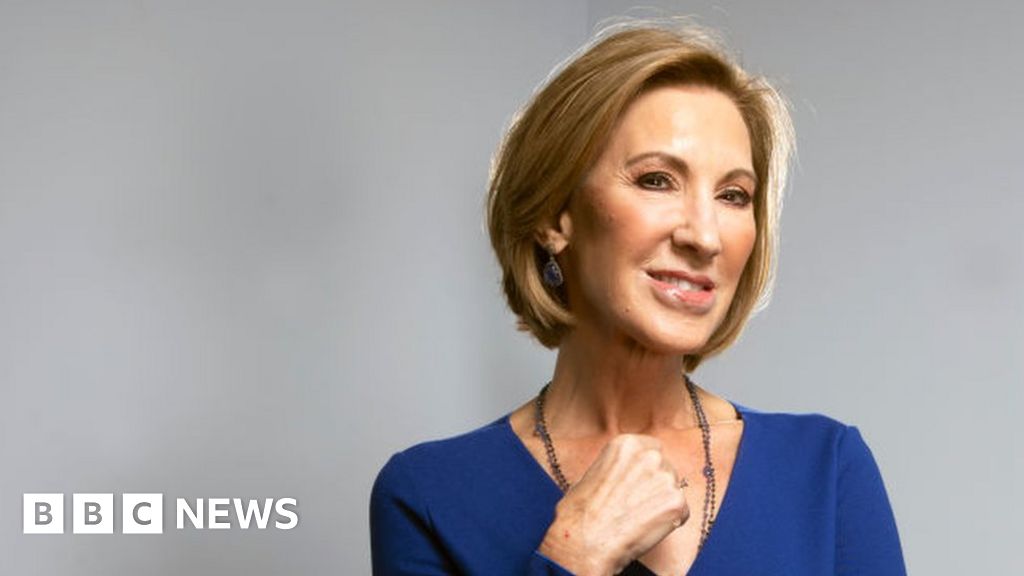
The BBC's weekly The Boss series profiles different business leaders from around the world. This week we speak to Carly Fiorina, US business leader, political figure and philanthropist.

It should give hope to any young person striving to reach the top, knowing that Carly Fiorina started her business career as a humble secretary.

"I spent my time greeting visitors, answering phones, typing memos," she says. "But I was really committed to the job, arriving early, and leaving late."

Mrs Fiorina, 65, is looking back on her 21-year-old self, who in 1976 got her first full-time job at a small property company in Palo Alto, California.

From that modest start she went on to become the first female chief executive of a Fortune 50 company (the 50 largest firms in the US). This happened in 1999 when, aged 44, she was appointed to the top job at computer group Hewlett-Packard.

Fortune magazine subsequently named her the most powerful woman in US business five years in a row, with the publication declaring that "Carly Fiorina didn't just break the glass ceiling, she obliterated it".

However, her time at HP was not universally regarded as a success, with much criticism of her decision to merge the business with rival Compaq in 2001. And in 2005 she resigned after a disagreement with her fellow board members.

Mrs Fiorina subsequently entered the political arena, first as an adviser to the late John McCain's 2008 presidential campaign. McCain went on to lose the election to Barack Obama.

Eight years later, she herself ran to become the Republican Party candidate for the 2016 presidential election. She dropped out after nine months, due to low polling numbers, with Donald Trump going on to win both the candidacy and, of course, the presidency. She said at the time that she was "horrified" by Trump.

Born in 1954 in Austin, Texas, her family moved around a lot, due to her father's job. Her dad, Joseph Sneed, was a law professor who went on to become US deputy attorney general. Her mother was a painter.

She got a degree in philosophy and medieval history from Stanford University in California, before gaining a Master of Business Administration from the University of Maryland.

In 1980 she entered the technology sector when she joined US giant AT&T as a management trainee. Her rise at the company was meteoric. By 1990 she was the firm's first female vice president, and by 1995 she was a senior director at AT&T spinoff Lucent Technologies.

It was also while at AT&T that she met her husband Frank, and they were married in 1985.

Mrs Fiorina's success at the telecoms giant caught the attention of HP, who were looking for a fresh start after missing nine quarterly profit targets in a row. She was appointed to the top job at the company in July 1999.

"When I arrived at HP I purposely brought no-one new in at the beginning," she says. "I did that for a very explicit reason, which was to send a very clear message to the organisation that we could, and we would, figure out what the problem was, and we would fix it.

"[However], I was brought in by the board to transform the company. Those were the words they used."

Under Mrs Fiorina's leadership, costs were reduced, and eventually 30,000 jobs were removed from the combined 145,000 HP and Compaq workforce. A further 80,000 employees took pay cuts at a business which at its peak was worth $87bn (£71bn).

"Of course it is incredibly difficult to have to fire people, to have to lay people off," she says. "In that very difficult circumstance, the best I could do was to fully explain why.

"Why are we having to lay people off? Because if we don't, we will go out of business like many of our peers."

When the merger between HP and Compaq went ahead in 2002, it was the biggest ever in the technology sector at the time, and created the world's largest seller of personal computers.

Whether the merger was a success, however, is still hotly contested. Tech website ZDNet said in 2016 that HP and Compaq's coming together was "the worst merger ever". By contrast, the Huffington Post called it "the merger that worked".

What is certain is that the HP board were unhappy with the profits and share price of the combined business, and Mrs Fiorina was asked to resign in 2005. Her severance package was reportedly worth $21m.

"We did, in fact, restore a great company," she says. "[But] we had a dysfunctional board. It was dysfunctional when I arrived. It was dysfunctional when I left."

If leading HP wasn't enough of a battle, Mrs Fiorina jumped into politics for a decade from 2006. After working for John McCain, she went on to stand as the Republican candidate in the 2010 US Senate election in California, but lost out to the Democratic Party incumbent.

Mrs Fiorina then worked for the American Conservative Union, a right-wing lobbying organisation, before running to be the 2016 Republican presidential candidate. Looking back on this campaign, she says that "the process itself is insane".

She adds: "Meaning, when you think about the process the candidates go through, does it really help someone to be a better leader? Does it help us to decide a better leader? I don't think so.

"It is a really crazy process that goes on for far too long. It is far too driven by a media spectacle."

But with another US presidential election due to be held this autumn, what does she think of President Trump after his four years in office? She declines to comment.

More The Boss features:

While the worlds of politics and business can be tough, Mrs Fiorina's biggest fight came in 2009 when she was diagnosed with breast cancer, and subsequently required a double mastectomy.

She says the experience taught her a great deal. "While I hope to never go through cancer again, it was a very important part of my journey, and for that I'm grateful.

"I learned and grew so much during this time - learned about love and friendship, grew in my faith, and valued the kindness of strangers."

Technology firm boss Mihai Ivascu says that Mrs Fiorina is an "inspirational leader".

"She does not limit herself to what she is expected to do," says Mr Ivascu, who runs London-based M3 Holdings, and was included on a "Forbes 30 Under 30" list of leading young entrepreneurs. "And as she has said, leadership is about changing the status quo when it needs changing."

In recent years Mrs Fiorina, who lives with her husband in Washington DC, has dedicated most of her time to her charity work. This includes being the chair of Good360, which helps companies give their surplus merchandise to various charities, and running Unlocking Potential, which helps the bosses of charities improve their leadership skills.

Looking back on the start of her career, and her days as a secretary, she says: "I was going to be the best secretary out there. I had no idea where it would lead."

Let's block ads! (Why?)


https://news.google.com/__i/rss/rd/articles/CBMiLGh0dHBzOi8vd3d3LmJiYy5jby51ay9uZXdzL2J1c2luZXNzLTUyODIwMjk40gEwaHR0cHM6Ly93d3cuYmJjLmNvLnVrL25ld3MvYW1wL2J1c2luZXNzLTUyODIwMjk4?oc=5

2020-05-31 23:02:04Z
CBMiLGh0dHBzOi8vd3d3LmJiYy5jby51ay9uZXdzL2J1c2luZXNzLTUyODIwMjk40gEwaHR0cHM6Ly93d3cuYmJjLmNvLnVrL25ld3MvYW1wL2J1c2luZXNzLTUyODIwMjk4